 (Image credit: Space.com / Josh Dinner) Share this article 0 Join the conversation Follow us Add us as a preferred source on Google Newsletter Get the Space.com Newsletter
 Breaking space news, the latest updates on rocket launches, skywatching events and more!
Contact me with news and offers from other Future brands Receive email from us on behalf of our trusted partners or sponsors By submitting your information you agree to the Terms & Conditions and Privacy Policy and are aged 16 or over.You are now subscribed
Your newsletter sign-up was successful
Want to add more newsletters?
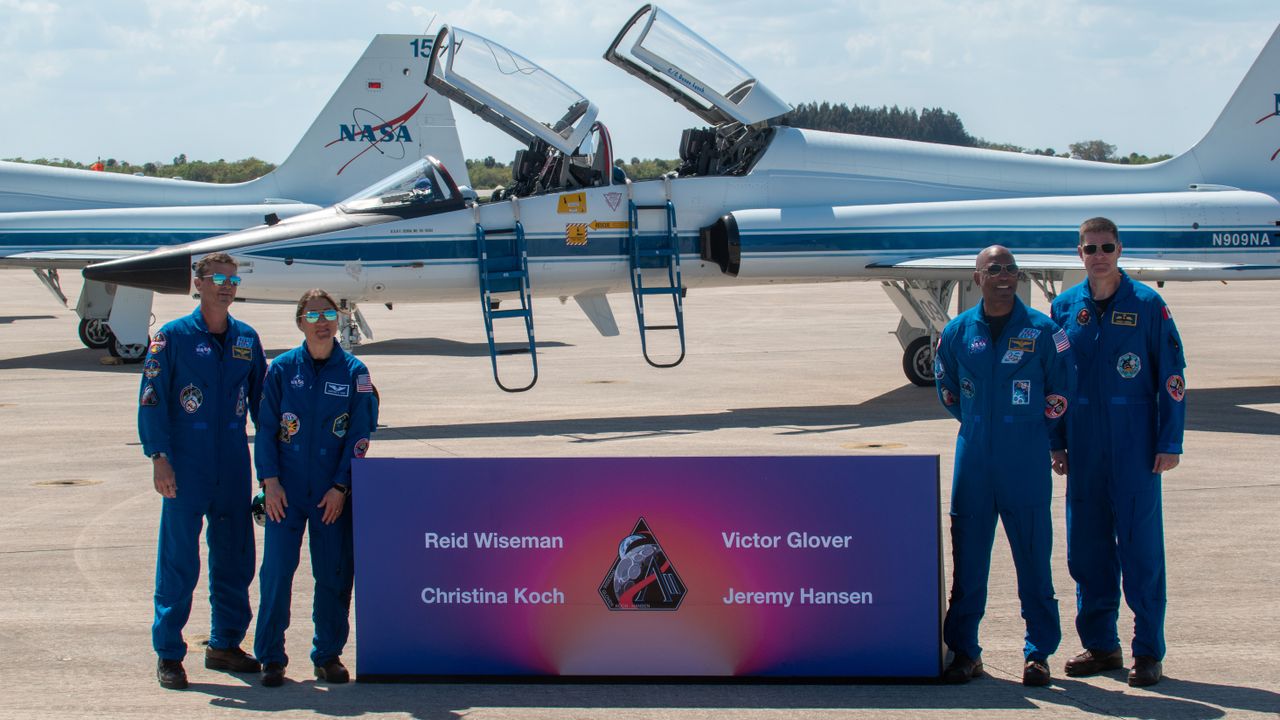
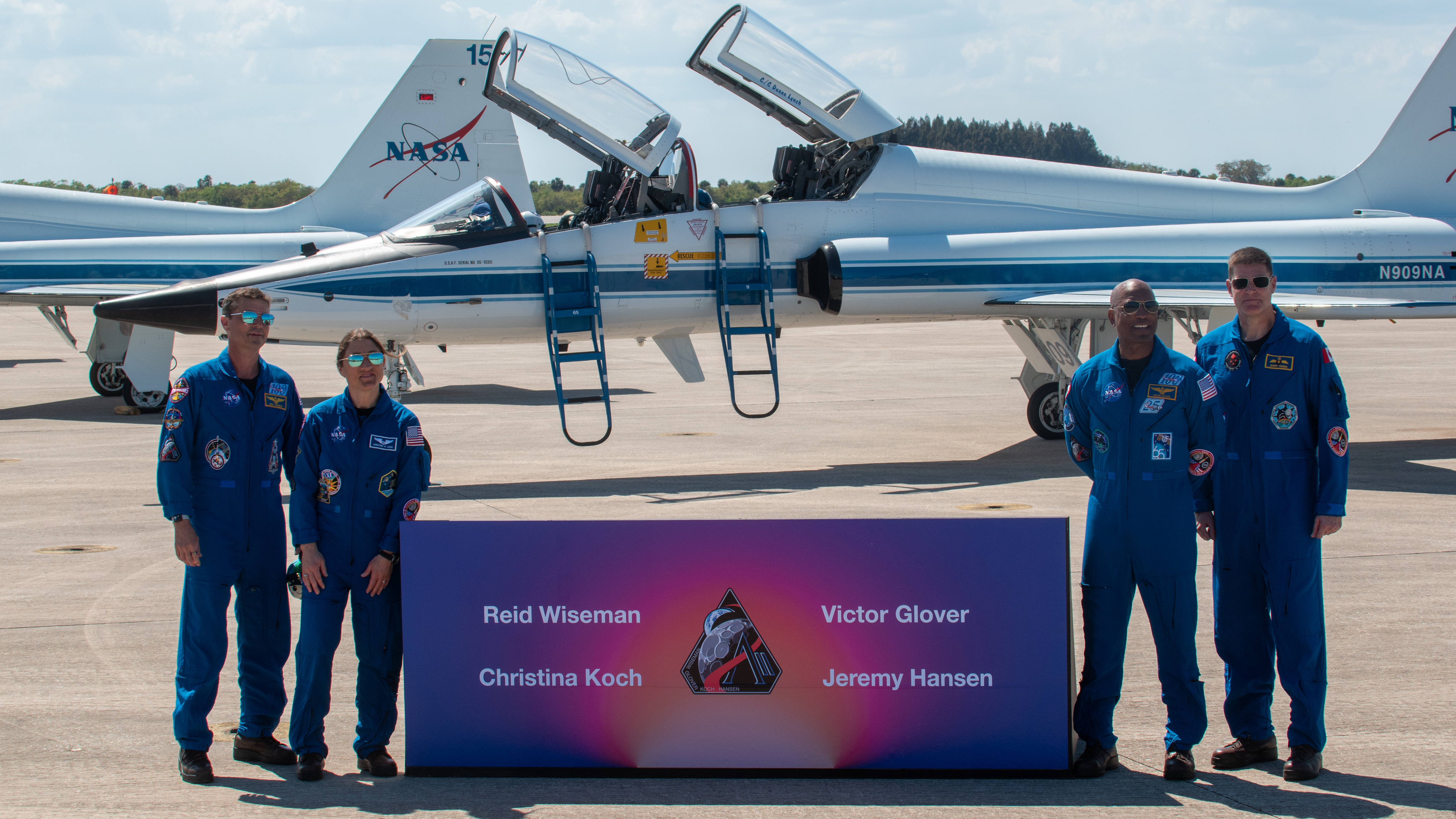
An account already exists for this email address, please log in. Subscribe to our newsletterCAPE CANAVERAL, Fla. — The crew of Artemis 2, NASA's first launch to the moon in over half a century, has arrived at the Kennedy Space Center ahead of their mission.
NASA astronauts Reid Wiseman, Victor Glover and Christina Koch, and Canadian Space Agency (CSA) astronaut Jeremy Hansen piloted T-38 jets from the Johnson Space Center in Houston to touch down on the runway at KSC's Shuttle Landing Facility at 2:15 p.m. EDT (1915 GMT) today (March 27), here on the Space Coast.
Article continues belowThe crew have been in quarantine since March 20, when SLS was rolled from KSC's Vehicle Assembly Building (VAB) to the pad at Launch Complex-39B (LC-39B). Now at their last terrestrial stop before heading to space, the Artemis 2 astronauts will remain in quarantine through the remainder of the mission's upcoming launch window, which extends through April 6.
It was the second such rollout for the Artemis 2 SLS, which NASA was forced to roll the rocket back to the VAB from the pad after its initial rollout earlier this year due to maintenance issues discovered during prelaunch tests in February.
Artemis 2 is designed as a stepping stone for the Artemis program, and will test Orion's life support systems in space with astronauts aboard for the first time. The crew won't land on the moon during Artemis 2, but will instead fly in a loop around its far side on a course known as a free-return trajectory. This is a path that flies Orion to lunar space on a direct path back to Earth to avoid the need for any major firings of the spacecraft's engine after its translunar injection burn that will put it on a course for the moon.
Assuming no major issues crop up during the Artemis 2 mission, NASA is planning a demonstration with Orion and the Artemis lunar landers to take place on Artemis 3 in Earth orbit next year. Following that, and pending the readiness of one of those landers, the agency is aiming for the program's first lunar landing on Artemis 4 in 2028. Beyond that, NASA hopes to begin laying the architecture for a more permanent lunar presence through the 2030s with habitats, rovers and regular cargo landers to establish a sustained outpost on the moon's surface.
Get the Space.com NewsletterContact me with news and offers from other Future brandsReceive email from us on behalf of our trusted partners or sponsors"We're not trying to get it right out of the gate," Isaacman said to media after the astronauts' arrival. "In fact, it's a test and experimentation phase — lots of rovers, lots of landers ... That means lots of opportunity for scientific and technological payloads that we can incorporate."
Image 1 of 4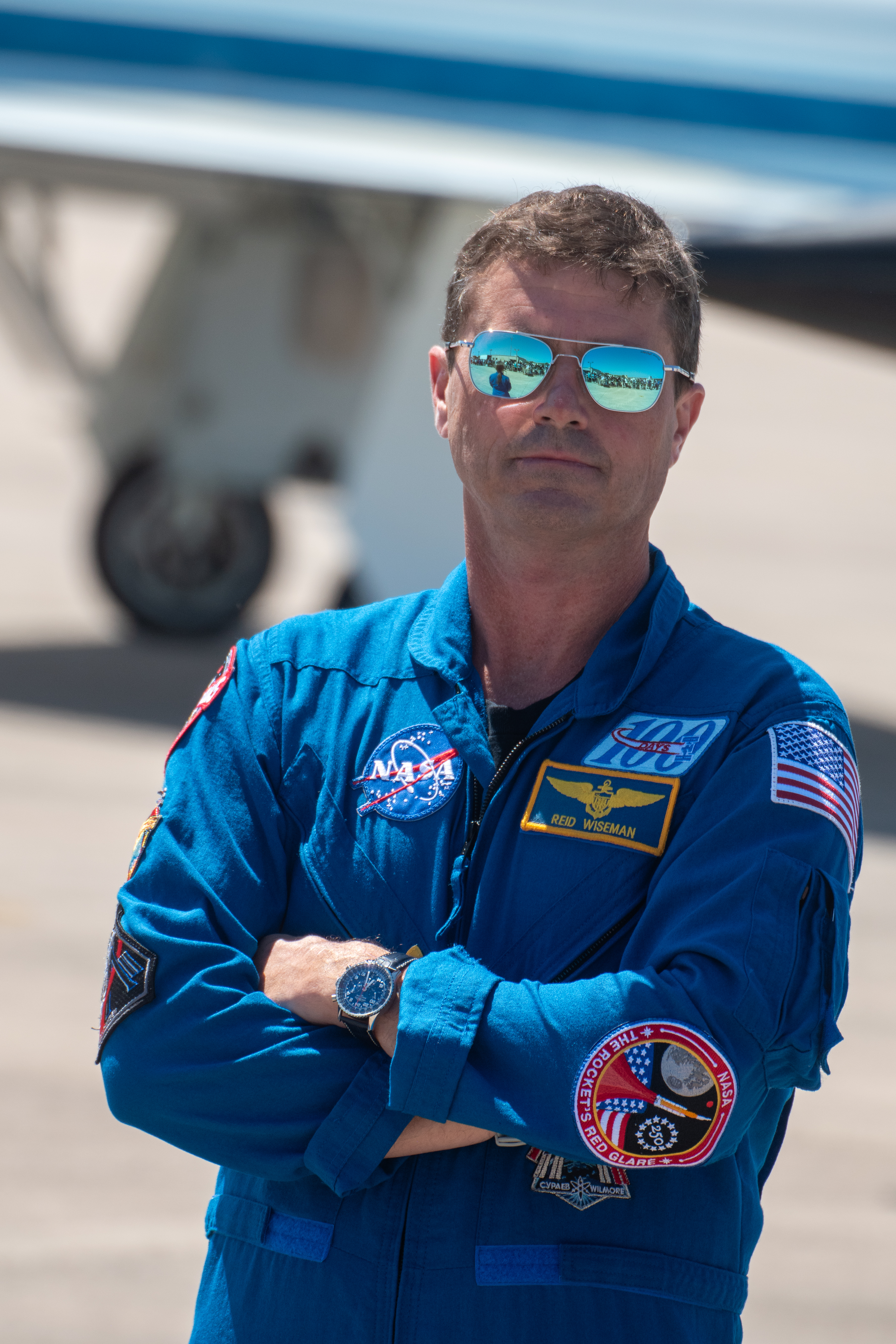 Reid Wiseman.(Image credit: Space.com / Josh Dinner)
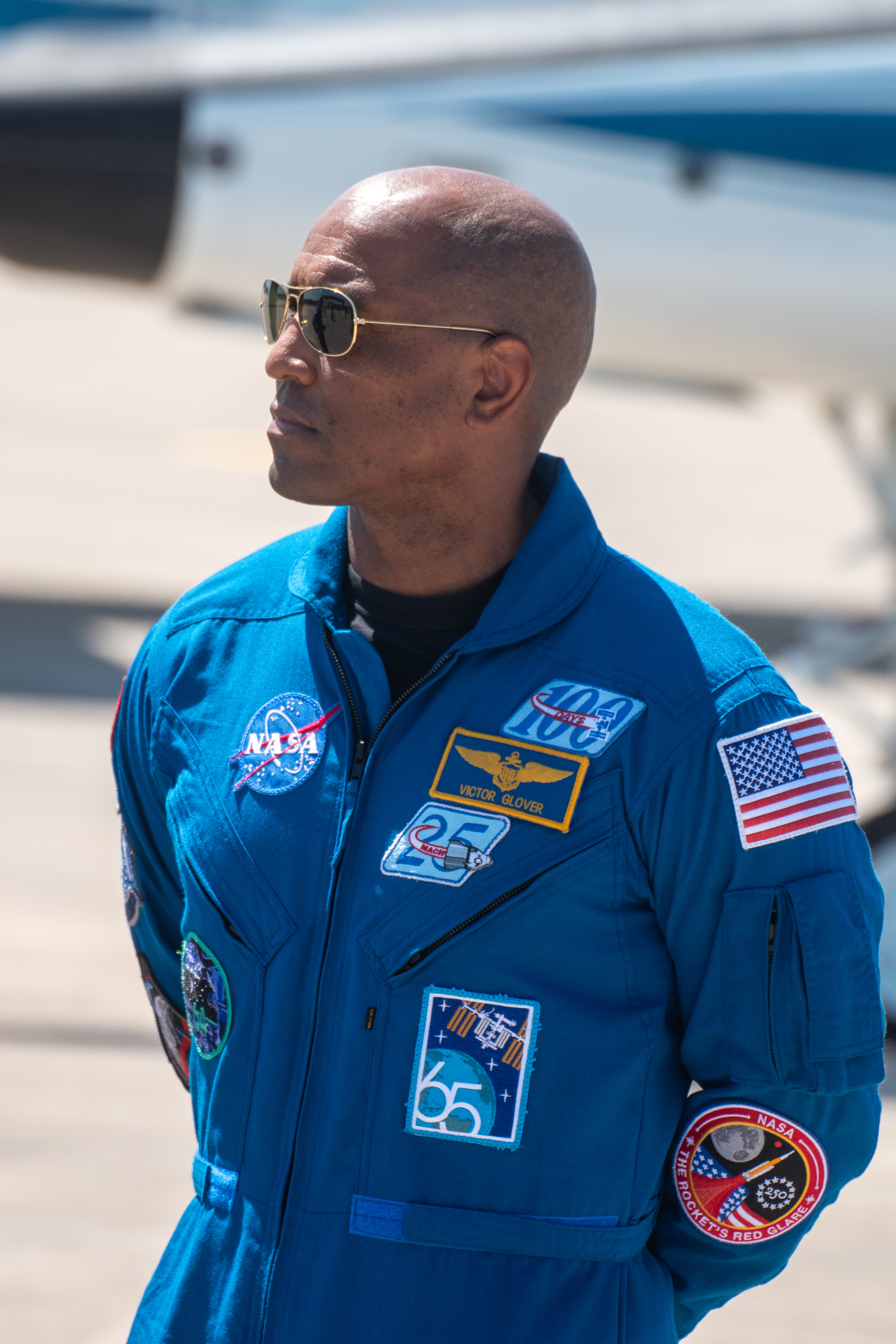 Victor Glover.(Image credit: Space.com / Josh Dinner)
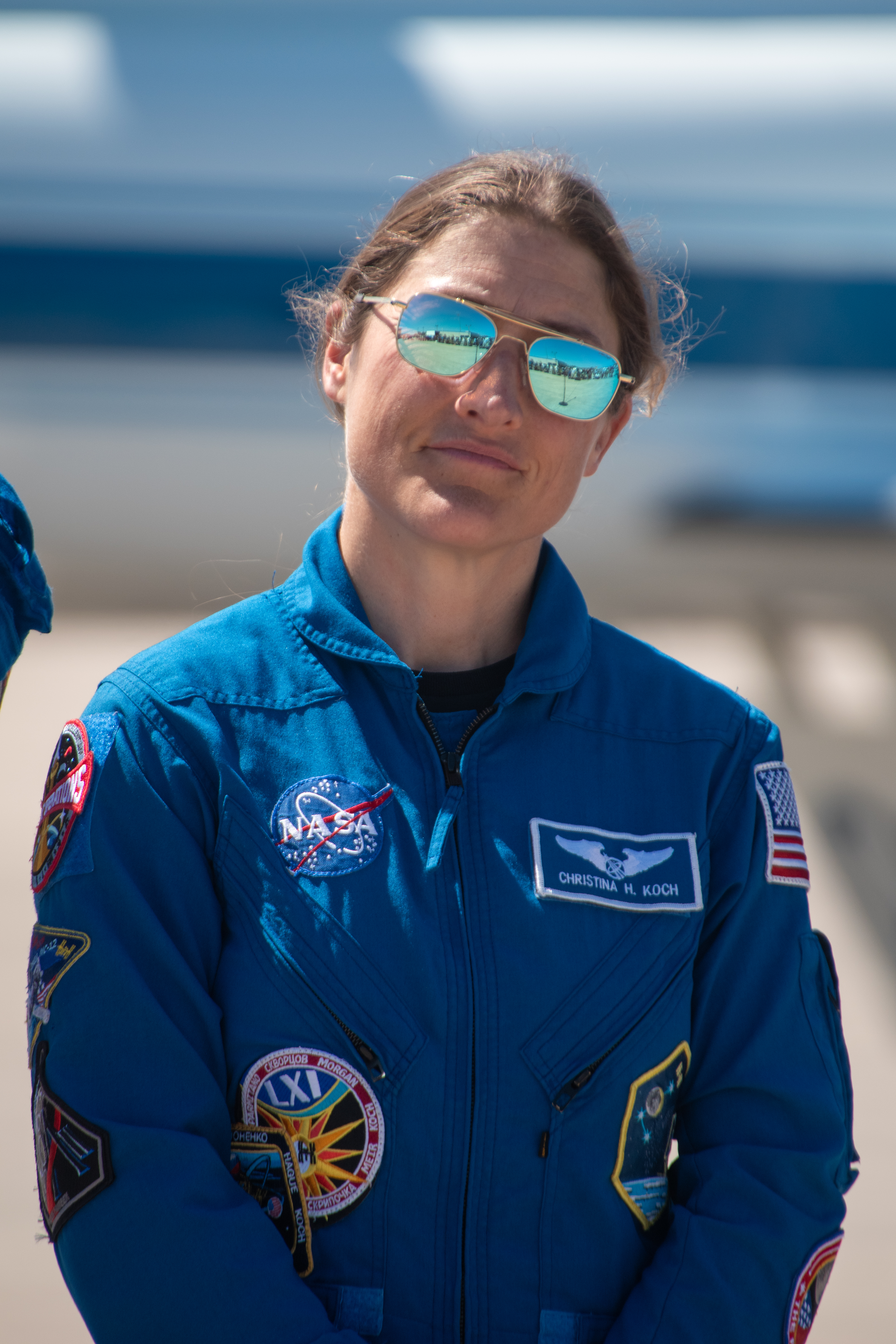 Christina Koch.(Image credit: Space.com / Josh Dinner)
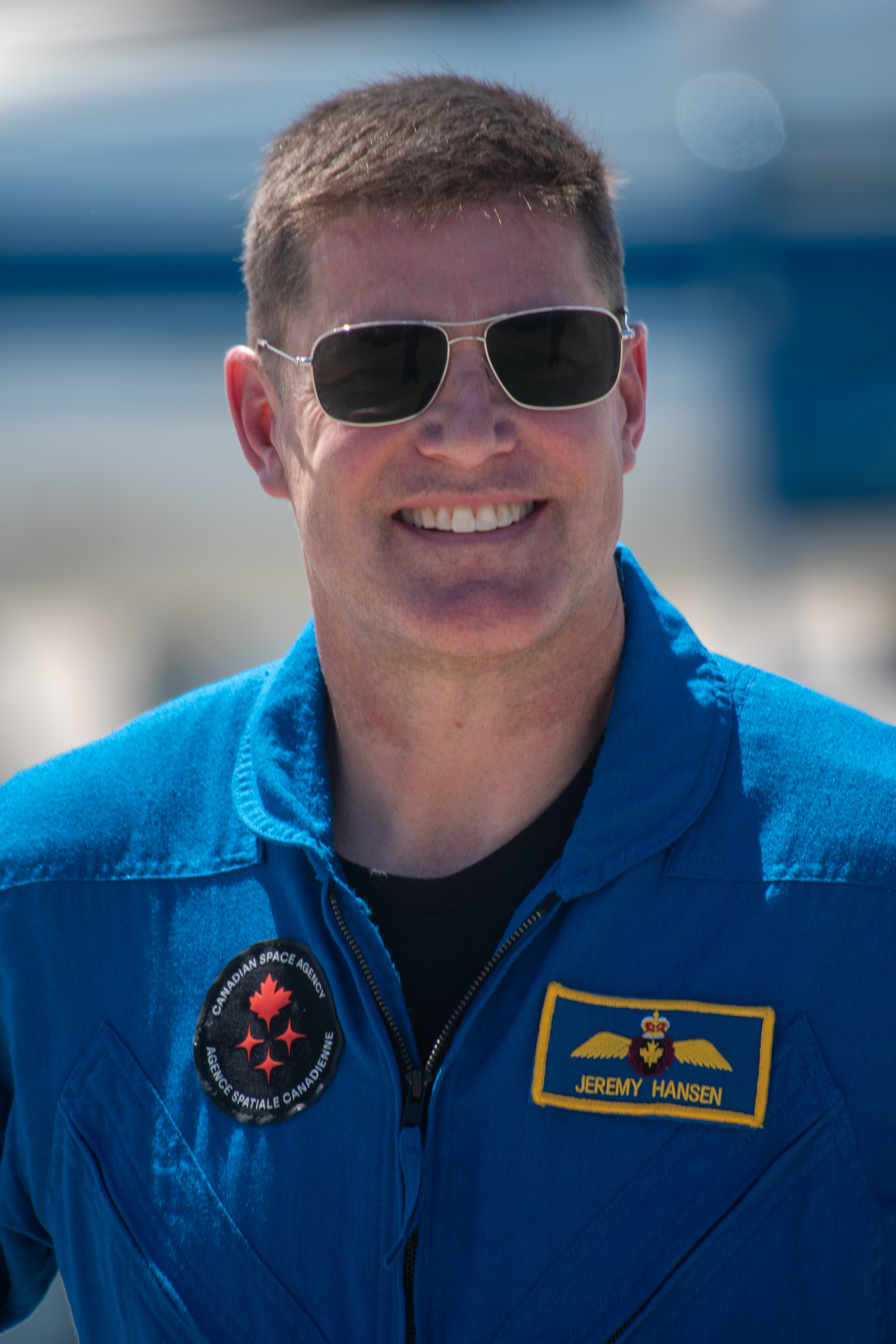 Jeremy Hansen.(Image credit: Space.com / Josh Dinner)
"It's awesome to be here. We love coming here," Wiseman said on the tarmac on Friday afternoon. "About 100 miles away, we said how much we love sliding to KSC."
In his remarks, Wiseman also thanked members of NASA's astronaut office for their support. "I just want to send a special thank you to our AOD team. They pulled a lot together to make this possible for us to get to fly these jets and stay in quarantine and have all the support," he said.
If NASA's schedule holds, the Artemis 2 crew will transfer to KSC's Neil Armstrong Operations and Checkout facility (O&C), appropriately named for one of the first human to walk on the moon, early Wednesday to begin donning their spacesuits, as mission teams work through launch countdown procedures to fuel SLS.
NASA plans to begin fueling SLS with the rocket's volatile, cryogenically-cooled liquid hydrogen and liquid oxygen propellants at 7:45 a.m. EDT (1245 GMT) on Wednesday, with liftoff scheduled during a two-hour launch window that opens at 6:24 p.m. EDT (2324 GMT). Should mission operators encounter any delays and need to postpone the launch for another day, NASA is able to reset SLS for up to four attempts between April 1-6, with another window opening April 30 should the first week of the month become unviable.
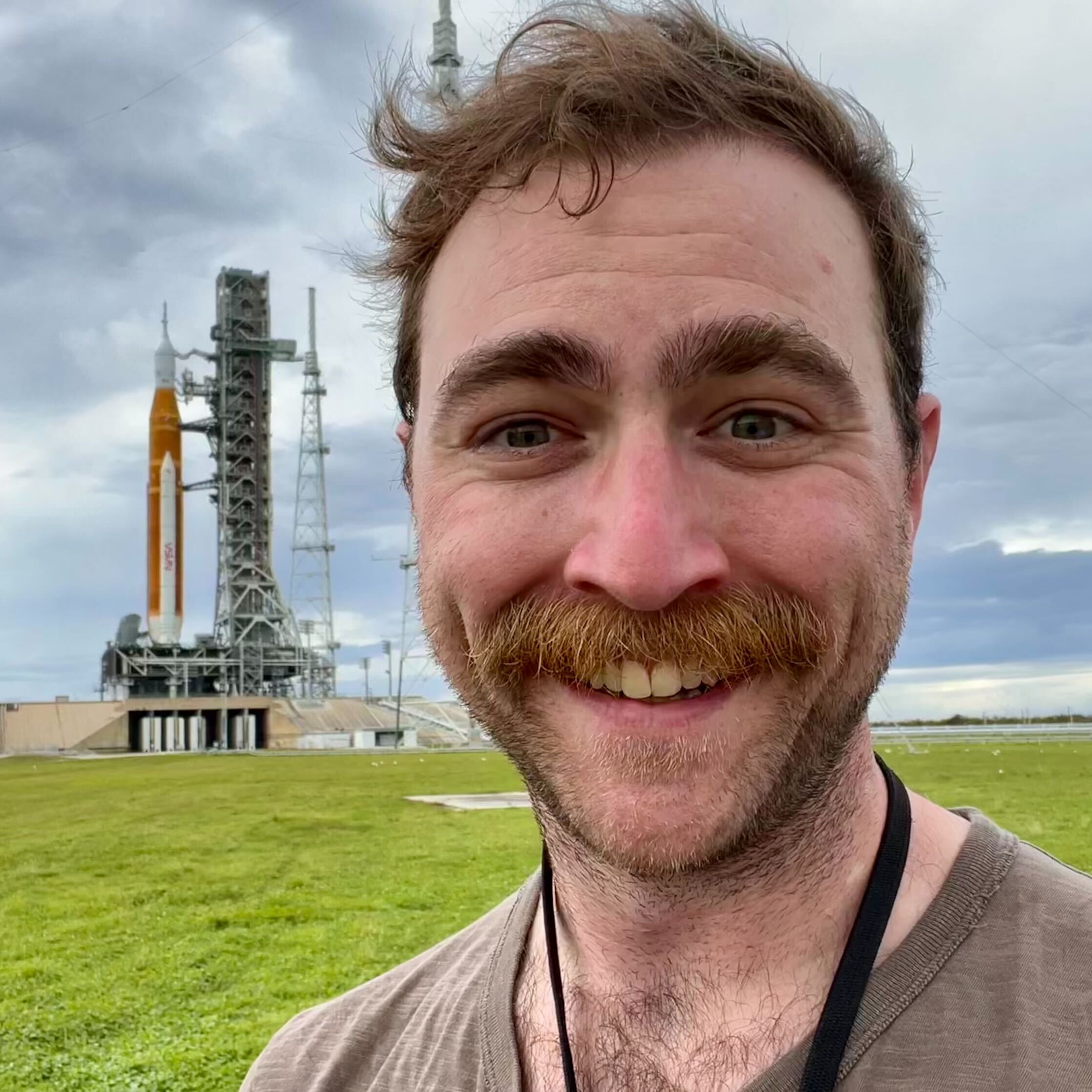 Josh DinnerStaff Writer, Spaceflight
Josh Dinner is Space.com's Spaceflight Staff Writer. He is a writer and photographer with a passion for science and space exploration, and has been working the space beat since 2016. Josh has covered the evolution of NASA's commercial spaceflight partnerships and crewed missions from the Space Coast, NASA science missions and more. He also enjoys building 1:144-scale model rockets and spacecraft. Find some of Josh's launch photography on Instagram, and follow him on X, where he mostly posts in haiku.
View MoreYou must confirm your public display name before commenting
Please logout and then login again, you will then be prompted to enter your display name.
Logout MORE FROM SPACE... 1Can humans have babies in space? It may be harder than expected
- 2Fireball sightings are surging across the US — here's what's really going on
- 3Are Saturn's rings made of a lost, shattered moon? New evidence arises for the case
- 4'For All Mankind' season 5: Release date & how to watch Apple TV's alt-history space show
- 5New portrait of the oldest-known supernova | Space photo of the day for March 27, 2026