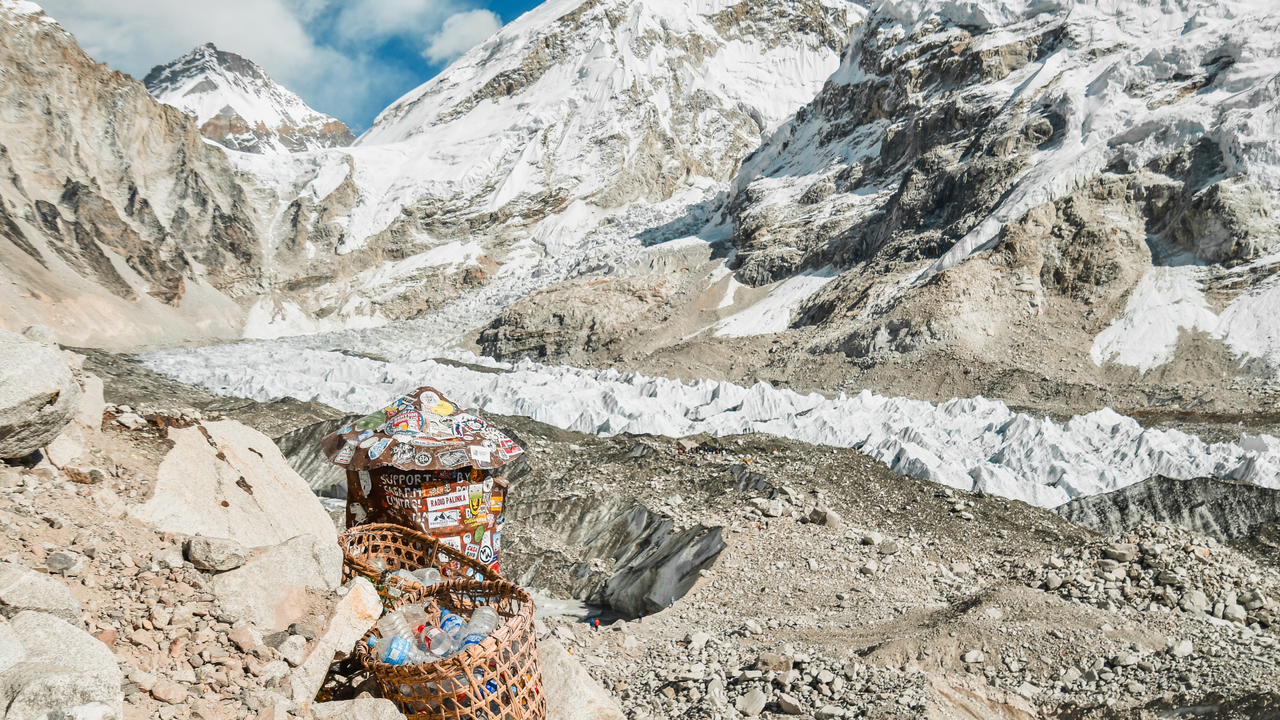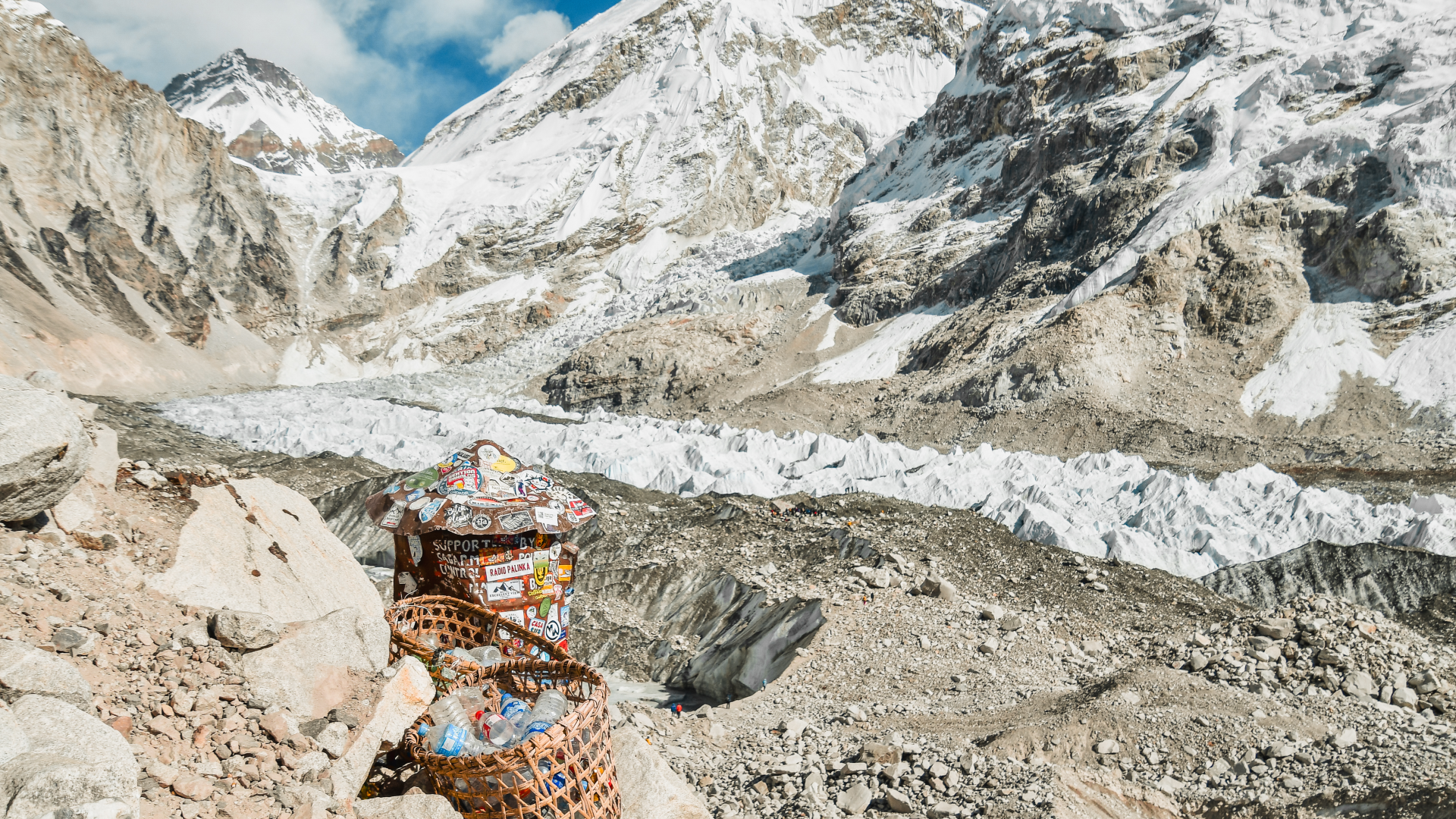
Plastic bottles and other garbage can be seen in woven baskets at Everest base camp in the Himalayas. (Image credit: Getty Images)
Share this article Join the conversation
Follow us Add us as a preferred source on Google Newsletter Subscribe to our newsletter
Most archaeologists study the things that past people left behind to recreate a picture of a bygone culture. Researchers are now applying those same archaeological techniques to more modern — and extreme — environments.
Justin Walsh, an archaeologist at Chapman University in California, is an innovator in the field of "space archaeology," or the study of human activity in the space environment, defined as 100 kilometers [62 miles] above Earth and beyond. Since the founding of the ISS Archaeological Project in 2015, Walsh has been studying how astronauts experience the International Space Station. Shawn Graham, a digital archaeologist at Carleton University in Canada, joined the project in 2023.
Now, Walsh and Graham are launching a new project — Archaeology Impossible — that looks at the things humans leave behind on Mount Everest. Live Science spoke with the duo about their ISS work and about why humans are obsessed with conquering extreme environments, like the highest spot on Earth.
Kristina Killgrove: You both started your careers in traditional archaeology but now you're doing something very different. Tell me about space archaeology.
Justin Walsh: My background is in Greek archaeology. But in 2008, I had a student in a cultural heritage seminar ask me a question: What about stuff in space? Is that heritage? And this question just completely blew my mind. I had never considered for a second that this idea could extend beyond Earth. But as soon as she asked the question, it was obvious. Yes, absolutely, there's stuff in space!
KK: So you're not using classic trowels and brushes to excavate artifacts?
JW: Space archaeology can use traditional archaeological tools and methods and techniques, but it also can require us to develop completely new methods and techniques.
Sign up for the Live Science daily newsletter now
Get the world’s most fascinating discoveries delivered straight to your inbox.
Contact me with news and offers from other Future brandsReceive email from us on behalf of our trusted partners or sponsors
KK: I assume you're not going up in a spaceship to record information at the International Space Station?
JW: It's now $75 million to pay Axiom Space for a seat to go to ISS for two weeks. There's no grant that's going to allow me to do that. So we had to come up with other ideas. I knew NASA was trying to develop a mission to Mars that's going to take three years, and they're going to put people in a tin can for that long. If you don't know the first thing about how that crew creates its own little society and culture and you can't support them effectively, how can you expect to have a successful mission? I wanted to try to show them what they were missing out on.
The inspiration for the ISS Archaeological Project was [UCLA anthropologist] Jason De León's Undocumented Migration Project, where he was using all kinds of creative ways of digging into the lived experience of migrants crossing the border from Mexico into the U.S. One of them was giving disposable film cameras to the migrants in Mexico and retrieving them in the U.S. so that the migrants could take images of the obstacles they faced that he couldn't otherwise observe. And that was another light bulb moment for me.
Here we have, in the case of the ISS, tens of thousands of digital photographs that NASA has made public that show people doing things in the space station and show the places that they're occupying and the objects and the tools that they're using. And if we put the photos in order and track that change over time, it is possible to study the material culture of a space habitat over the very long term.
Shawn Graham: My background is in Roman archaeology, but I became a digital archaeologist. One of my previous projects was looking at human remains being bought and sold online with my colleague Damien Huffer [an osteoarchaeologist at the University of Adelaide in Australia]. We were looking at tens of thousands of images and trying to understand: What are the large-scale patterns? What are the changes over time? How do you map that?
Given my interests, Justin called me up and said, so we've got these photographs and we're trying to map change over time and to understand stratigraphy. Is there a way we can do that?
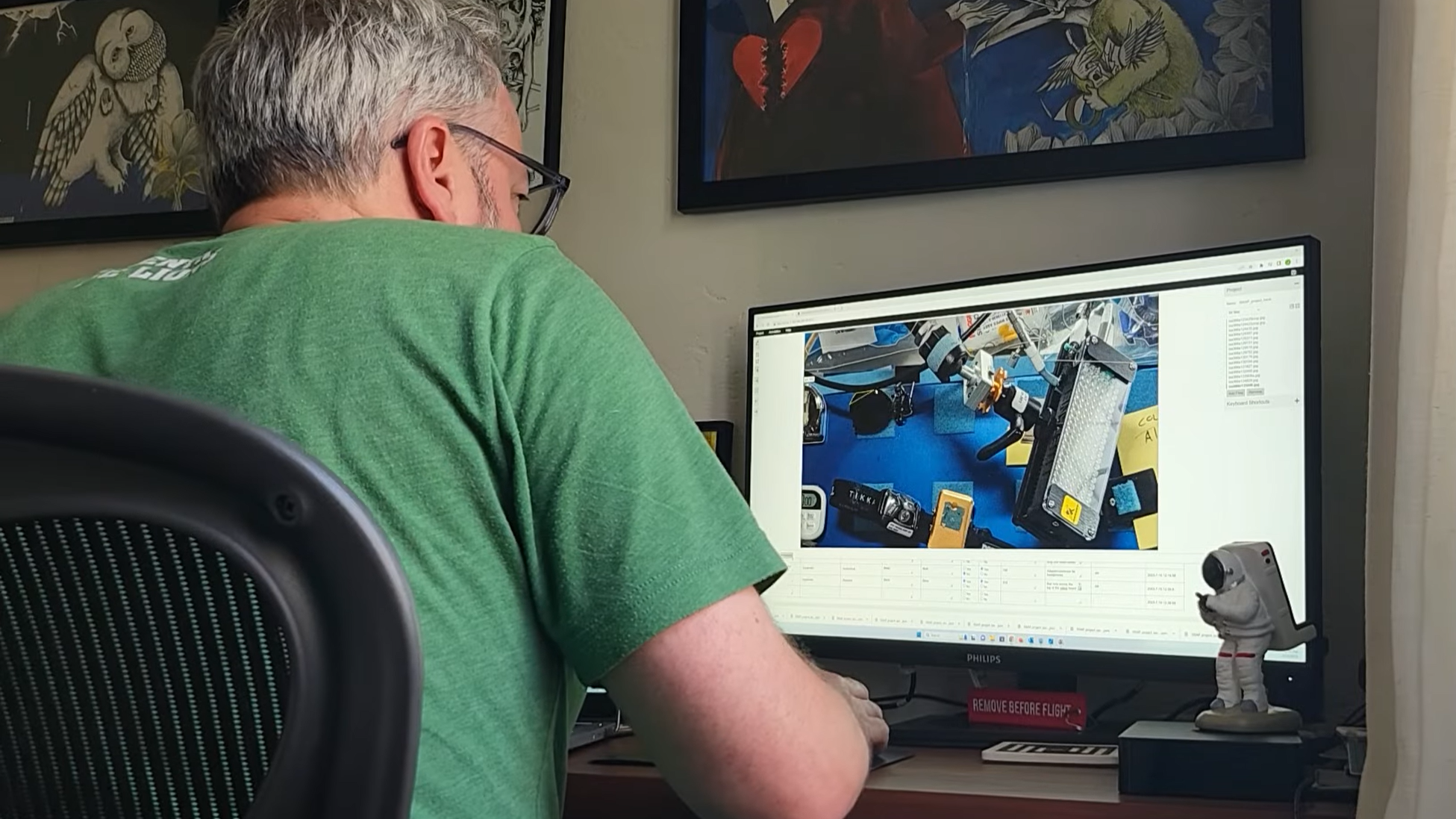
Justin Walsh tags images from the International Space Station on a computer monitor.
(Image credit: Justin Walsh)
KK: What can you learn about humans in space from just photographs?
JW: From photos, we were able to map the distribution of population groups across the space station because, at that time in 2020, there had been about 250 people. We can easily find out information about them: their gender, their space agency affiliation, their nationality. The gender split at the time was 84% men, 16% women. And the U.S. had sent something like 35 women at that point.
On the U.S. side of the space station, we saw that women were underrepresented in the photographs of areas for science, eating, sleeping and exercise. There was one area where they were overrepresented: the cupola — the beautiful panoramic window looking out onto Earth. Women were 24% of the people in the published cupola photographs — 50% higher than you would expect based on the population.
So what this indicates is that NASA Public Affairs has at least an unconscious bias in selecting images of women in this aesthetically appealing location and not choosing the images of them in those other areas where they're working, living, and being human. That was interesting.
SG: Correct me if I'm wrong, Justin, but aren't the interior spaces of the station hyper-managed? But the actual archaeological investigations show that the astronauts aren't behaving the way the mission planners want them to.
JW: You're exactly right, Shawn. In one experiment, we had ISS crew members take a photo of each of six locations for 60 days. The clearest example is an area that's called the Maintenance Work Area. It's basically a workbench with a folding table and a blue aluminum panel with 40 pieces of Velcro on it. If you read the design protocol for this work station, NASA has delineated seven ranked priorities. Number one is the maintenance of equipment. Number two is science that doesn't need to be done in a specific kind of facility. And then there are others.
We actually found that, over 60 days, this location was never used for maintenance that we could see. It was used for science on four or five occasions. The rest of the time it was just a pegboard in your garage or your basement where you store things that don't have a better home elsewhere because there's a ton of Velcro there.
KK: You found that the ISS needs a junk drawer, basically?
JW: Yes, absolutely! That's a great way of putting it. The space agencies wouldn't have known that this wasn't being used in the way it was designed because, if you look at the historic photographs, there's always somebody doing science or maintenance there, but nobody takes a photograph of that space when nobody's working there. We did — and it showed a pattern.
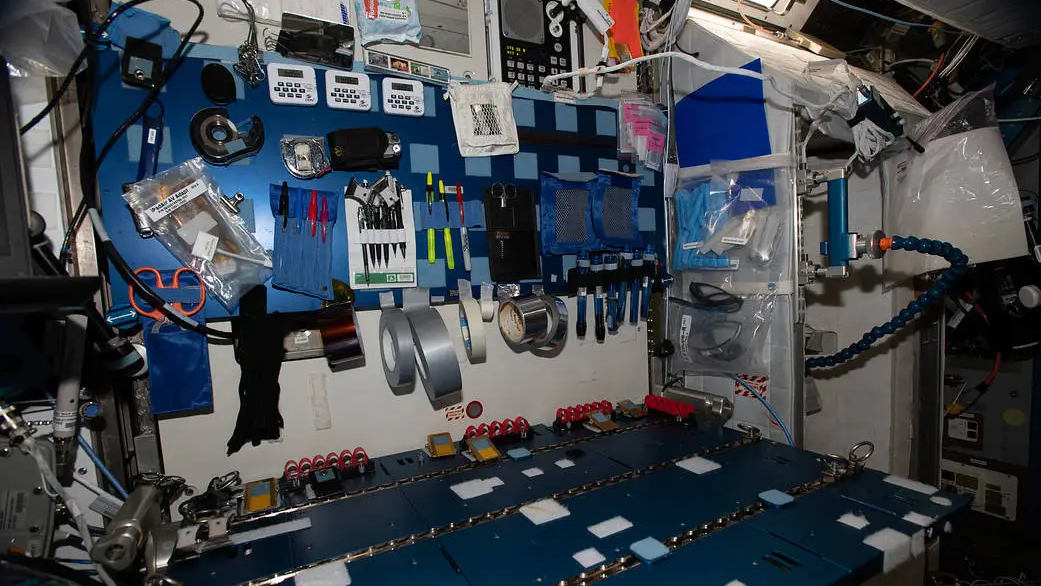
NASA designed the Maintenance Work Area on the International Space Station for equipment repair, but space archaeologists discovered it was being used more often as a junk drawer.
(Image credit: NASA)
KK: What do the ISS astronauts think about this?
JW: We got to debrief the crew that carried this out after they came home. They were just really interested in the idea that, by observing these spaces, we could improve future space habitats. And I can say that we actually have. The space station company Vast has told me that they have used our published research, and it has influenced the design of the interior of what's called Haven-1. That's really gratifying and exciting!
KK: That's awesome! I understand that you're both working on a new project that uses similar techniques but applied to Mount Everest. What do you want to learn about the mountain and the humans who attempt to climb it?
SG: If you look at photographs of Machu Picchu, there's this beautiful pristine view. But if you turned around the other way, you'd see the line of 200 tourists waiting for their two minutes on it. Climbing Everest is like that.
If we can pay attention to incidental details in people's photographs, we can map those over time and figure out how climbers construct a society there. By looking at all of these photographs and adapting the method from the ISS project, that gives us this opportunity to see how humans adapt in this impossible place where we have no business going.
KK: What kinds of artifacts or objects are you looking to document? What kinds of things do people deposit on Everest?
SG: There's oxygen tanks, there's human waste, food packaging, tents, prayer flags, poles, respirators.
JW: I've been reading a history of Everest and noting every time I see somebody encountering something that was left behind by somebody else who was exhausted or on the verge of death. But even in more orderly retreats, the early mountaineers made no effort whatsoever to bring things back. They're leaving mementos on the top of the mountain. You have all these different routes, different campsites, and different materials.
SG: Base camp has a couple of landmarks that appear in hundreds of photos. There's this boulder that has spray painted on it, "Everest Base Camp." It gets repainted periodically and there's always lots of different stuff around that boulder. I'm really interested in that boulder because it is a very clear point that we can keep an eye on and how that changes.
JW: There's an area with monuments to the deceased below and farther away from the mountain. It has also changed over time, of course, as memorials have been added and as people have died, but also as people have brought things to honor the dead.
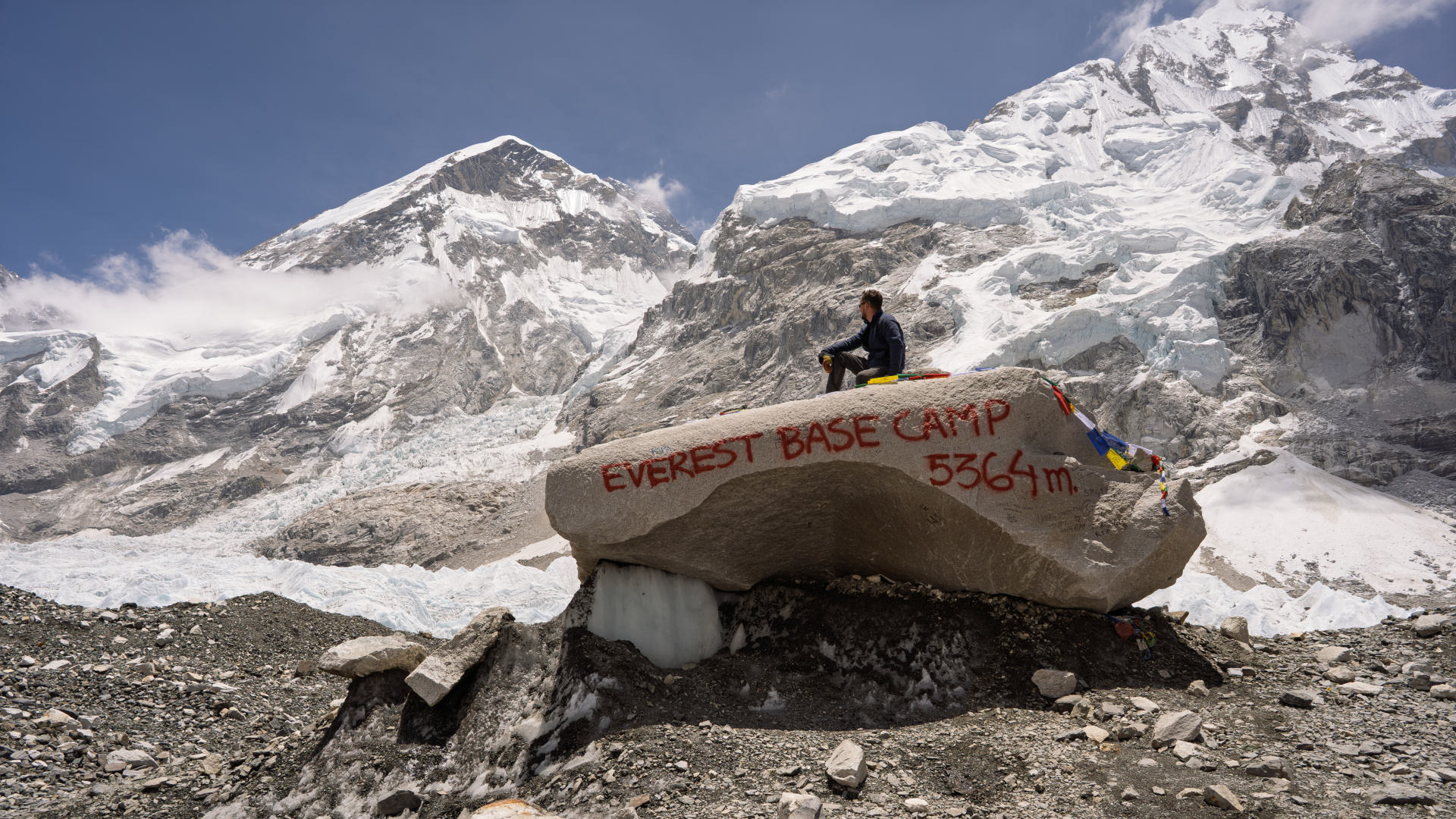
Archaeologists are planning to monitor changes to the famous Everest Base Camp boulder.
(Image credit: Getty Images)
KK: On the ISS, you found differences in the way nations were using their space. Mount Everest is also an extreme environment with international people coming and going. Do you think you're going to find cultural differences when you start looking at the photos?
SG: Any place I've ever traveled, Canadians are annoying because they always have a flag stuck on every piece of their clothing. So I would expect to see some knuckleheads doing that. [Graham is Canadian.]
JW: Nationalism has been a huge part of Everest expeditioning. Until the 1990s, it was all about which nation could do which route first, in the most extreme way. Nationalism is really significant in this environment, just as it is in space.
RELATED STORIES
KK: Are you starting a new subfield of extreme or impossible archaeology? Are there other environments that you think would benefit from your approach?
JW: Some people have asked me about Antarctic research stations. Also oil rigs, submarines — places that humans go and carry out activities but archaeologists can't go. There's obviously a kind of macho-ness about the discipline of archaeology — we go to these distant places and live in crowded dig houses and ride around in falling-apart cars in 120-degree Fahrenheit [49 degrees Celsius] weather. But because of the ISS project, I volunteer as part of a nonprofit group called AstroAccess, which is actively working to open up space to people with disabilities. Everybody who goes to space is disabled by virtue of the space environment, which is also true of Everest —you are not at your full capacity when you're climbing.
So I'm really interested in how the perspectives of people with disabilities can open up new avenues of interacting with these environments and how we can open up the field of archaeology to people who have traditionally been excluded.
The other thing I would mention is we are developing a crowdsourcing project because we want folks who have been to Everest to submit their images so we can analyze them. Once we get that approved, we will be moving forward. So people should stay tuned!
Editor's note: This interview has been edited and condensed for clarity.
See how much you know about human exploration into space with our spaceflight quiz!
TOPICS
 Kristina Killgrove
Staff writer
Kristina Killgrove is a staff writer at Live Science with a focus on archaeology and paleoanthropology news. Her articles have also appeared in venues such as Forbes, Smithsonian, and Mental Floss. Kristina holds a Ph.D. in biological anthropology and an M.A. in classical archaeology from the University of North Carolina, as well as a B.A. in Latin from the University of Virginia, and she was formerly a university professor and researcher. She has received awards from the Society for American Archaeology and the American Anthropological Association for her science writing.
View More
You must confirm your public display name before commenting
Please logout and then login again, you will then be prompted to enter your display name.
Logout