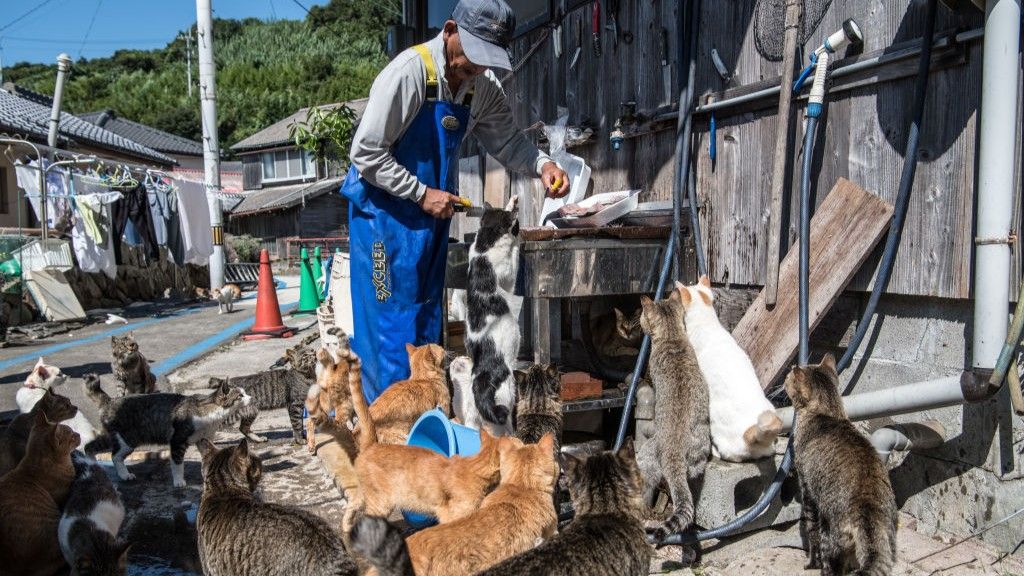
 An island resident gives some recently caught fish to cats in Aoshima, Japan. (Image credit: Carl Court/Getty Images) Share this article 0 Join the conversation Follow us Add us as a preferred source on Google Newsletter Sign up for the Live Science daily newsletter now
 Get the world’s most fascinating discoveries delivered straight to your inbox.
Become a Member in Seconds
Unlock instant access to exclusive member features.
Contact me with news and offers from other Future brands Receive email from us on behalf of our trusted partners or sponsors By submitting your information you agree to the Terms & Conditions and Privacy Policy and are aged 16 or over.You are now subscribed
Your newsletter sign-up was successful
Want to add more newsletters?
Join the club
Get full access to premium articles, exclusive features and a growing list of member rewards.
Explore An account already exists for this email address, please log in. Subscribe to our newsletter QUICK FACTSName: Aoshima
Location: Ehime prefecture, Japan
Coordinates: 33.7361, 132.4812
Why it's incredible: Cats outnumber humans by about 27 to 1.
Aoshima is a tiny, 0.2-square-mile (0.5 square kilometers) Japanese island in the Seto Inland Sea that is home to around 80 feral cats and three elderly people. It is the best known of 11 "cat islands" in Japan where felines easily outnumber humans.
A decade ago, there were about 200 cats on the island, but a mass spaying-and-neutering program in 2018 reduced the number of cats by more than half, and no kittens are known to have been born there since then. All of the remaining cats are older than 7, and a third have diseases caused by decades of inbreeding, according to The Guardian.
"We just take it one day at a time," Naoko Kamimoto, a resident of the island who is in her 70s and known locally as the "cat mama," told The Guardian in 2024. "But the day will come when there are no people left, and no cats. All we can do is make sure we look after them for as long as we're here."
Aoshima was settled in the 17th century and grew into a sardine fishing community with almost 900 inhabitants. Fishers brought a handful of cats to the island to kill rodents that were destroying fishing nets and increasingly becoming pests. But a decline in the fishing industry in the 20th century forced people to leave Aoshima and relocate to the mainland. Many left their cats behind, and the felines reproduced.
Aoshima's cats are fed by food donations from people around Japan. The felines also eat small animals on the island, but their impact on local wildlife is unclear.
The cats occupy abandoned houses and buildings that have crumbled over the years due to weather events such as typhoons and storms. Kamimoto looks after the cats, feeding them twice per day and administering medication.
Sign up for the Live Science daily newsletter nowContact me with news and offers from other Future brandsReceive email from us on behalf of our trusted partners or sponsors 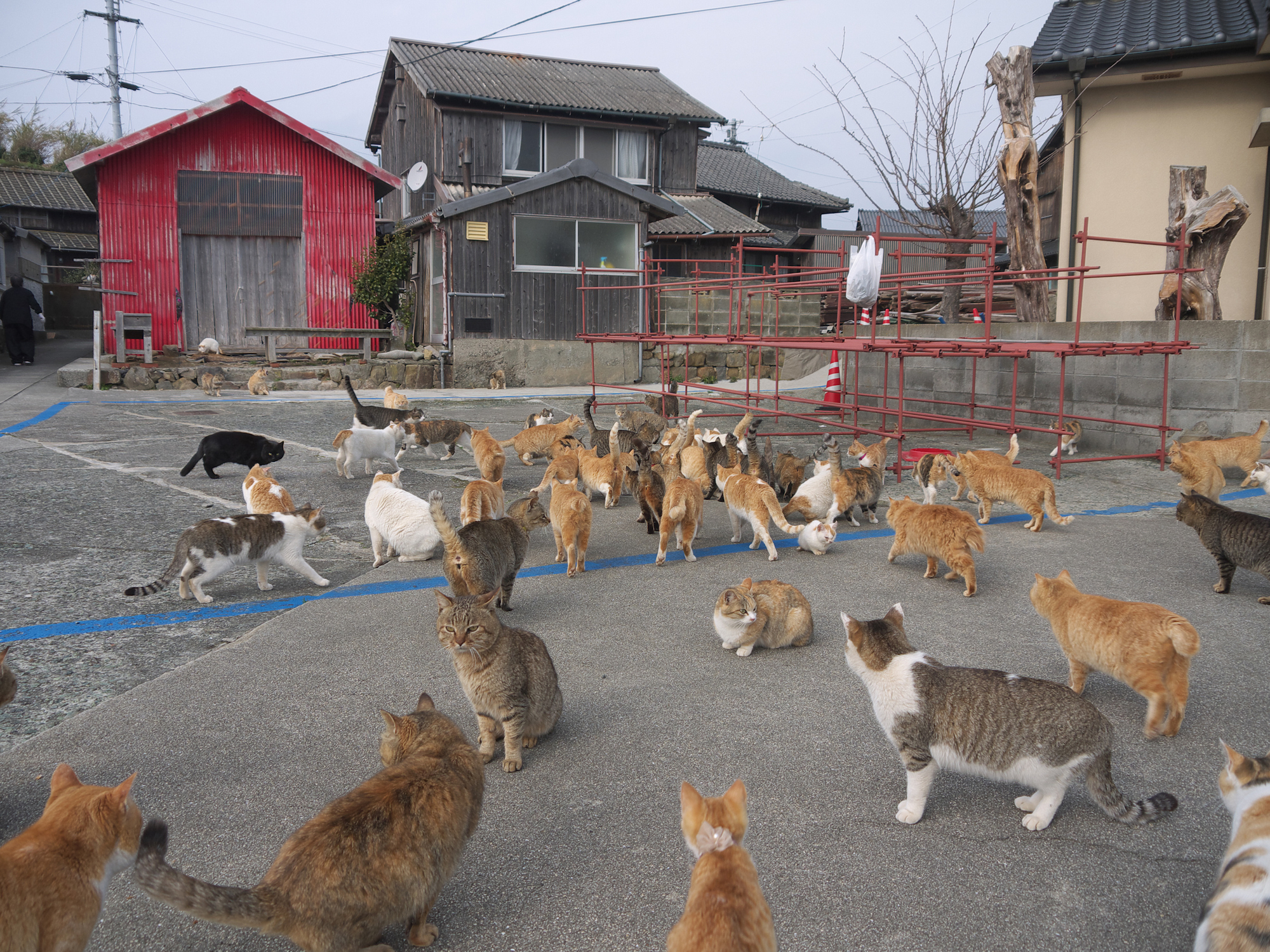
"People see images online and think they're being neglected, but nothing could be further from the truth," she said. "Some are blind, some are really thin, and others look normal. But that's the reality for wild animals in a place like this."
MORE INCREDIBLE PLACES- Snake Island: The isle writhing with vipers where only Brazilian military and scientists are allowed
- Narusawa Ice Cave: The lava tube brimming with 10-foot-high ice pillars at the base of Mount Fuji
- Sørvágsvatn: The lake that 'floats' above the ocean thanks to a unique optical illusion
A 2023 study analyzed the cats' genetic makeup and found significant differences in their coat-color genes compared with cats on other Japanese islands, explaining why most cats on Aoshima are ginger or tortoiseshell. The research showed that Aoshima's cats are descended from a small founder population, confirming that the felines are likely suffering from the effects of inbreeding.
If humans abandon the island, locals are confident that volunteers and shelters will adopt the cats, The Guardian reported. But for now, the felines are a tourist attraction, with visitors taking day trips to the island by boat and helping to feed the cats.
Discover more incredible places, where we highlight the fantastic history and science behind some of the most dramatic landscapes on Earth.
Cat quiz: Can you get a purr-fect score?
TOPICS Sascha PareStaff writer
 Sascha is a U.K.-based staff writer at Live Science. She holds a bachelor’s degree in biology from the University of Southampton in England and a master’s degree in science communication from Imperial College London. Her work has appeared in The Guardian and the health website Zoe. Besides writing, she enjoys playing tennis, bread-making and browsing second-hand shops for hidden gems.
View MoreYou must confirm your public display name before commenting
Please logout and then login again, you will then be prompted to enter your display name.
Logout LATEST ARTICLES 1AI war games almost always escalate to nuclear strikes, simulation shows
- 2Ancient Korean society practiced human sacrifice and high inbreeding, researchers find
- 3Chimpanzees in Uganda are locked in a deadly 'civil war' after their group split apart — and scientists don't know why
- 4James Webb telescope spots 'stingray' galaxy system that could solve the mystery of 'little red dots'
- 5'RIP, Comet MAPS': Watch the superbright sungrazer become a 'headless wonder' after being ripped apart by the sun