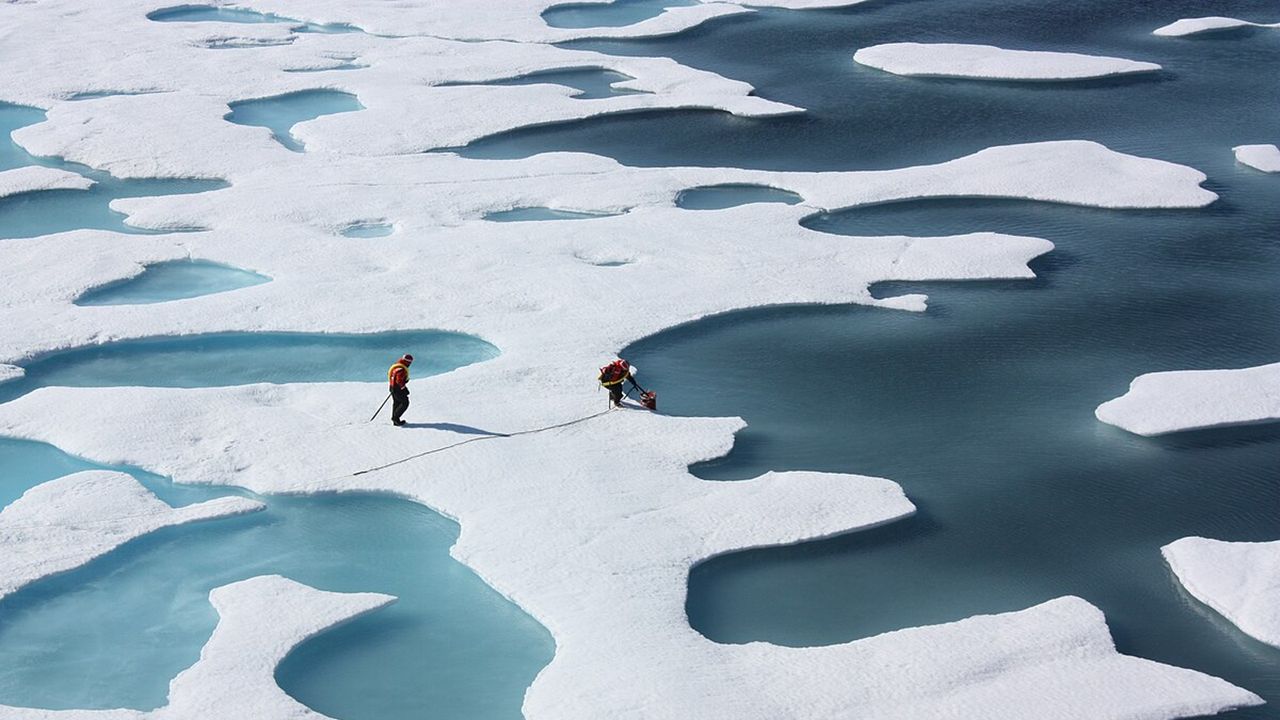
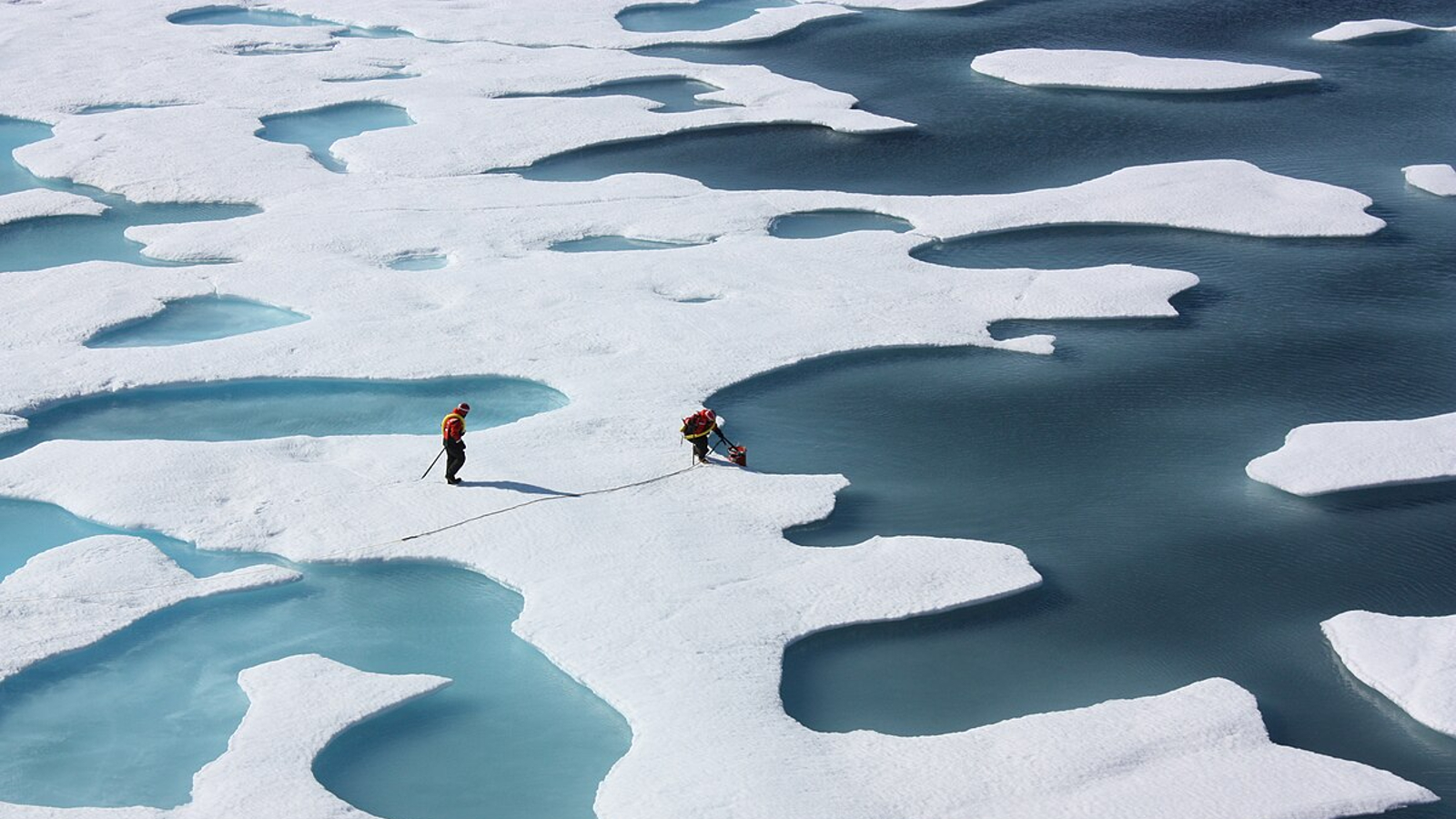
 A new analysis projects that as much as 120,610 square kilometers of new, ice-free land could emerge in Antarctica by 2300. (Image credit: NASA Goddard Space Flight Center) Share this article 0 Join the conversation Follow us Add us as a preferred source on Google Newsletter Sign up for the Live Science daily newsletter now
 Get the world’s most fascinating discoveries delivered straight to your inbox.
Become a Member in Seconds
Unlock instant access to exclusive member features.
Contact me with news and offers from other Future brands Receive email from us on behalf of our trusted partners or sponsors By submitting your information you agree to the Terms & Conditions and Privacy Policy and are aged 16 or over.You are now subscribed
Your newsletter sign-up was successful
Want to add more newsletters?
Join the club
Get full access to premium articles, exclusive features and a growing list of member rewards.
Explore An account already exists for this email address, please log in. Subscribe to our newsletterA warming climate could expose a Pennsylvania-sized chunk of ice-free land in Antarctica by 2300, which could drastically reshape Antarctic geopolitics as well as the continent's geography.
A study published in Nature Climate Change is the first to incorporate glacial isostatic adjustment — how land beneath heavy ice sheets uplifts after the ice retreats — into projections of ice-free land emergence in Antarctica. The results reveal that climate change could expose potentially valuable mineral resources that may spur renegotiations of the international treaties that currently govern Antarctica.
Rebounding resources
Beneath Antarctica's ice sheet lies a varied landscape with mountains, canyons, valleys, and even volcanoes. As the climate warms, the ice sheet is slowly retreating, uncovering some of that land.
But until now, projections of ice-free land emergence had considered only changes to ice margins — how the spatial extent of ice cover will shift. Simulations of Antarctica's future accessible land hadn't considered how land would uplift once uncovered by ice or how different sea level scenarios would affect the amount of ice-free land that might emerge.
Lucas's projections included these factors by incorporating expected sea level changes, information about the thickness of Earth's lithosphere, and estimates of how the absence of the gravitational pull of an ice sheet would affect land uplift.
The study estimated that 120,610 square kilometers (46,578 square miles), 36,381 square kilometers (14,047 square miles), and 149 square kilometers (58 square miles) of land would emerge by 2300 under high–, medium–, and low–ice melt conditions, respectively. "We know we’ve had ice retreat and grounding line retreat over the past couple of decades," so the ranges of projected ice-free land emergence were not surprising, Lucas said.
Sign up for the Live Science daily newsletter nowContact me with news and offers from other Future brandsReceive email from us on behalf of our trusted partners or sponsorsSouth pole politics
Within the area that Lucas and the research team projected would be ice-free by 2300 lie known or suspected deposits of copper, gold, silver, iron, and platinum — critical minerals used in manufacturing and valuable metals in and of themselves. In particular, the study found the largest land emergence in Antarctica is likely to occur over territories claimed by Argentina, Chile, and the United Kingdom and contains a range of mineral deposits, including copper, gold, silver, and iron.
The continent will still remain a very challenging environment for mineral resource extraction.
Tim Stephens, professor of international law at the University of Sydney Law School
Currently, commercial mineral extraction is not allowed in Antarctica, though the Antarctic Treaty does allow for activities related to mineral resources if they are conducted strictly for scientific purposes.
If mineral resources become simpler to extract, countries with territorial claims in Antarctica would have an incentive to renegotiate those terms, the study's authors suggest. The first window for renegotiation is in 2048, when parties to the Antarctic Treaty are permitted to call for a review of the treaty's environmental protocol.
RELATED STORIES—Antarctica ice melt could cause 100 hidden volcanoes to erupt
—Antarctic sea ice collapse linked to a mysterious spike in ocean salt
The authors suggest that these changes to Antarctic land could put pressure on the region's legal framework surrounding mineral resource activities. "That's a fair assessment," wrote Tim Stephens, a professor of international law at the University of Sydney Law School who was not involved in the new study, in an email. "However, the ice-free land emergence projected by the new study is unlikely to trigger a major change to Antarctic governance on its own," he wrote.
"The continent will still remain a very challenging environment for mineral resource extraction," he wrote, adding that the transformation of the Antarctic environment could also spur greater cooperation and focus on the environmental protection objectives of the Antarctic Treaty.
This article was originally published on Eos.org. Read the original article.
Article SourcesLucas, E. M., Richards, F. D., Cederberg, G., Bao, X., Hoggard, M. J., Tsuji, S. R. J., Latychev, K., Tsuji, L. J. S., & Mitrovica, J. X. (2026). Emergence of Antarctic mineral resources in a warming world. Nature Climate Change. https://doi.org/10.1038/s41558-026-02569-1
 Grace van DeelenJournalist
Grace is a journalist who writes about climate, agriculture, wildlife and science. She has published work for Sierra Magazine, Inside Climate News, Scientific American, Audubon and Environmental Health News, among other publications. She is currently a reporter at Eos. She is particularly interested in stories that illuminate the relationship between new research, human culture, animals and the environment. Grace is a graduate of MIT's Graduate Program in Science Writing and holds bachelor's degrees in biology and anthropology from Tufts University.
View MoreYou must confirm your public display name before commenting
Please logout and then login again, you will then be prompted to enter your display name.
Logout LATEST ARTICLES 1Shroud of Turin, claimed to be Jesus' burial cloth, contaminated with carrot and red coral DNA
- 2NASA telescope uncovers new mystery in supernova first spotted by Chinese astronomers 2,000 years ago — Space photo of the week
- 3What happened to the Minoan civilization?
- 4Fossil site in China reveals bevy of complex creatures lived prior to the Cambrian explosion, including a 'Dune'-like sandworm
- 5Cheap, decades-old transplant drug delays full onset of type 1 diabetes