There is very little about this race that seems to make sense.
The gruelling French farm tracks with their jagged cobblestones seem barely fit for a cow's hoof, let alone a Lycra-clad cyclists' thin tyre and ultra-light bike.
Welcome to L'Enfer du Nord - the Hell of the North - as cycling's most brutal race, Paris-Roubaix, is known.
At 260km (162 miles), it is not the longest of cycling's classics, and there are no mountains to climb. But that is not the point.
First held in 1896, it is the unrelenting cobbles - or 'pave' - that have left some of the world's finest riders, and their bikes, bloodied and broken.
Four-time Tour de France winning legend Tadej Pogacar has won every race worth winning in cycling, and often by a country mile.
But he can't win Roubaix.
The 30 sectors of cobbles along the ancient route got the better of the Slovenian for the second time on Sunday, when he was beaten by Belgian Wout van Aert in a sprint in the race's legendary velodrome finish.
"I'd describe the cobbles, not like a market place in a village as you might think, but more like someone decided to drop a load of cobbles and see where they landed, and somehow they are described as roads," Lizzie Deignan, who left blood on the handlebars of her bike when winning the inaugural women's edition in 2021, says.
"Think of hardest physical exertion you've ever done on a bike, and then being rattled at the same time to the point even the muscles in your fingers are so sore. It's a bit like holding on to a pneumatic drill whilst going as fast as you can on a bike."
More Than the Score podcast: Paris-Roubaix: cycling’s ‘hell of the north’
Van Aert beats Pogacar in thrilling Paris-Roubaix sprint
- Published18 hours ago
A dedicated group of volunteers spend the year leading up to the race maintaining the cobbles to try to keep the course safe, while ensuring the unique profile remains.
Preparation of the route has included the use of goats to chew away the vegetation which makes its way through the stones - especially on the fearsome sector through the Forest of Arenberg, a foreboding sprint over pave which is always treacherous, often slippery, and forever fraught.
The weather also never helps: if it rains it is a near-impossible quagmire, with countless abandonments; if it is dry, the dust will get you, kicked up by competitors and the cavalcade of team cars and motorbike outriders - it's a challenge to breathe, let alone see.
On her day of glory, Deignan surprised the rest of the peloton and broke away in torrential conditions which saw her, at one point, riding the bike sideways as the rear wheel slid out on a corner.
"Everybody punctures and everybody crashes, it's whoever has good legs and survives it really," she says. "It's unlike any other race."
Paris-Roubaix falls into the same road cycling World Tour as that of the Tour de France, or Giro d'Italia. And so the same peloton will be hurtling along the cobbles a couple of months before gliding through the sunflowers of a French summer.
But success in those other races does not always translate to joy on the pave.
Four-time Tour winner Chris Froome: hated it, rode it once and didn't finish. Three-time Tour champion Greg Lemond: managed fourth. Two-time Tour winner Jonas Vingegaard: more likely to do the Paris-Dakar rally.
There were those who straddled both, including Bernard Hinault and the often-acclaimed greatest Eddy Merckx, each with five Tours de France among their glittering palmares, but even they weren't the best when it came to Hell.
Hell belongs to the powerhouses; the burly classics riders who cannot go over mountains day after day, but who can go for longer and harder across one epic day of racing.
"Every time I tried [to attack], my legs were not the greatest any more and [Van Aert was always] riding on my wheel," Pogacar, who we have grown used to winning races by several minutes, said after Sunday's edition.
For Van Aert - known to many as the 'nicest man in cycling' and who was roared into the velodrome - it was simply "a dream come true" that was "years in the making".
And nothing tells you you're part of something so difficult and profound more, than when the champion dedicates his win to a team-mate who lost his life on the cobbles eight years ago. Belgian Michael Goolearts died after a cardiac arrest during the 2018 race.
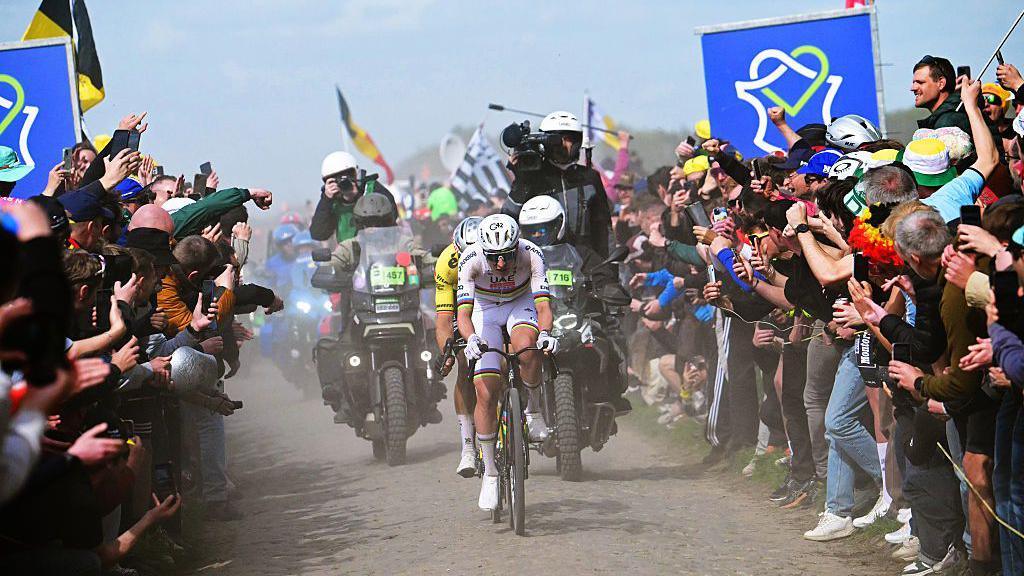 Image source, Getty ImagesImage caption,
 Fans line cobbled farm tracks to roar on their mud-splattered heroes
Even when you win the race, you don't get away from the cobbles.
The trophy is a piece of pave - mounted by a local stone mason who works on cobbles which had been lost for generations after the tracks they formed were blown up by German bombs during the World Wars, and then ploughed back to the surface decades later by farmers, who leave them by the tracks of the present day to be carved for next year's victor.
"It's the same as it always was," says Deignan. "These are roads steeped in their own history aside from cycling - you know, World War One, World War Two…
"It's just terrain that shouldn't be raced; it doesn't make sense really.
"Everything that can possibly happen, happens on that one day - it throws everything there is at a rider, and it's such a spectacle to watch."
The pave requires a unique and counter-intuitive way of racing, says Deignan - so fast that your bike doesn't have time to get stuck in the changing profile and undulation of the cobbles, with as little as possible pressure on your handlebars.
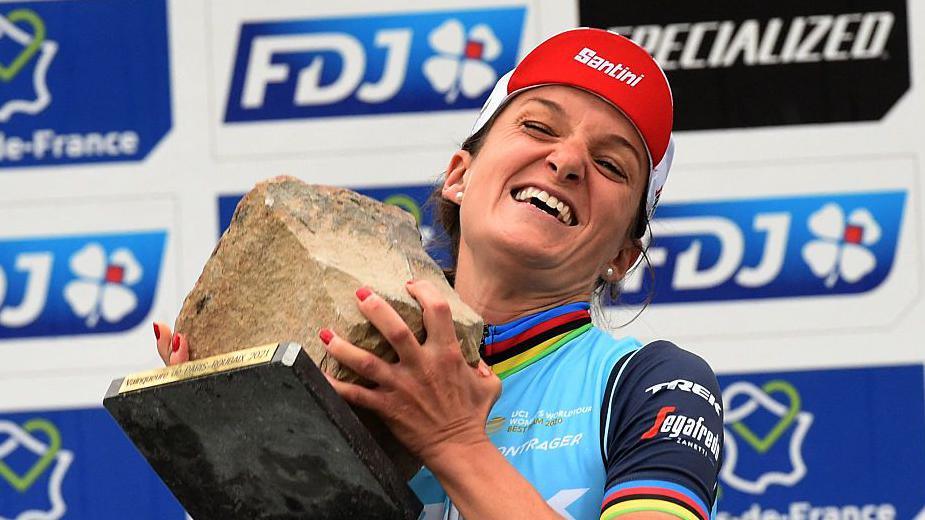 Image source, Getty ImagesImage caption,
 Deignan won the inaugural Paris-Roubaix Femmes in 2021
"Everybody has a story to tell… if they make it to the end," says Britain's joint-highest ever male finisher Ian Stannard - a former Team Sky golden era classics man who now directs the team from the cars behind the peloton, and who came third in 2016.
"When things are going well, you just cruise over the cobbles, but when your legs go 'bang' you smash into every one.
"It's a great race for people - they all come over the Belgian border to watch by the roadside and set up camp and have a good time. You can smell the barbecues as you race.
"But," adds Stannard, "it really brings this area into focus."
And it's a poor one. An old mining and textile town, modern-day Roubaix has more than its fair share of poverty - striking old brickwork architecture screaming through the grime for a more gentrified age through street art installations and restaurant start-ups.
Farming, coal, wars… more farming. Paris always seems further away, both geographically and culturally, than you think.
Despite the name the race doesn't even start in the French capital famed for money and style these days, but in the outskirts of the outskirts instead.
That is why the race means more to people here than arguably the Tour de France does to, say, Parisians or Alpinistas.
Waving flags and sounding airhorns, the locals line the sides of the jagged paths, which are little more than a couple of metres wide, watching first the motorbikes and cars bouncing over at speed before a slew of seemingly out-of-control cyclists bursts through.
Those from north of Paris and south of Brussels did the digging, ploughing, assembling and many of them the fighting, on these fields which saw such bloody battles.
Fiorella, who works for her grandparents at a cafe in Roubaix on a street corner near the velodrome, says: "I'm not crazy about cycling, but I like it. It's definitely important for us in this area. You know, us, Lilleois, Belgians, even the Netherlands… we are all together.
"It's different here - our mentality is different. All the factories here, we make things. Hard work - that's what we stand for. It is different for Parisians, and the south."
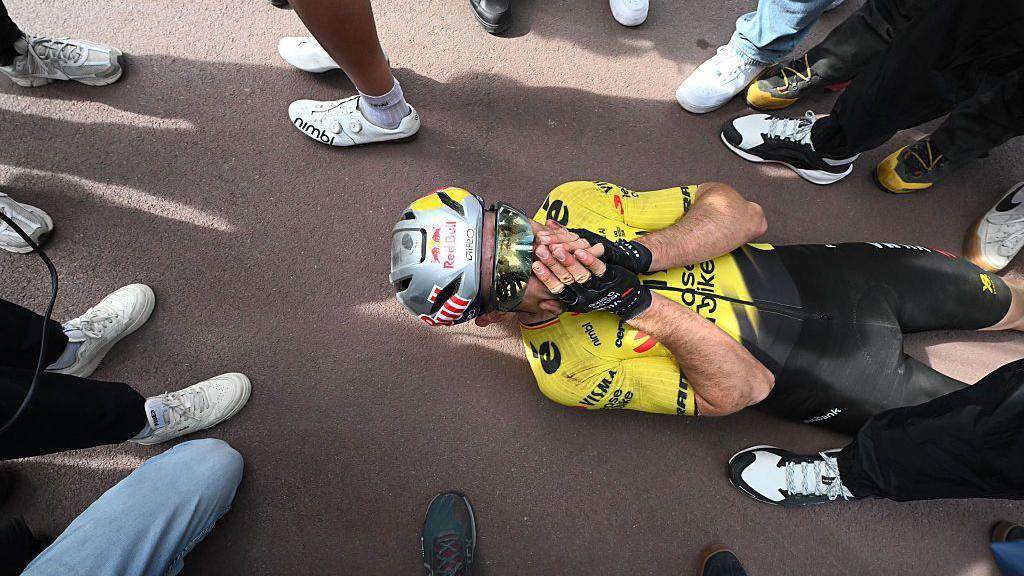 Image source, Getty ImagesImage caption,
 People's champion Van Aert in disbelief at beating Pogacar to win the race everyone in northern France and Belgium wanted him to win
Fifty years ago Paris-Roubaix was featured in what would become a cult documentary among cycling fans called A Sunday in Hell.
It featured the attempt by all-rounder Merckx to prevent the legendary powerhouse of the time, Belgium's Roger de Vlaeminck, from winning his fourth title. Both were denied by the often over-looked nearly man Marc Demeyer.
Somewhat fittingly, the 2026 edition mirrored that, with Pogacar's all-round brilliance up against powerhouse Mathieu van der Poel's attempt to win a record-equalling fourth title. Both were denied by the erstwhile underdog Van Aert.
That film also captured the spirit of the people of the region - the proud and hard-working engine room of France, cheering home one of their own from the coffee houses and tabacs.
Since 1896, when two textiles industrialists tried to promote the town and were told to ensure the race's title somehow involved Paris, little has changed in the culture of the north.
And given that, the brutal, legend-humbling race, all grit and grind, makes perfect sense.
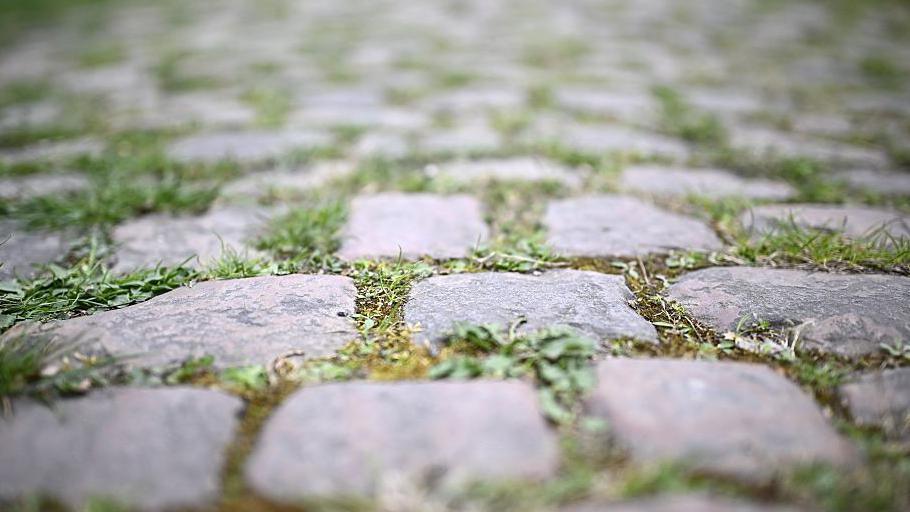 Image source, Getty ImagesImage caption,
 Le Pave at the forest of Arenberg - the stuff of nightmares for the polished Tour de France specialist
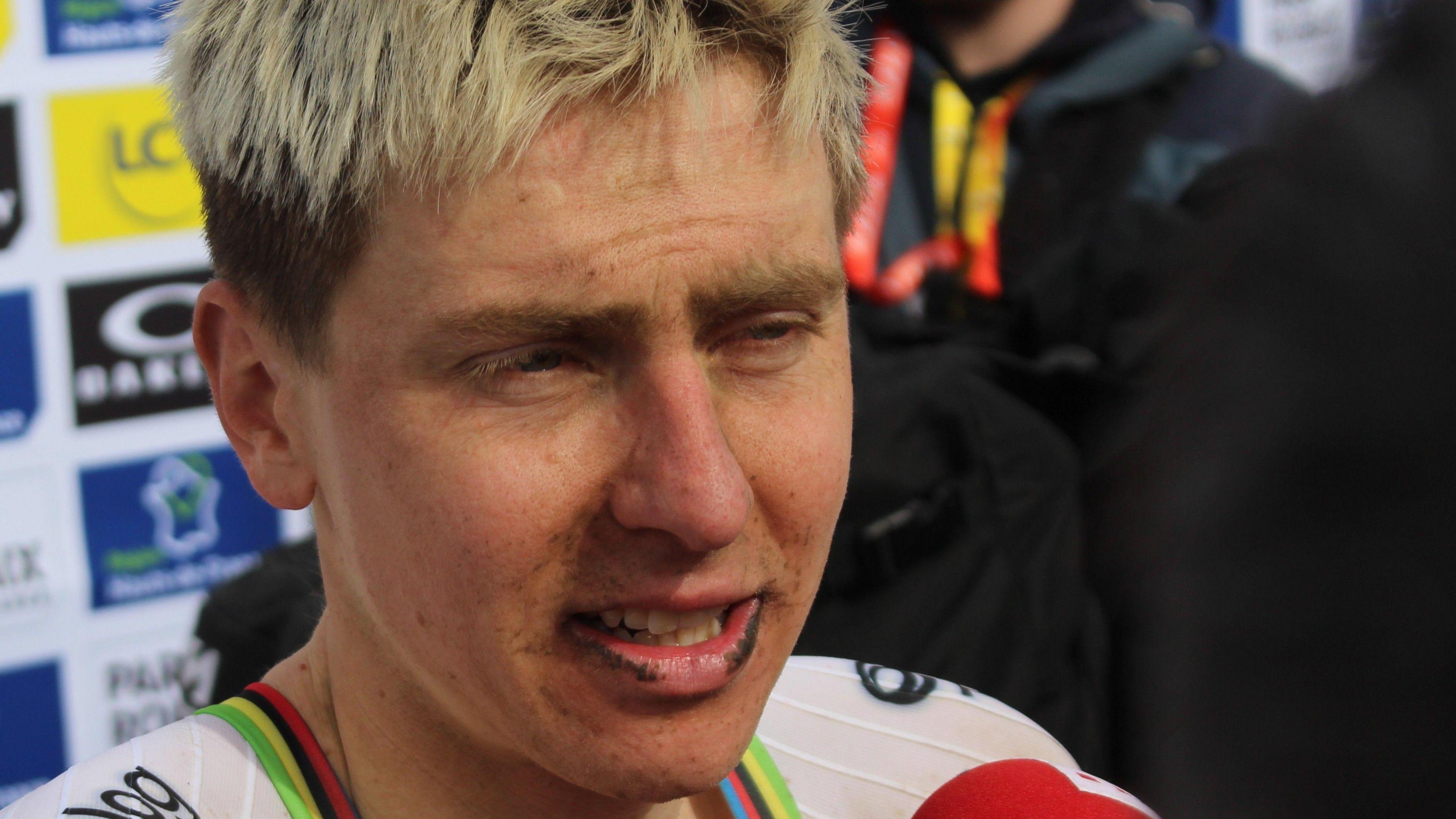 Image source, BBC SportImage caption,
 A muddied and exhausted Pogacar after the race
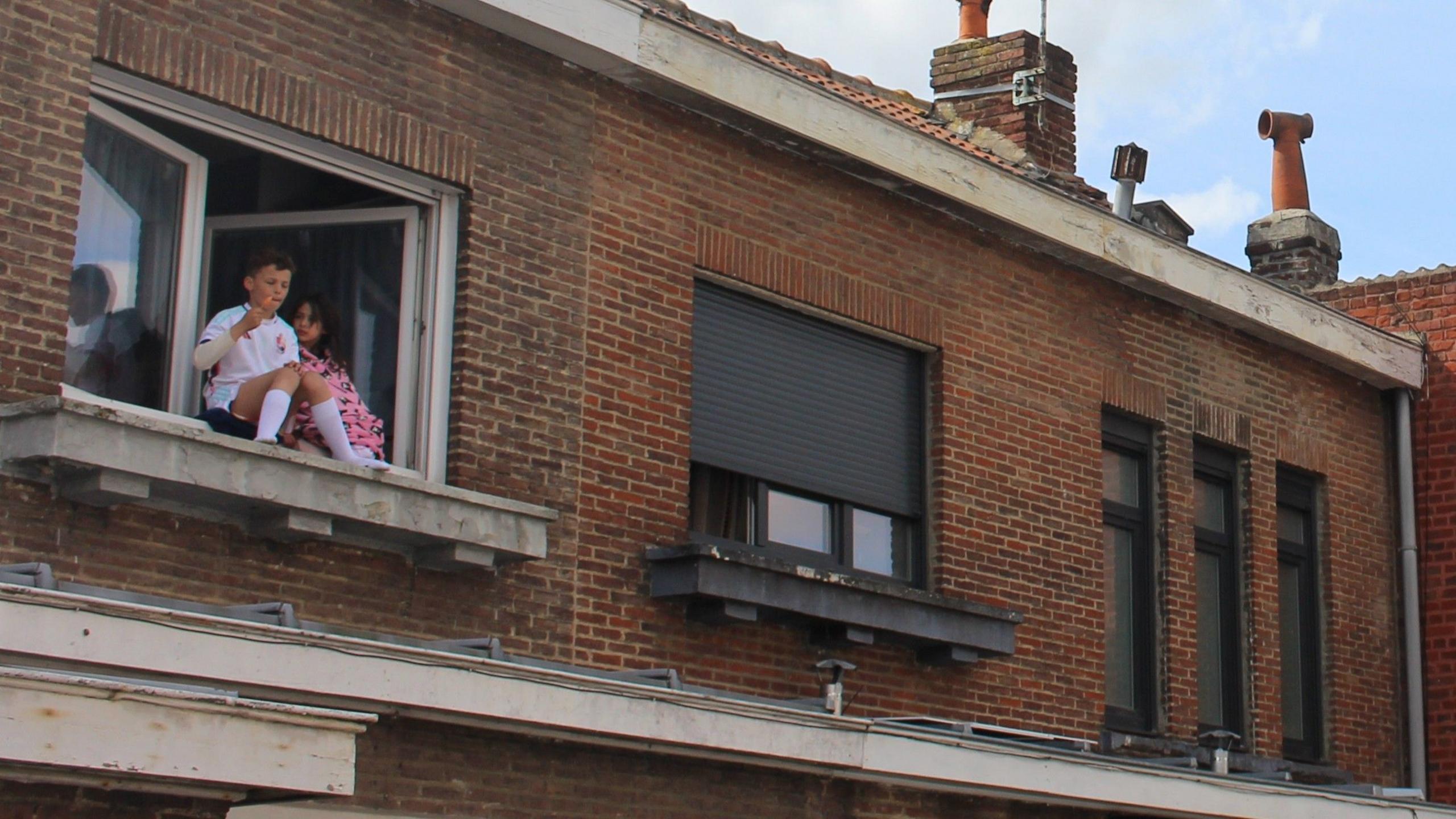 Image source, BBC SportImage caption,
 Some residents near the velodrome have a good vantage point
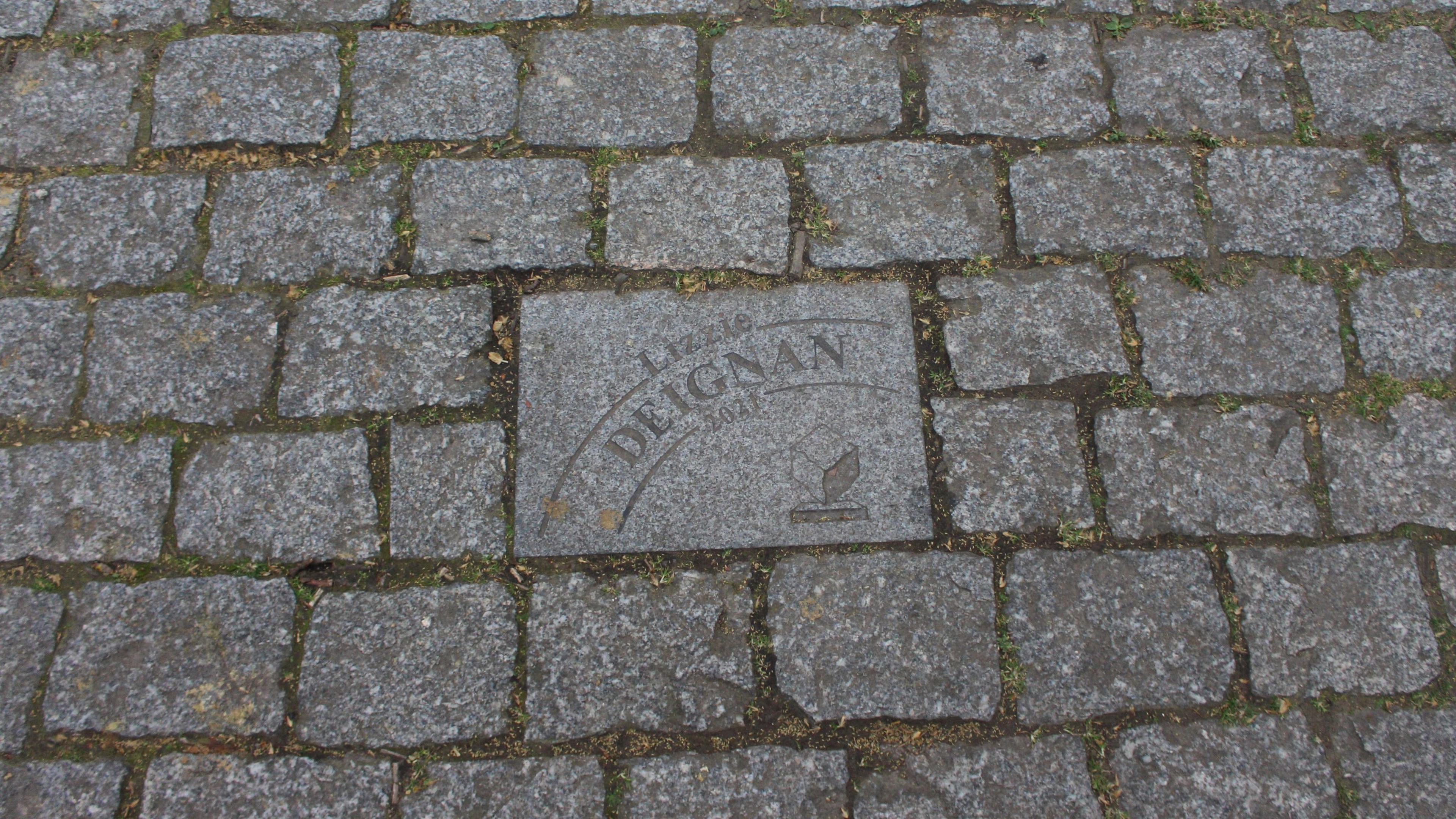 Image source, BBC SportImage caption,
 Deignan is the only Briton to have a dedicated cobble on Le Pave in Roubaix