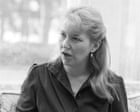
 Annie Dillard in 1983. Photograph: Bob Child/APAnnie Dillard in 1983. Photograph: Bob Child/APAnnie Dillard, Pulitzer prize-winning author of nonfiction and nature essays, dies aged 81
Pilgrim at Tinker Creek, published when Dillard was 28, skyrocketed her to become one of the most prominent nonfiction writers of her generation
Annie Dillard, author of the Pulitzer prize-winning book Pilgrim at Tinker Creek, died aged 81 at her home in South Wellfleet, Massachusetts on Tuesday.
Maggie Nelson, Dillard’s literary editor, confirmed her death to the New York Times.
Pilgrim at Tinker Creek, a nonfiction narrative Dillard wrote about the natural world surrounding her mountainous Virginia home, was published in 1974 when the young writer was just 28. The book was an instant critical and financial success, skyrocketing Dillard to becoming one of the most prominent nonfiction writers of her generation.
Tinker Creek won the 1975 Pulitzer Prize for general nonfiction, and in 1998 it was included in Modern Library’s list of 100 best nonfiction books.
Initially overwhelmed by her sudden fame and countless requests for interviews, the introspective Dillard retreated to Washington state and started splitting her time between the city of Bellingham and the islands Waldron and Lummi.
Over the years, Dillard went on to publish poetry, essays, journalism, meditations on religion, theory of literature, two novels and a bestselling autobiography. Her eerie essay, 1982’s Total Eclipse, about her experience witnessing a solar eclipse three years earlier, was chosen by Joyce Carol Oates as among the 20th century’s 100 best essays.
Dillard published her autobiography An American Childhood in 1987, which covered her years growing up during the 1950s and 1960s in the Pittsburgh, Pennsylvania area.
In 1992, she published her debut novel, The Living, a piece of historical fiction exploring the lives of European settlers and a group of Lummi natives in late 19th century Washington.
Dillard was well known throughout her career for her tremendous range as a writer. Her acute ability to capture the astonishment that humans feel in the face of wilderness and the plurality of the world left readers astonished, and her choice to live life surrounded by the wonders of nature was reflected directly in her craft.
Her work was often compared to Henry David Thoreau, the naturalist about whom she wrote her master’s thesis. Despite the association, Dillard rejected the pigeonhole label of “nature writer”, instead considering herself a theologian pondering the mystery of God and the duality of reality.
In the 1989 collection of short essays, titled The Writing Life, she wrote “how we spend our days is, of course, how we spend our lives”. Dillard spent her days outdoors taking notes and contemplating everything.
Dillard was married three times, most recently to historical biographer Robert D Richardson, whom she was married to for 32 years until his death in 2020. She had one daughter, Cody Rose, born in 1984 in Connecticut.
Explore more on these topicsShareReuse this content