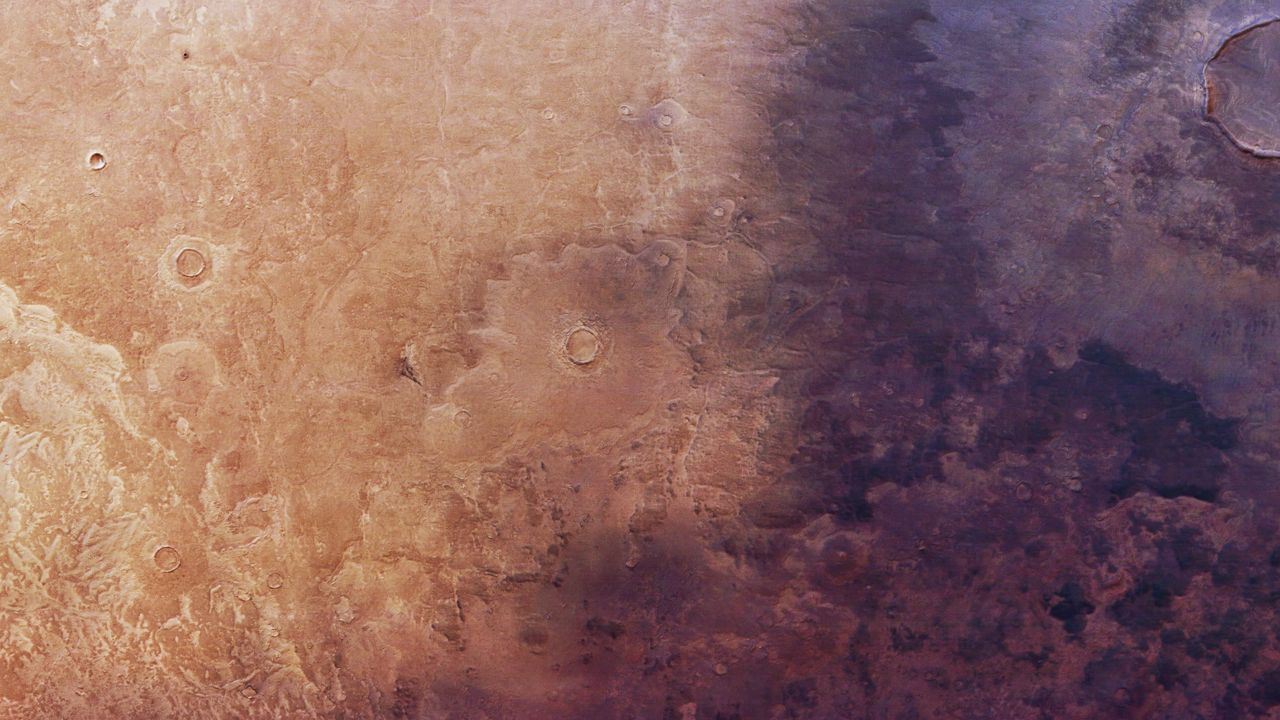
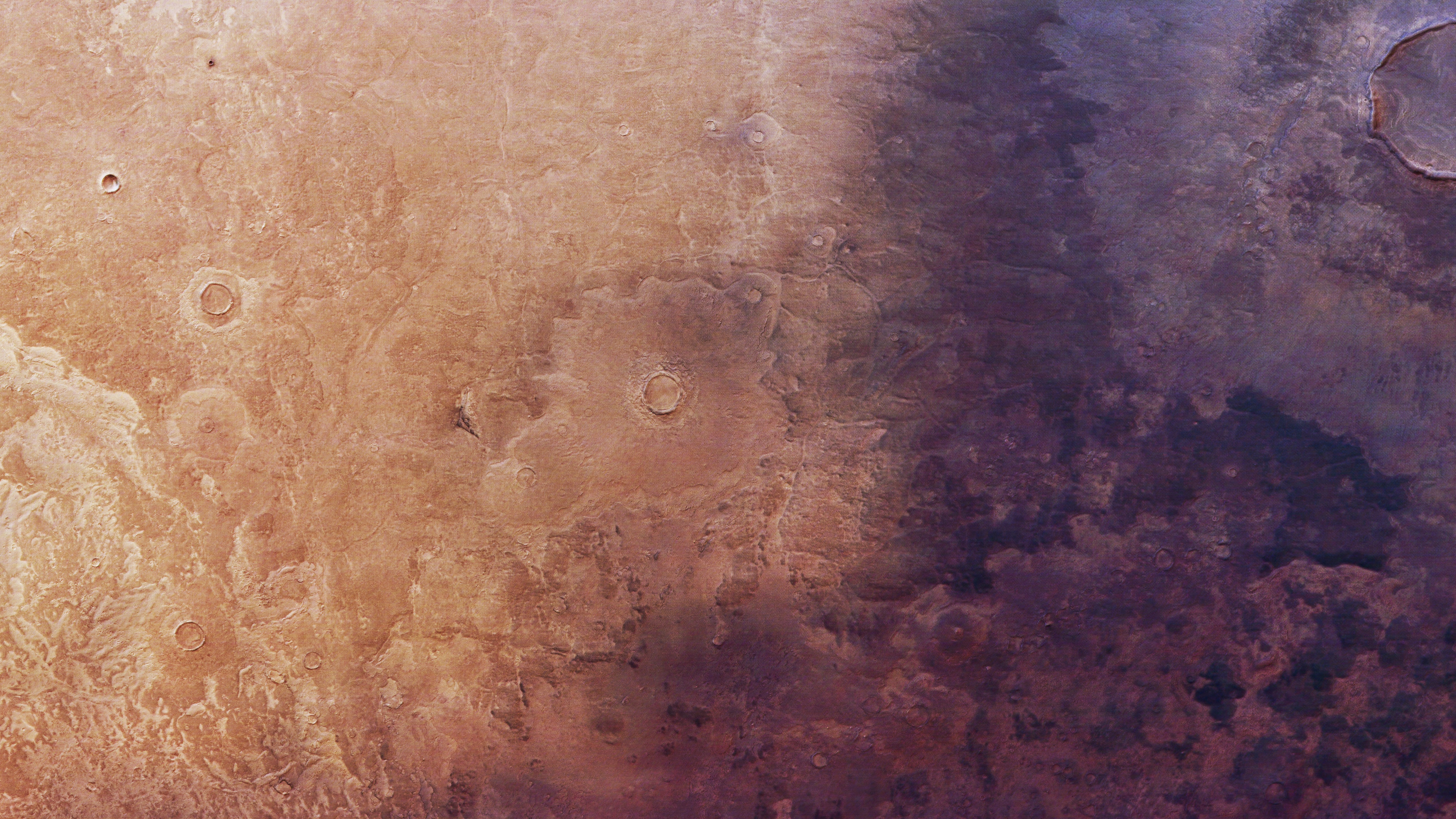
 The wide strip of land in Utopia Planitia imaged by Mars Express. The dark volcanic material is on the right, while grabens can be seen on the left. (Image credit: ESA/DLR/FU Berlin) Share this article 0 Join the conversation Follow us Add us as a preferred source on Google Newsletter Get the Space.com Newsletter
 Breaking space news, the latest updates on rocket launches, skywatching events and more!
Contact me with news and offers from other Future brands Receive email from us on behalf of our trusted partners or sponsors By submitting your information you agree to the Terms & Conditions and Privacy Policy and are aged 16 or over.You are now subscribed
Your newsletter sign-up was successful
Want to add more newsletters?
An account already exists for this email address, please log in. Subscribe to our newsletterEurope's Mars orbiter has captured high-resolution images of an ancient sea bed on the Red Planet, revealing that Mars' appearance can change over a matter of decades.
The High Resolution Stereo Camera on the veteran Mars Express mission, which launched all the way back in 2003, recently captured new views of Utopia Planitia, which is a vast northern lowland plain spanning 2,100 miles (3,300 kilometers). Utopia Planitia is thought to be the bruise left by the impact of a small dwarf planet between 4.1 and 4.3 billion years ago. After China's Zhurong rover landed in 2021, it found evidence for coastal sediments in an ancient shoreline, implying that long ago Utopia Planitia was filled with enough water to form a gigantic sea that also extended into the neighboring basin, Vastitas Borealis.
The wide strip of land in Utopia Planitia imaged by Mars Express. The dark volcanic material is on the right, while grabens can be seen on the left. (Image credit: ESA/DLR/FU Berlin)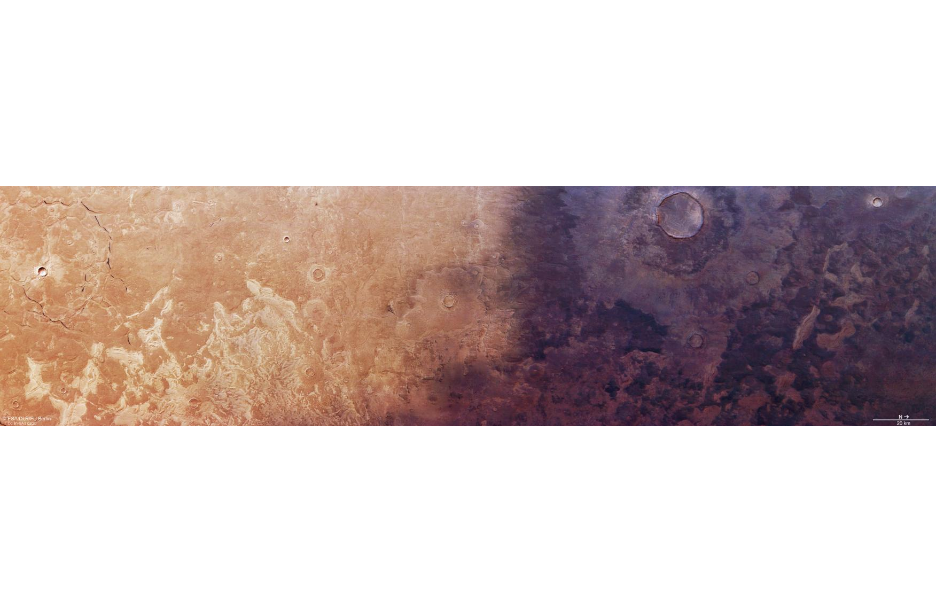
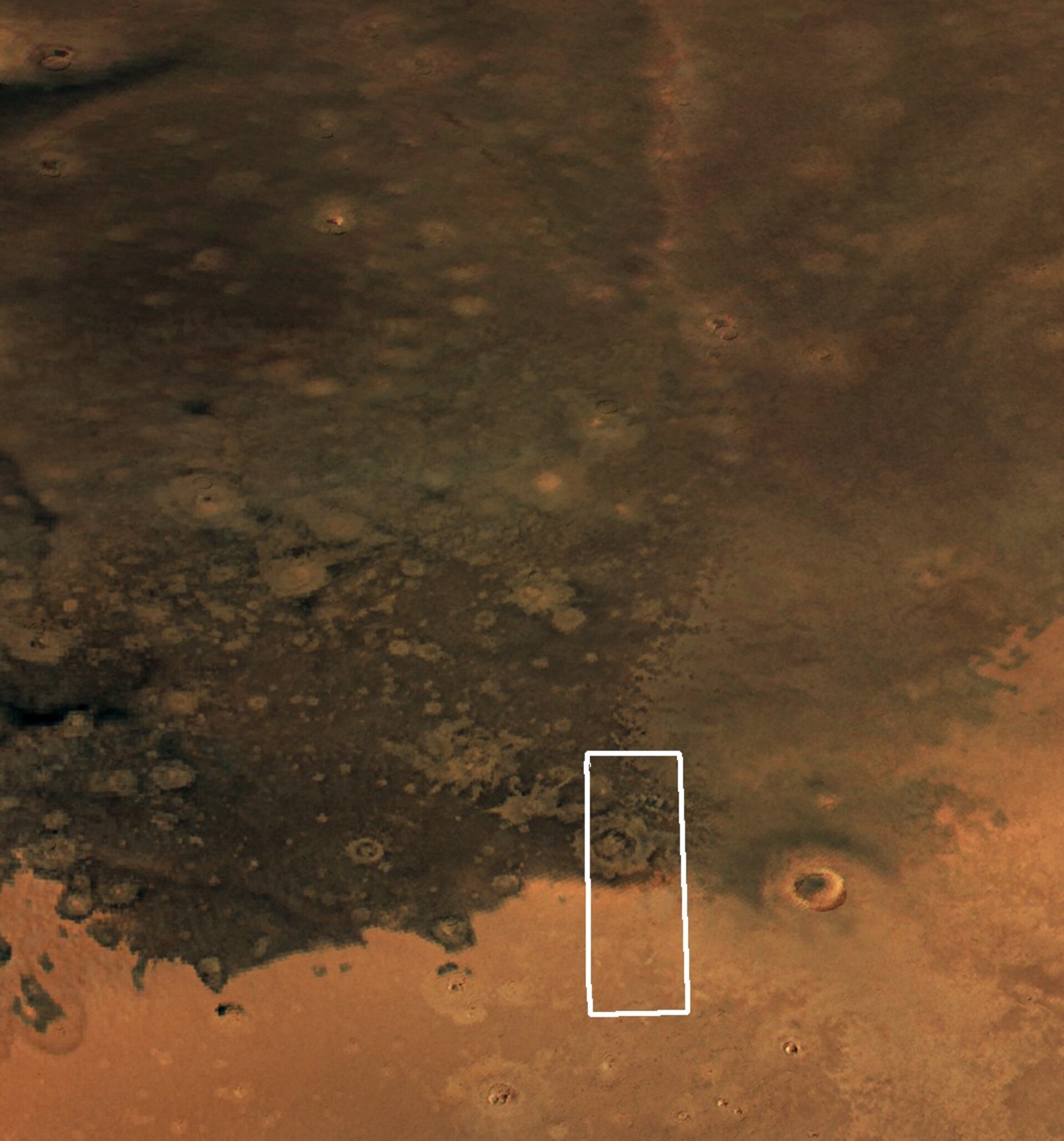
While Mars Express' new imagery, which was captured in November 2024, has revealed surface features affected by the presence of ice, it has also found changing surface features blown by the wind.
When the Viking orbiters imaged the region in the late 1970s, they saw the reddish-caramel hues of Mars contrasting with darker material — essentially ancient volcanic ash rich in minerals such as olivine and pyroxene. Mars Express has revealed how this dark material has extended across large swathes of the plain compared to the smaller area that it covered in the 1970s. Either the ash itself is being blown by the wind, scientists say, or the lighter-colored material is being scoured away to reveal the darker material beneath.
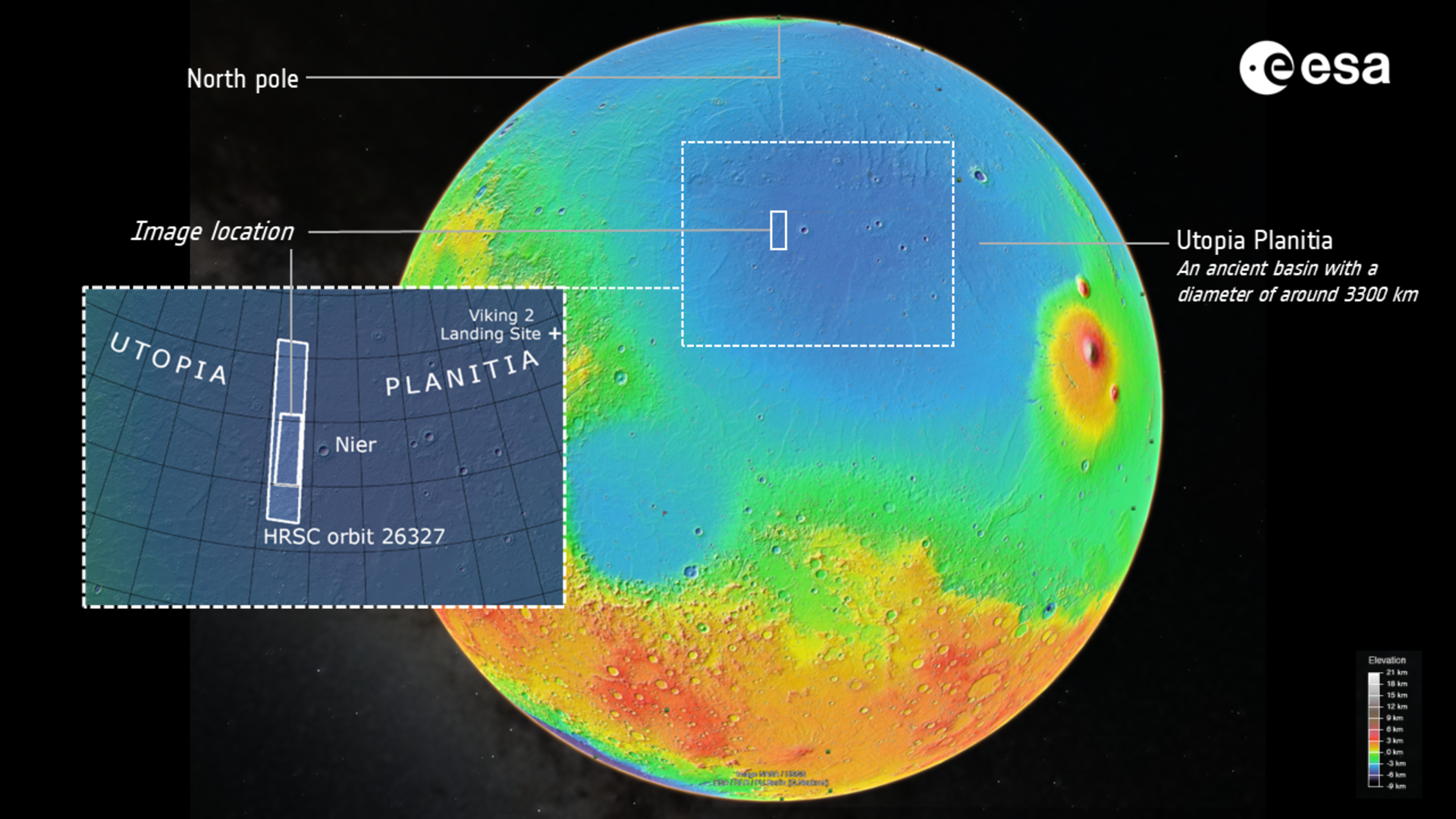
The images are a clear demonstration of how Mars is far more geologically alive than our almost unchanging moon. It's just part of what makes Mars such a fascinating world to study.
Elsewhere in the new Mars Express images are signs of hidden subsurface ice, which was discovered in 2016 by the Shallow Radar on NASA's Mars Reconnaissance Orbiter. As the ice gradually sublimates, it causes the surface above to collapse and form what are called scalloped depressions, which are pits with undulating, ribbed edges. These pits can merge to form larger depressions, with floors often covered in polygonal patterns resulting from stresses caused by water freezing and sublimating as Mars' climate changes across the aeons, triggered by changes in the Red Planet's axial tilt.
Get the Space.com NewsletterContact me with news and offers from other Future brandsReceive email from us on behalf of our trusted partners or sponsors 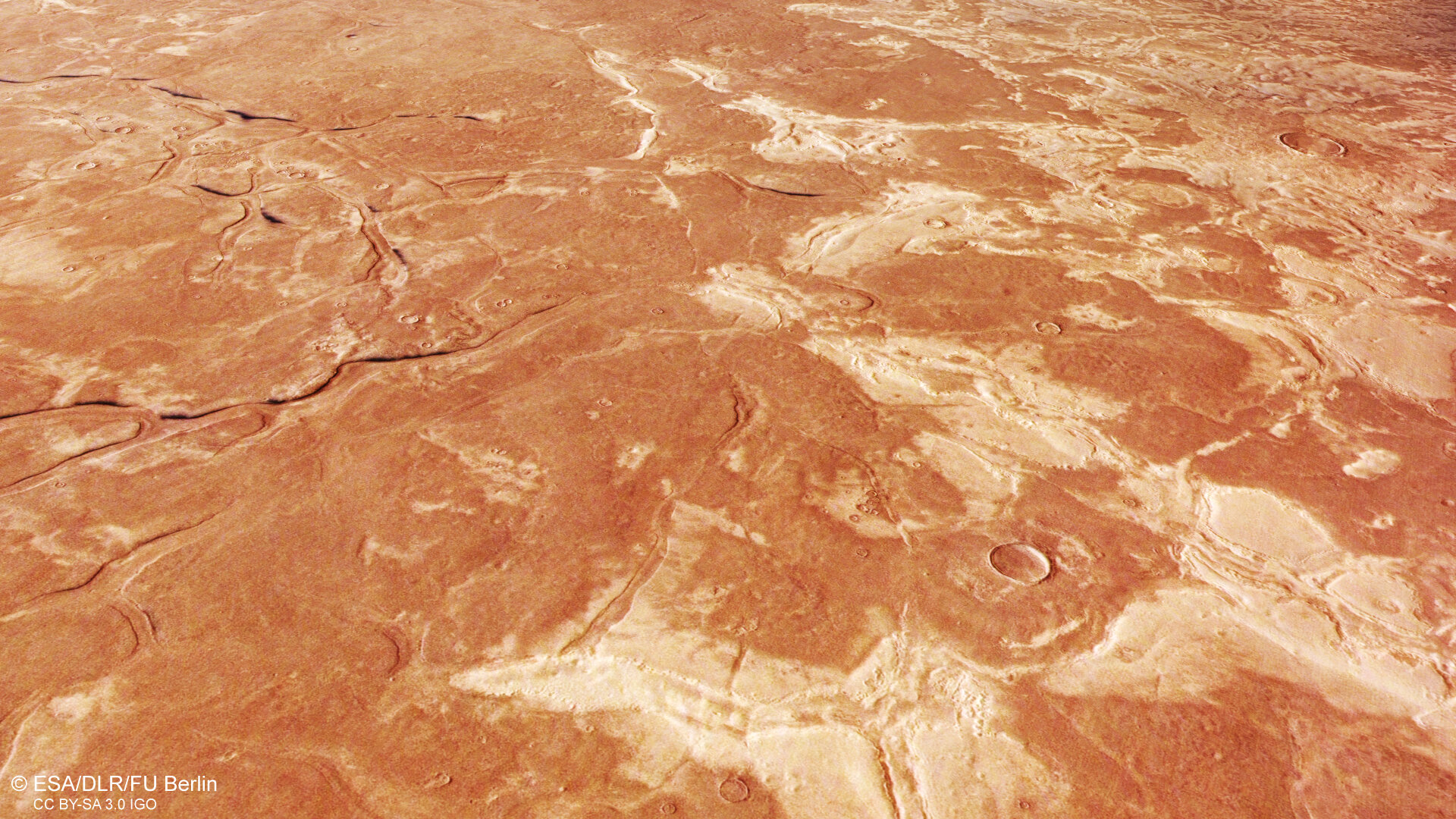
The Mars Express images also capture dark crevasses up to 12.4 miles (20 kilometers) long and 1.2 miles (2 kilometers) wide. These are called grabens and they occur when long strips of the ground slip down between faults in the crust. Grabens are commonly found on Earth, and on Mars they are usually produced when tectonic stresses pull areas of land apart, creating fault lines that cause the land in between to drop down. The grabens form a labyrinthian network and meet to form much larger versions of the polygons seen on the floors of the scalloped depressions.
These particular grabens could be much older than those depressions, however, so old that they could be connected to the loss of the sea that once filled Utopia Planitia over four billion years ago.
 Keith CooperContributing writer
Keith Cooper is a freelance science journalist and editor in the United Kingdom, and has a degree in physics and astrophysics from the University of Manchester. He's the author of "The Contact Paradox: Challenging Our Assumptions in the Search for Extraterrestrial Intelligence" (Bloomsbury Sigma, 2020) and has written articles on astronomy, space, physics and astrobiology for a multitude of magazines and websites.
View MoreYou must confirm your public display name before commenting
Please logout and then login again, you will then be prompted to enter your display name.
Logout MORE FROM SPACE... 1James Webb Space Telescope peers into a dying star surrounded by mysterious buckyballs: 'The structures we're seeing now are breathtaking'
- 2Interstellar invader comet 3I/ATLAS formed in a world much colder than the solar system
- 3NASA's TESS spacecraft discovers a weird system of exoplanets unlike anything seen before
- 4Nebula sparkles in new Hubble snapshot | Space photo of the day for April 23, 2026
- 5Japan's audacious sample-return mission to the Mars moon Phobos has made it to the launch pad