Get the world’s most fascinating discoveries delivered straight to your inbox.
Become a Member in Seconds
Unlock instant access to exclusive member features.
Contact me with news and offers from other Future brands Receive email from us on behalf of our trusted partners or sponsors By submitting your information you agree to the Terms & Conditions and Privacy Policy and are aged 16 or over.You are now subscribed
Your newsletter sign-up was successful
Want to add more newsletters?
Join the club
Get full access to premium articles, exclusive features and a growing list of member rewards.
Explore An account already exists for this email address, please log in. Subscribe to our newsletter 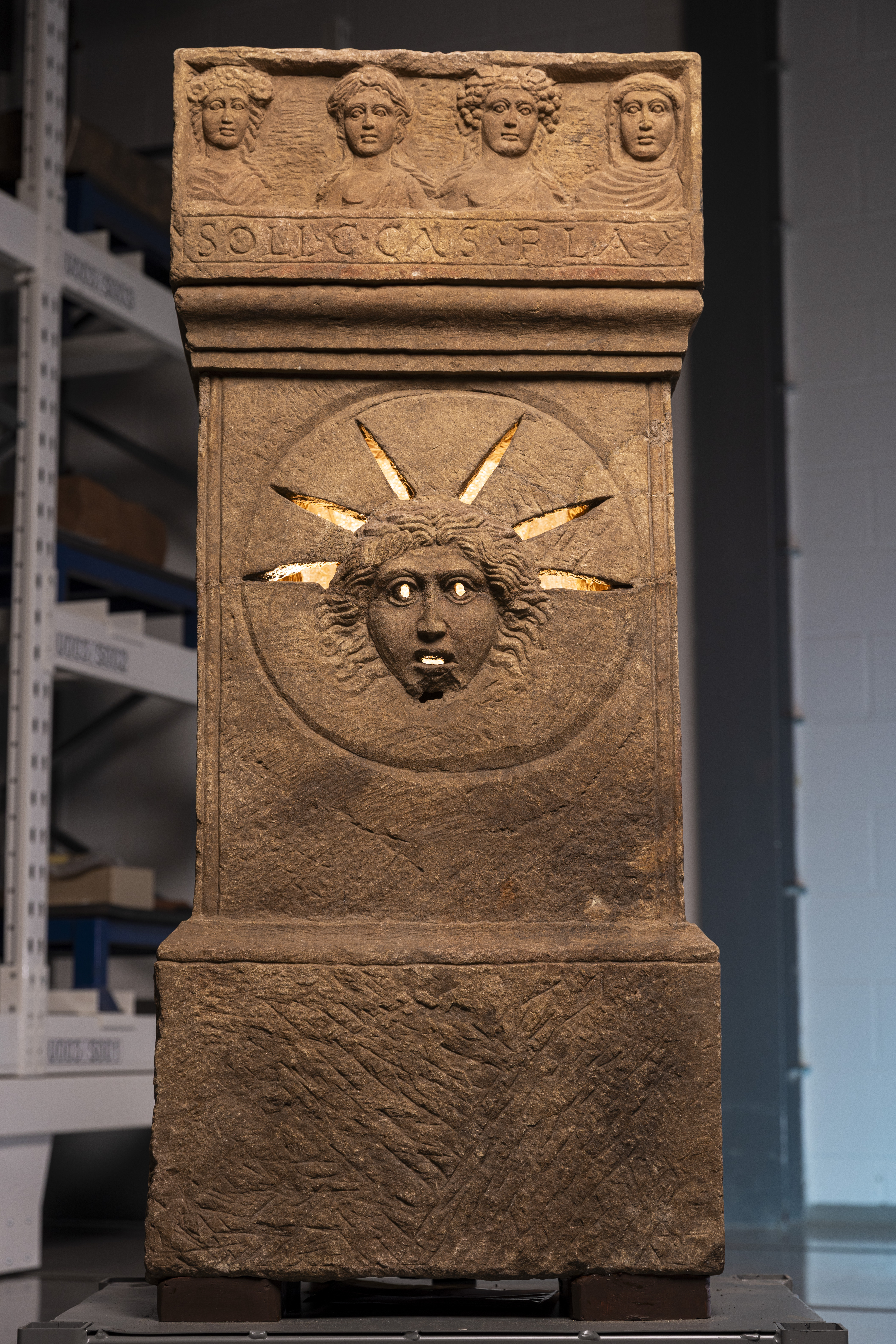
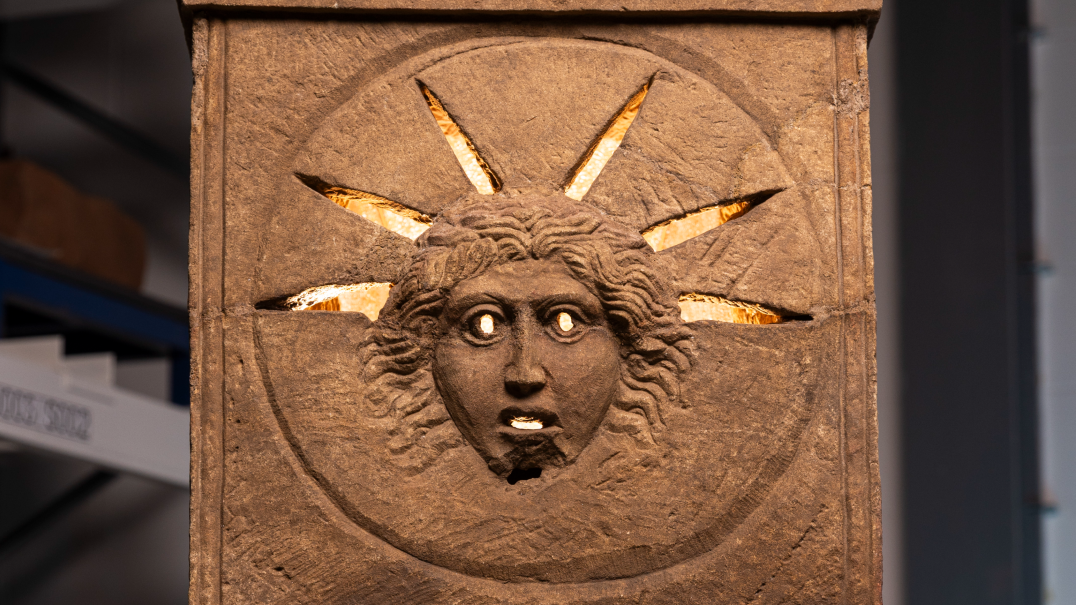
Name: Altar to Sol
What it is: A carved sandstone altar
Where it is from: Inveresk, Scotland
When it was made: Second century
Based on the inscription, the altar appears to have been dedicated by a soldier named Gaius Cassius Flavianus, who may have been in command of the Roman military base in Inveresk, Scotland. In A.D. 142, the fort at Inveresk was established along the Antonine Wall, where Roman soldiers were sent to protect the northernmost frontier of the Roman Empire.
According to National Museums Scotland, which recently acquired the Altar to Sol along with a second altar that honors the god Mithras, these monuments would have been focal points for worshippers participating in secret religious ceremonies. The mythical Mithras was born from a rock and was often depicted slaying a bull. Sol played an important role in the Mithras cult and was sometimes equated with Mithras.
MORE ASTONISHING ARTIFACTS- Idol of Pomos: A 5,000-year-old fertility figurine from Cyprus that wears a miniature version of herself on a necklace
- Beadnet dress: A 4,500-year-old ancient Egyptian funeral 'gown' that was in vogue during the Old Kingdom
- Tudor Heart: A Renaissance gold necklace featuring a French-English pun on the love between Henry VIII and his first wife, Katherine of Aragon
Temples to Mithras, called Mithraea, were always situated underground, and only men were allowed to join the mysterious cult, which purported to celebrate the triumph of light over darkness and goodness over evil.
"In the dark of the temple, you would see the rays and the eyes of the sun god glaring at you," Fraser Hunter, curator of Iron Age and Roman archaeology at National Museums Scotland, explained in a video. The altars to Sol and Mithras are unique in Scotland and point to the beliefs of soldiers stationed along the Antonine Wall. Mithras and Sol gave soldiers "a sense that there was a purpose to the world and that there was a life after death," Hunter said.
The rare carved altars will be on display at National Museums Scotland starting Nov. 14.
For more stunning archaeological discoveries, check out our Astonishing Artifacts archives.
 Kristina KillgroveStaff writer
Kristina Killgrove is a staff writer at Live Science with a focus on archaeology and paleoanthropology news. Her articles have also appeared in venues such as Forbes, Smithsonian, and Mental Floss. Kristina holds a Ph.D. in biological anthropology and an M.A. in classical archaeology from the University of North Carolina, as well as a B.A. in Latin from the University of Virginia, and she was formerly a university professor and researcher. She has received awards from the Society for American Archaeology and the American Anthropological Association for her science writing.
View MoreYou must confirm your public display name before commenting
Please logout and then login again, you will then be prompted to enter your display name.
Logout LATEST ARTICLES 1Loneliness may contribute to memory issues, but not dementia — they are 'not the same thing'
- 2Naked mole rats wage bloody wars of succession to choose a new queen — but one colony did something scientists have never seen before
- 3'The chances of you living 50 years are very small': Theoretical physicist explains why humanity likely won't survive to see all the forces unified
- 4Can the US be trusted with the moon? A law scholar raises concerns after Artemis II's success.
- 5Lyrid meteor shower 2026: See spring's first rain of 'shooting stars' peak in moonless skies