

 Eddy Chen/HBOThe storyline for Cassie, played by Sydney Sweeney, is one of the most controversial in season three
 Warning: This article contains spoilers for season three of Euphoria
Rue is swallowing balls of drugs and smuggling them between America and Mexico. Cassie is making erotic content on OnlyFans to pay for wedding flowers. Nate is losing fingers and toes in blood-soaked revenge scenes and Jules is giving up her artistic career to search for a sugar daddy.
If Euphoria once felt like an exaggerated but emotionally resonant portrait of Gen Z adolescence, its latest season has pushed that chaos to near-surreal extremes.
And after seven weeks polarising both critics and social media, the series concludes on Monday. Some viewers speculate this will be a relief to its central cast, who they say have "outgrown" the show. In fact, many fans, teens when the show launched in 2019, say they too are ready to move on.
Zendaya, Sydney Sweeney and Jacob Elordi, all now major names, star as a group of young people navigating sex, drug addiction, friendship, love and trauma. Season three picks up half a decade after the characters left high school, following them into a far darker and more fractured version of adulthood.
When Euphoria first launched, it quickly became one of the defining shows of its generation, but after a five-year break marked by strikes, rewrites and cast departures, it returned to a noticeably more divided response.
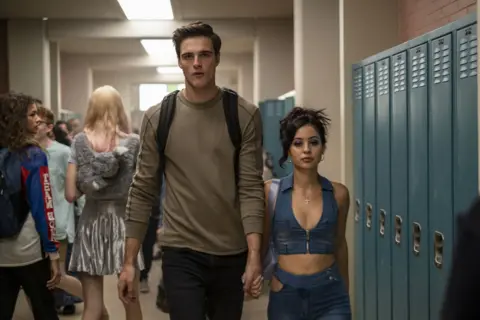 HBOSome viewers say previous seasons of the show were far more relatable and nuanced - this episode featured Jacob Elordi and Alexa Demie
In December, ahead of the season three launch, showrunner Sam Levinson said "this is our best season yet". The response from critics may not have borne that out (it has a weighted average of 56% on review aggregation site Metacritic), but so far, viewing figures are the show's highest ever.
The first episode drew a US audience of more than 12.3 million, while global viewership surpassed 20 million - a 68% increase on the season two premiere over the same period, according to Warner Bros. Discovery.
Euphoria has always thrived on viral moments, but some viewers believe certain scenes in season three have been concocted specifically with memes and social media in mind - at the expense of character and plot.
Weeks after the relevant episodes aired, my own feeds are still flooded with edits and jokes about Cassie dressing up as a baby, and Nate telling her "you've been a bad, bad dog".
'Rage bait'
Journalist and author Jess Bacon says the show "is almost rage bait at this point", arguing its apparent eagerness for viral moments has led to "a one-dimensional plot" unworthy of its heavy subject matter and star cast.
This season, she adds, "feels almost unrecognisable" compared with the "relatable or thought-provoking teenage experiences" seen in Euphoria's earlier episodes.
Fan Eve Rigby, 23, agrees: "I remember Euphoria resonating strongly within my friend group as the characters felt like a more stylised version of us as 17-year-olds, but season three is harder to resonate."
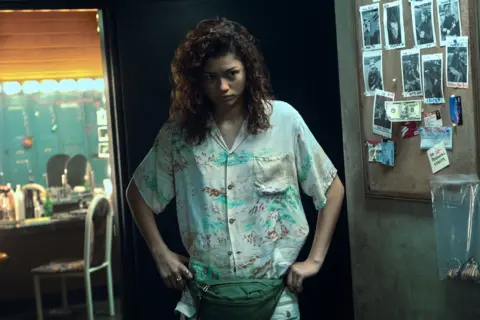 Eddy Chen/HBORue finds herself working for a drug dealer in a strip club while also reporting on his activities to the Drug Enforcement Administration (DEA)
Eve says the show's visual identity – "neon LED strip lighting, gemstone eye looks and not-so-family-friendly outfits worn to your small town's community events" - mirrored the aesthetics young people were embracing and, beneath the glitter-heavy visuals, it also reflected issues many young women recognised from their own lives.
"Cassie's objectification, Maddy's domestic abuse, Kat's body consciousness, Jules's relationship with older men, and Rue's addiction reflected things girls had experienced or seen within our circles."
By comparison, Eve says the latest season feels noticeably more detached from reality.
"Surprisingly, most of us aren't OnlyFans creators or getting kidnapped by the mob. Even Lexi's 'normal' life - a Warner Bros 9–5 while living alone in an LA apartment - would be a great gig for friends who tell me they're watching season three via TikTok clips rather than paying for another subscription."
Some fans have found the latest storylines more intense and Bacon says the show's brutality makes it "almost unwatchable" at times.
She adds that while it continues to tackle hard-hitting themes such as sex work, misogyny and tradwife culture, it no longer approaches them with the same emotional depth and "now lacks the nuance the show has been known for".
Writing in Vogue, journalist Daisy Jones criticised what she described as the series' "peculiar and persistent obsession with sex work", arguing the subject is explored in a way that now feels "dated and two-dimensional".
'The way it's always been'
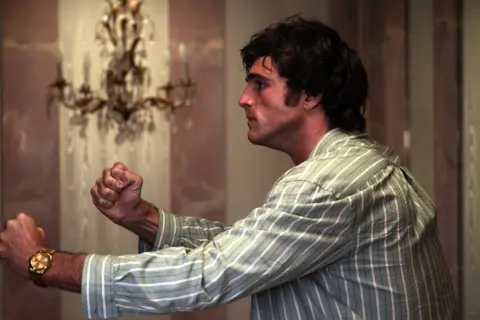 Eddy Chen/HBOIn the penultimate episode of season three, Nate is buried alive for not paying his debts
 But on the Chicks in the Office podcast, Noah Ives says the season has been growing on him and he's been "way more entertained" by the last few episodes which see Rue secretly working for the DEA, Nate being buried alive, and Cassie becoming increasingly eager for validation on OnlyFans.
"The whole group getting back together makes it way more interesting and feels somewhat like Euphoria again," he says, though he adds the plot is still "ridiculous".
Another fan said outrageous storylines were "the way it's always been" on the show.
"For the creators to make the giant leap from high school to where they are now, without missing a beat, is fantastic," they added.
Many fans have also praised the show's acting, with Sydney Sweeney and Zendaya drawing particular kudos.
Other viewers believe Euphoria's emotional depth is still alive and kicking, particularly in its portrayal of addiction.
Addiction therapist Gonzalo Sanchez argues that in earlier seasons, drug taking was "portrayed in a highly stylised and fast-paced way" but as the series has developed, "there has been a clear shift towards showing the deeper emotional and psychological realities of addiction".
"The series increasingly highlights themes that are very familiar within therapeutic work like shame, unresolved trauma and the complicated nature of recovery."
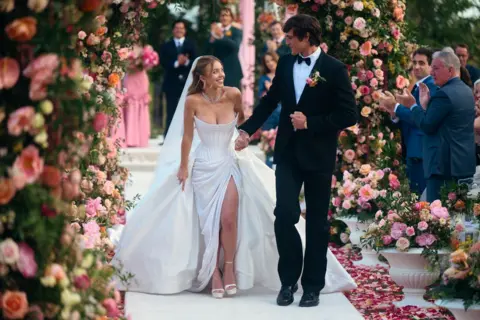 Patrick Wymore/HBOCassie and Nate's wedding was one of the most talked about moments of this series
 Many critiques of the show - accusations of style over substance, glamorising trauma and prioritising spectacle - were there from the very beginning. But in 2019, the shocks perhaps felt fresher.
When the show launched, the Guardian said it made Skins "look positively Victorian", while Time called it "the first teen drama to fully exploit the Xanax-numbed aesthetic that defines Gen Z".
In Vogue, Jones said season one storylines like Barbie Ferreira's Kat having nude photos leaked felt "pertinent and discerning", as this was before platforms like OnlyFans exploded into mainstream culture.
Levinson's continued fascination with those themes now feels "not just late, but mildly cringe-inducing", she adds.
'Four-year gap the real culprit'
James Kirkham, a brand strategist and culture commentator, agrees that the themes that once made Euphoria feel culturally defining are now more mainstream.
"The cultural conversation they were having in 2019 about identity, queerness, mental health, is now the conversation everyone is having everywhere, so the show no longer feels like a frontier."
He believes the sheer speed of online culture has fundamentally changed how audiences engage with youth-focused television.
"The four-year gap is the real culprit because in social media and streaming time, four years is like a seismic or geological shift, so audiences who fell for season one as sixth formers are now graduates."
Kirkham also says internet culture itself has fragmented since Euphoria's early seasons, making it harder for any one television show to dominate in the same way and "community on social media now barely exists in any meaningful collective sense".
Comparisons have frequently been drawn between Euphoria and Skins, the youth-focussed series that became hugely influential in the 2000s before later seasons struggled to maintain the same cultural relevance.
Kirkham says it is almost inevitable that modern youth dramas will lose relevance over time and "the miracle is when a youth show catches fire even once".
"Expecting it to do it twice, in different cultural weather, with the same writers, is always hard."
You may also be interested in


