 Agent's Take: Could Jack Campbell follow Tyler Linderbaum blueprint after Lions decline fifth-year option?
 All-Pro-caliber players in their prime rarely hit the open market, but is that Campbell's best path?
By Joel Corry May 13, 2026 at 2:49 pm ET • 7 min read Getty Images
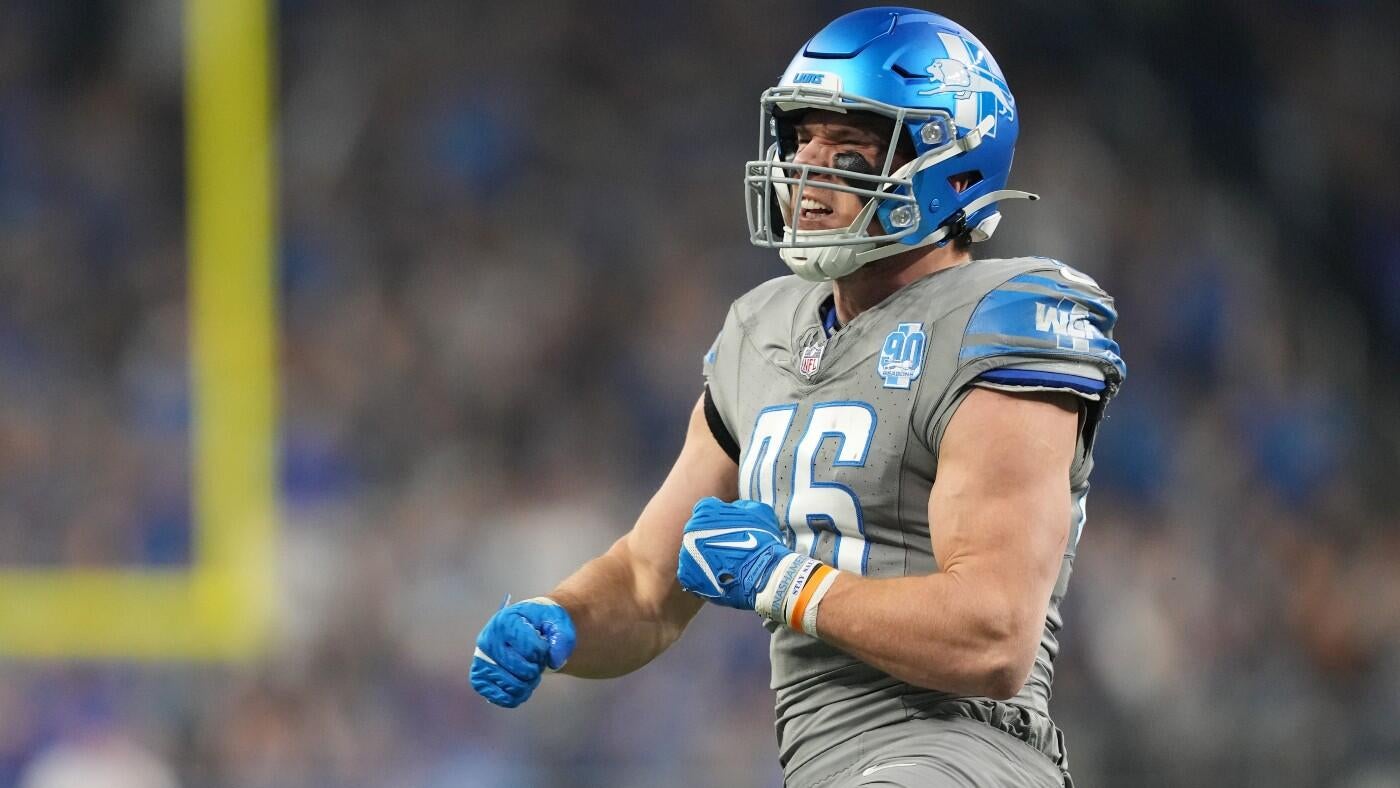
 Linebacker Jack Campbell being named to the Pro Bowl on the original ballot last season was both a blessing and a curse for the Detroit Lions. The blessing was Campbell had a breakout season, ranking second in the NFL with 176 tackles. He also had five sacks -- tied for second among off-ball linebackers -- three forced fumbles and two fumble recoveries. The 2023 first-round pick earned first-team All-Pro honors because of his efforts.
The curse was the Pro Bowl selection increased the value of Campbell's fifth-year option by $6.801 million. The amount went from $15.124 million to $21.925 million, which is the equivalent of the 2026 linebacker transition tag, because a player's performance dictates his option-year salary.
The Lions declined the fifth year in 2027. The cost doesn't reflect the off-ball linebacker market because pass-rushing 3-4 outside linebackers (i.e.; edge rushers) primarily determine the number. Fred Warner and Roquan Smith top the off-ball linebacker market with respective $21 million per year and $20 million per year deals from the San Francisco 49ers and Baltimore Ravens.
The Lions have expressed an interest in doing a long-term deal with Campbell, who now has an expiring contract and is scheduled to be an unrestricted free agent in 2027.
Safety Brian Branch and tight end Sam LaPorta, 2023 second-round picks, are also in contract years. Both are coming off season-ending injuries. Branch tore his right Achilles in early December, while LaPorta missed the last eight games after undergoing back surgery for a herniated disc. Running back Jahmyr Gibbs, a fellow 2023 first-round pick whose fifth-year option was exercised, is also in line for a new deal. Passing on Campbell's fifth year and the injuries could accelerate the Lions' negotiating timetable.
Why the Lions declined fifth-year option of All-Pro linebacker Jack Campbell, and what happens next Jordan Dajani
The dream scenario for Campbell's next contract
There are some parallels between center Tyler Linderbaum's and Campbell's situations. Linderbaum had his option year declined last offseason because the value exceeded his positional market despite being selected to the Pro Bowl for the second straight year in 2024.
Since there aren't specific option-year salaries for center, guard and tackle, the amount is the same regardless of position. A fifth year in 2026 was going to be $23.402 million when Creed Humphrey set the center market with the $18 million per year contract extension he received from the Kansas City Chiefs in 2024. The discrepancy between these two figures was 30.01%.
The Ravens predictably decided against putting a franchise tag on Linderbaum after he played out his rookie contract last season. The cost of using the designation would have been $25.773 million, $2.371 million more than the fifth-year option that the team declined.
Linderbaum broke the bank when he hit the open market. It was assumed Linderbaum would become the NFL's highest-paid center in free agency. Nobody expected him to get a three-year, $81 million contract averaging $27 million per year from the Las Vegas Raiders, resetting the center market by a whopping 50%.
Linderbaum apparently had his sights set on becoming the league's highest-paid interior offensive lineman. That had been Dallas Cowboys guard Tyler Smith, who signed a four-year, $96 million extension averaging $24 million per year in September shortly after the 2025 regular season started.
Linderbaum's $81 million is practically fully guaranteed. His injury-guaranteed $21 million base salary in 2028 becomes fully guaranteed next March on the third day of the 2027 league year. Linderbaum also has a clause in his contract preventing the Raiders from designating him as a franchise or transition player in 2029.
Where Campbell's true market probably lands
Campbell has surely taken note of what happened with Linderbaum. All-Pro-caliber players in their prime, like Campbell and Linderbaum, rarely become unrestricted free agents. This could lead Campbell to test the open market unless the Lions are willing to make him the league's highest-paid off-ball linebacker by a significant margin.
The refusal to exercise Campbell's fifth-year option for 4.41% more than the top of market suggests an unwillingness to do such a thing. Since the Lions didn't want to pay Campbell a fully guaranteed $21.925 million in 2027, there probably isn't much enthusiasm for giving him a long-term deal averaging the same or more. The Lions can't afford to take a hard-line negotiating stance with Campbell, though, after Alex Anzalone's departure to the Tampa Bay Buccaneers in free agency.
Campbell's salary floor should be Azeez Al-Shaair's new deal with the Houston Texans. Al-Shaair, who made the Pro Bowl for the first time in 2025, signed a three-year, $54 million extension with $45.75 million in guarantees, of which $38.75 million was fully guaranteed at signing. The deal makes Al-Shaair the NFL's third-highest-paid off-ball linebacker at $18 million per year.
The Lions would be reluctant to put a franchise tag on Campbell by the deadline early next March, even if he is named 2026's NFL Defensive Player of the Year. The current linebacker franchise tag is $26.865 million and will surely be more in 2027
The off-ball linebacker market has been stagnant for several years. Bobby Wagner set the market in 2019 with his $18 million per year contract extension, a deal that, if done today, would put him in a tie for the third-highest-paid off-ball linebacker with Al-Shaair
In the seven years since Wagner signed, the top of market has only moved 16.67%. By contrast, the salary cap has gone from $188.2 million in 2019 to $301.2 million currently -- a 60.04% increase. Wagner's deal adjusted for salary cap inflation is $28.8 million per year.
It's a completely different salary landscape than when Wagner did his deal. Wagner's extension made him the league's sixth-highest-paid defensive player. At $21 million per year, Warner was tied with cornerback Jaire Alexander and edge rusher Trey Hendrickson as the NFL's 30th-highest-paid defensive player upon signing. Warner is now tied with Tennessee Titans defensive tackle John Franklin-Myers as the league's 45th-highest-paid defensive player.
The largest individual off-ball linebacker market increase in recent years was Warner's 5.81% when he replaced Wagner as the highest paid at $19.045 million per year in 2021. The average increase when setting the market after Wagner signed is 3.91%. Based on this trend, $21.825 million per year would be Detroit's salary ceiling for Campbell if willing to reset the market with him.
Should Campbell bet on himself or stay in Detroit?
The off-ball linebacker market is long overdue for a major reset, as the last one occurred in 2019. Hall of Famer Luke Kuechly was the highest paid at $12,359,059 per year when the 2018 season playoffs ended. Wagner's deal was 45.64% more than Kuechly's. C.J. Mosley did most of the heavy lifting in 2019. Kwon Alexander briefly became the highest paid at $13.5 million per year in free agency when he signed with the San Francisco 49ers. The New York Jets signed Mosley, who was also an unrestricted free agent, to a five-year, $85 million contract averaging $17 million per year shortly thereafter.
Linderbaum may have had the perfect storm for a massive reset of the center market in free agency. The Ravens wanted to keep him, evident by a four-year, $88 million offer averaging $22 million per year that was reportedly made prior to free agency. Linderbaum had at least two other serious suitors: the Raiders and Washington Commanders.
The free-agent off-ball linebacker market has been fickle. Devin Lloyd had a breakout 2025 season after the Jacksonville Jaguars declined his fifth-year option. After earning second-team All-Pro honors last season, Lloyd signed a three-year, $42 million contract averaging $14 million per year with the Carolina Panthers in free agency. Incentives make Lloyd's deal worth as much as $45 million.
Zack Baun was outstanding in 2024, becoming the first player to ever record at least 150 tackles and five or more forced fumbles in a season. In addition to being named to the Pro Bowl and first-team All-Pro, Baun was an NFL Defensive Player of the Year finalist. He returned to the Philadelphia Eagles in March 2025 on a three-year, $51 million deal averaging $17 million per year.
Almost all the market-setting off-ball linebacker deals in recent years have been re-signings (Smith, Wagner, Warner, etc.). The ink was barely dry on Warner's contract in 2021 when Shaquille Leonard received a five-year, $98.5 million extension averaging $19.7 million per year from the Indianapolis Colts. The major exception was Mosley leaving the Ravens for the Jets in free agency.
The biggest deal for an off-ball linebacker switching teams in free agency belongs to Tremaine Edmunds. He signed a four-year, $72 million contract averaging $18 million per year with the Chicago Bears in 2023 after playing his first five NFL seasons with the Buffalo Bills. Mosley is the only other off-ball linebacker to sign for more than $15 million per year when switching teams.
Campbell runs the risk of overplaying his hand by playing out his rookie contract. A 2026 season comparable to 2025 might not pay big dividends like Linderbaum's, although a massive off-ball linebacker market reset is clearly warranted. Off-ball linebacker history suggests Campbell's best deal will likely come from the Lions. That's something Campbell should take into consideration.
Join the Conversation comments