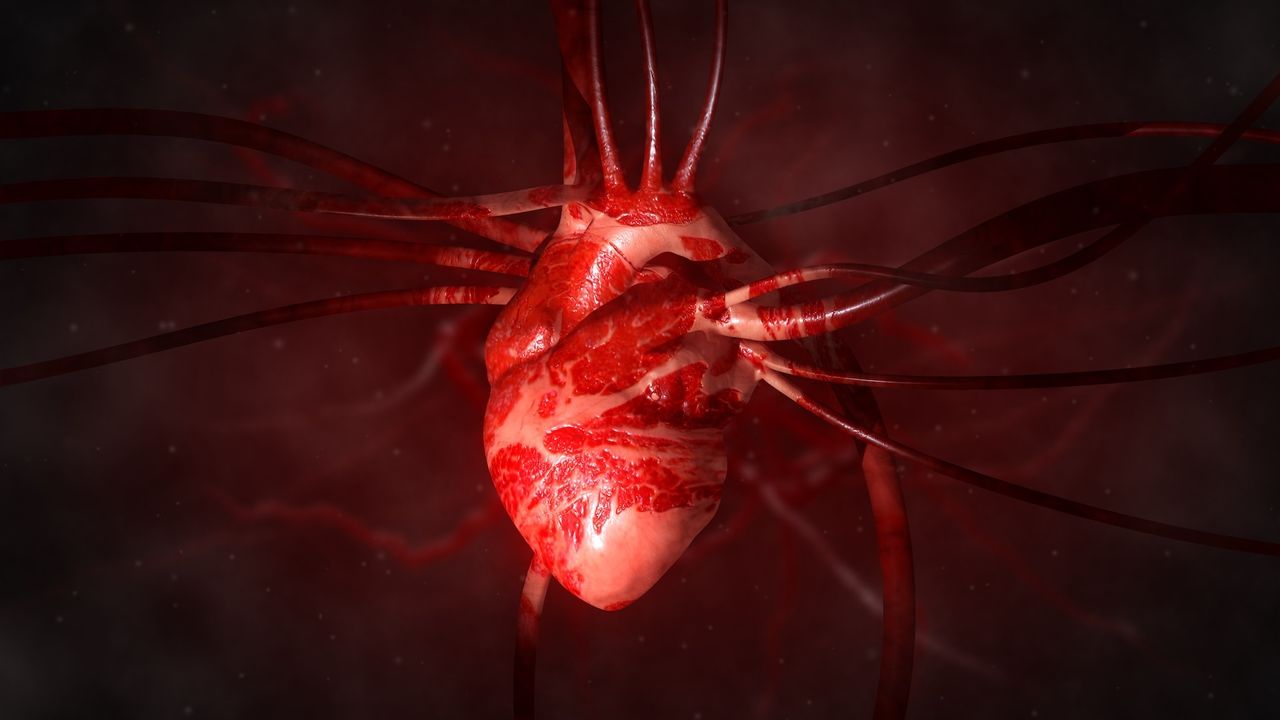
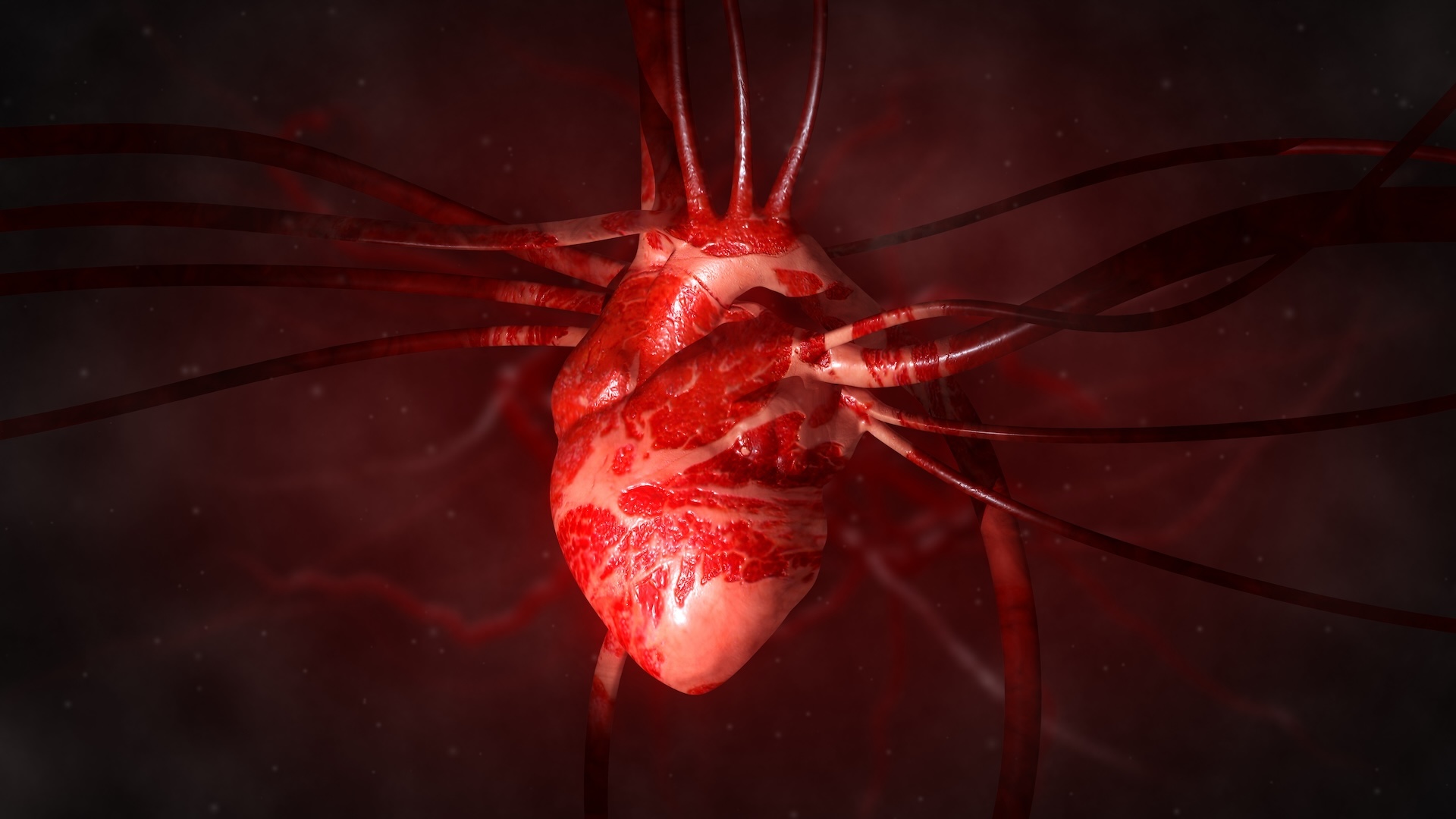
 A new study suggests that an mRNA-like treatment could help heal heart muscle after a heart attack. (Image credit: Noctiluxx via Getty Images) Share this article 0 Join the conversation Follow us Add us as a preferred source on Google Newsletter Get the Live Science Newsletter
 Get the world’s most fascinating discoveries delivered straight to your inbox.
Become a Member in Seconds
Unlock instant access to exclusive member features.
Contact me with news and offers from other Future brands Receive email from us on behalf of our trusted partners or sponsors By submitting your information you agree to the Terms & Conditions and Privacy Policy and are aged 16 or over.You are now subscribed
Your newsletter sign-up was successful
Want to add more newsletters?
Join the club
Get full access to premium articles, exclusive features and a growing list of member rewards.
Explore An account already exists for this email address, please log in. Subscribe to our newsletterA single shot of self-amplifying RNA can repair tissue damage from a heart attack, new research in pigs and mice shows.
It can take weeks or months to recover from a heart attack, but the new study explored a novel way to boost the production of a natural heart-repairing hormone with a single injection. Although the shot hasn't been tested in humans yet, researchers believe it could one day offer hope for a faster recovery.
Article continues belowA heart attack is often caused by a blocked artery that prevents oxygen-rich blood from reaching the heart muscle. While surgery can remove the blockage, the heart muscle itself also needs to recover from the oxygen starvation. If it doesn't heal quickly enough, scar tissue will take its place, which is less effective at pumping blood and may precipitate heart failure.
''Heart disease is still the number one killer in the U.S.,'' said Ke Cheng, a biomedical engineer at Columbia University and senior author of the new study. Repairing heart muscle cells after a heart attack could reduce the risk of death from heart failure, but it comes with a challenge. ''It is very hard to deliver drugs to the heart without invasive procedures,'' Cheng told Live Science.
In the study, published March 5 in the journal Science, Cheng and his collaborators showed that a single injection of self-amplifying RNA (saRNA) in the muscle tissue of the hind leg could heal heart muscle cells in mice and pigs by increasing levels of a hormone called atrial natriuretic peptide (ANP).
From studying mice, researchers learned that ANP levels are much higher in newborns than in adults — a difference they attributed to ANP playing a role in heart development. This inspired Cheng and colleagues to see if it was possible to increase ANP levels temporarily in adult mice to help heal the heart. ''We wanted to see if we can supplement ANP with self-amplifying RNA,'' Cheng said.
Sign up for the Live Science daily newsletter nowContact me with news and offers from other Future brandsReceive email from us on behalf of our trusted partners or sponsorsWhen injected, the saRNA instructs muscle tissue to produce a molecule called proANP, which enters the bloodstream and is converted to ANP once it reaches the heart.
The mechanism is similar to how mRNA vaccines work. Like mRNA, saRNA includes the instructions to make a protein. Both mRNA and saRNA degrade within a few days, but saRNA instructs the cell to make more copies of itself so it can keep renewing and producing protein for about four weeks.
Self-amplifying RNA is similar to mRNA, and has been approved for use in COVID-19 vaccines used in Europe and Japan. (Image credit: SOPA Images via Getty Images)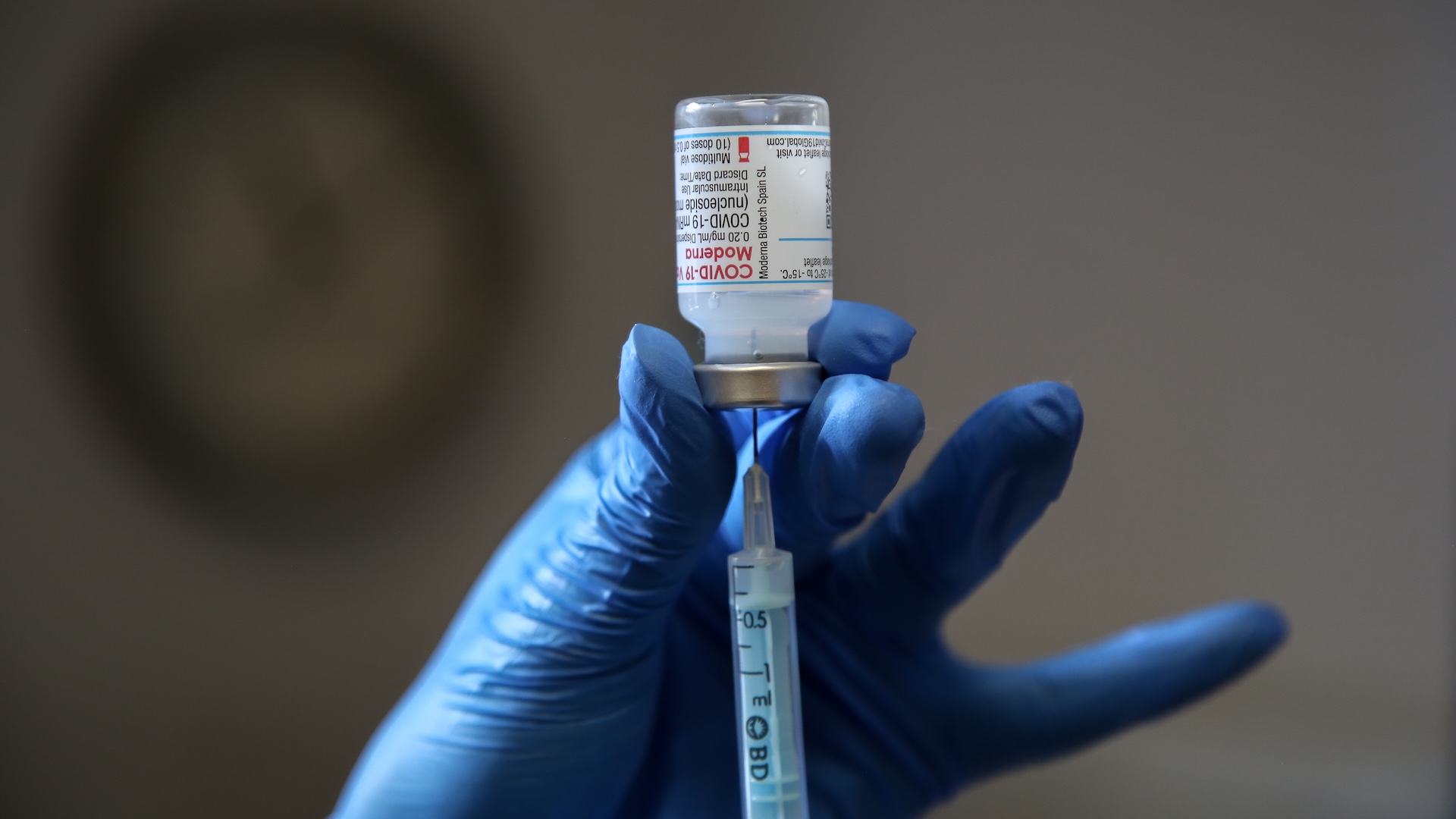
The first saRNA-based COVID-19 vaccine was approved for use in Japan and Europe, but saRNA has never been used in heart treatment before.
''I think this is a perfect use of saRNA,'' said Anna Blakney, a biomedical engineer at the University of British Columbia who studies saRNA but was not involved with the research. She pointed out that mRNA doesn’t work for studies like this because it disappears so quickly. That is enough for vaccines to activate the immune system, but for applications that need larger amounts of protein, saRNA works better.
RELATED STORIES—An experimental mRNA treatment counters immune cell aging in mice
Although this new method of increasing ANP has not been tested in humans, it helps heart cells recover in mice and pigs. Since saRNA is effectively a longer form of mRNA, it uses the same delivery system as COVID-19 vaccines, which bodes well for the safety of the injection itself. Nonetheless, future studies would still need to determine what dose of ANP is safe and effective in people.
''We do not yet exactly know what the mechanism would be that would exert an advantage for the patients,'' said Dr. Dan Atar, a professor of cardiology at Oslo University Hospital who was not involved with the study. Previous studies that treated heart attack patients with natriuretic peptides (like ANP) did not help recovery, he noted, so this new single-shot delivery method would need to be proven in clinical trials.
Much more research is still needed for this potential treatment, including trials to confirm the mechanism, test the injection's safety and monitor its effects. But if it passes these steps, it could offer a promising avenue for healing the heart after a heart attack.
Article SourcesZhang, K., Tao, H., Zhu, D., Yue, Z., Hu, S., Wu, Y., Yan, N., Hu, Y., Liu, S., Liu, M., Vahl, T. P., Ranard, L. S., Cheng, X., Romanov, A., Liu, J., Zhang, S. W., Li, Y., Lu, C., Shen, M., . . . Cheng, K. (2026). Single intramuscular injection of self-amplifying RNA of Nppa to treat myocardial infarction. Science, 391(6789), edau9394. https://doi.org/10.1126/science.adu9394
 Eva AmsenLive Science Contributor
Eva Amsen is a science writer in London. Her articles about biology, chemistry, environmental sciences and the overlap of science and the arts have appeared in Undark, The Observer (Guardian), Nature, Hakai, Nautilus, Forbes.com and other publications. Eva has won an Association of British Science Writers award in the Opinion/Essay category in 2020, and that same year received a journalism grant from Falling Walls. She has a Ph.D. in biochemistry from the University of Toronto.
View MoreYou must confirm your public display name before commenting
Please logout and then login again, you will then be prompted to enter your display name.
Logout LATEST ARTICLES 1El Niño: Facts, news, features and articles about the climate cycle that impacts weather patterns around the globe
- 2Live Science Today: 'Hexagonal' diamonds and fish scale down
- 3Equestrian statue of Marcus Aurelius: The only surviving larger-than-life-size statue of a pagan Roman emperor — a rarity that Michelangelo refurbished
- 4Measles' resurgence in the US is a grim sign of what's coming
- 5The government is very serious about UFOs. So why are researchers being stymied?