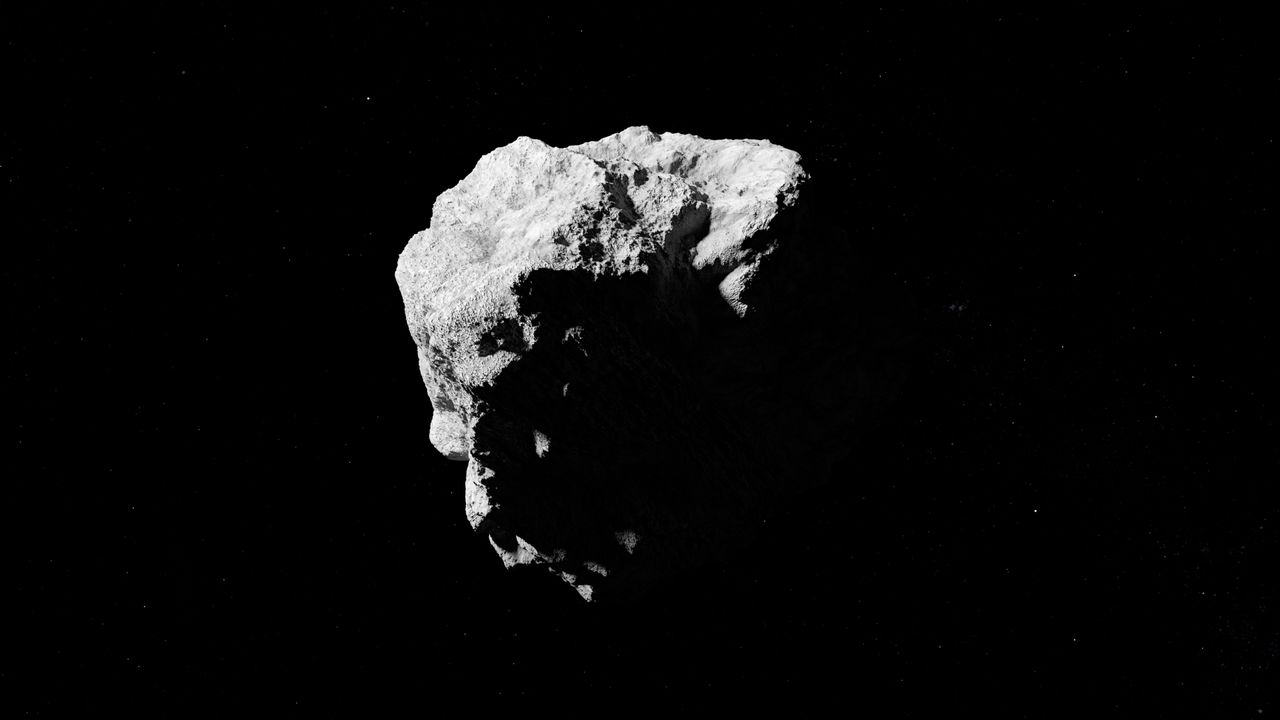
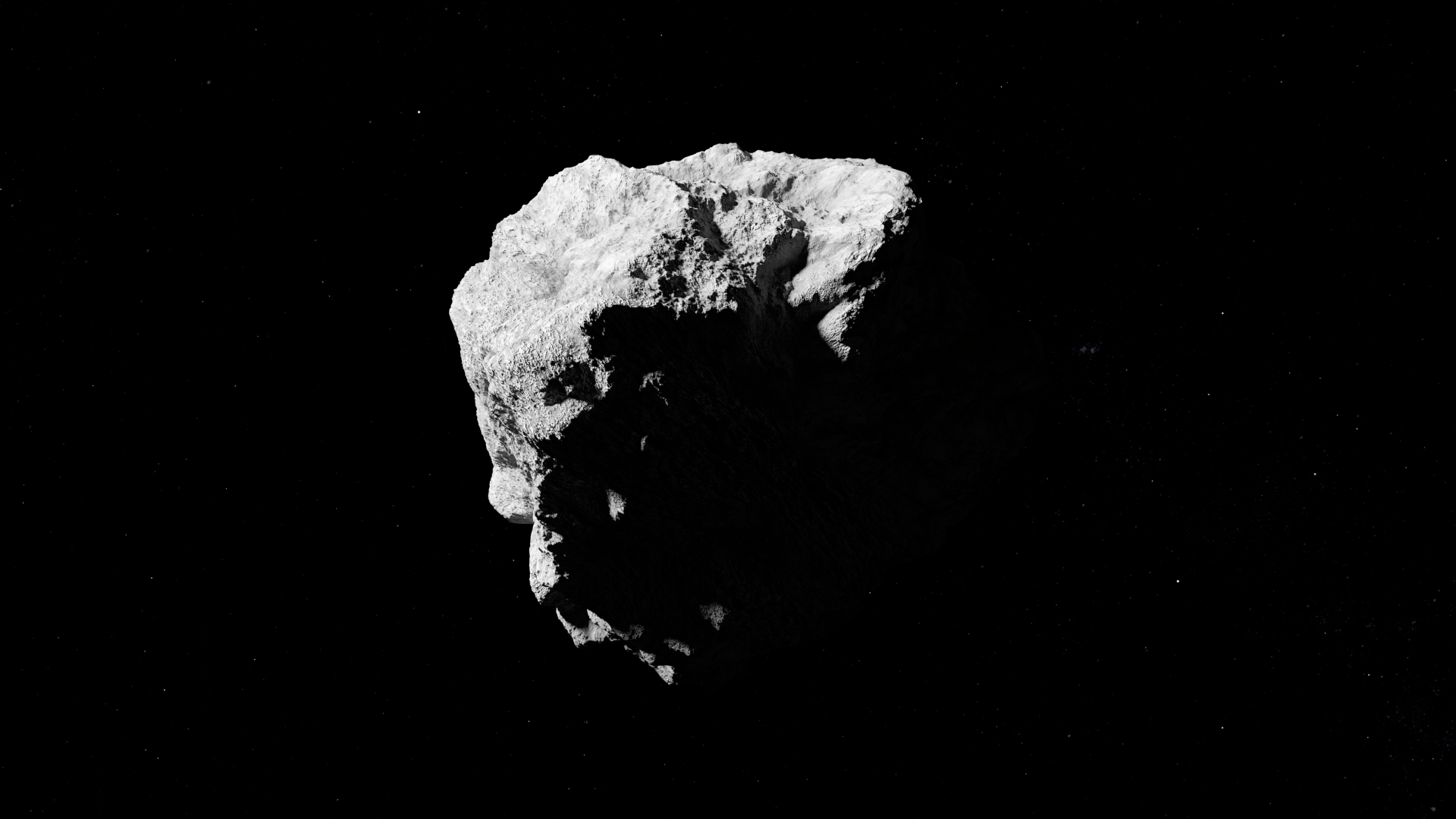
 An artist's impression of a near-Earth asteroid. (Image credit: HYPERSPERE/SCIENCE PHOTO LIBRARY via Getty Images) Share this article 0 Join the conversation Follow us Add us as a preferred source on Google Newsletter Get the Space.com Newsletter
 Breaking space news, the latest updates on rocket launches, skywatching events and more!
Contact me with news and offers from other Future brands Receive email from us on behalf of our trusted partners or sponsors By submitting your information you agree to the Terms & Conditions and Privacy Policy and are aged 16 or over.You are now subscribed
Your newsletter sign-up was successful
Want to add more newsletters?
An account already exists for this email address, please log in. Subscribe to our newsletterA house-size asteroid will make a close pass of Earth and the moon tonight (April 9), passing a little over half the distance to the moon as it buzzes the southern hemisphere at a blistering speed of 28,030 miles per hour (45,109 kilometers per hour).
The asteroid, designated 2026 GD, was discovered on Monday (April 6) and is estimated to be 16 meters (54 feet) in diameter. The solar system wanderer will make its closest approach to Earth at 6:59 p.m. (2259 GMT) on April 9, when it will pass 155,760 miles (250,000 km), or 0.65 lunar distances, while moving at 28,030 miles per hour (45,109 kilometers per hour).
The asteroid will also pose no threat to the crew of the Artemis 2 lunar mission, which is currently travelling between the moon and Earth ahead of its scheduled parachute-assisted splashdown off the coast of California on Friday (April 10).
Following the flyby, 2026 GD will continue along a 644-day elliptical path that takes it beyond the orbit of Mars before careening back towards the sun. Its next planetary encounter won't come until July 2031, when it will travel the equivalent of 25 lunar distances from Venus.
2026 GD's size and close orbit take it close enough to Earth to warrant a place on the European Space Agency's "Risk List" — a catalogue of near-Earth objects that pose a non-zero impact probability. Even so, it poses a cumulative impact probability of just 1/124,378 for orbits that will take it close to Earth between the years 2082 and 2124, according to ESA.
Get the Space.com NewsletterContact me with news and offers from other Future brandsReceive email from us on behalf of our trusted partners or sponsors Anthony WoodSkywatching Writer
Anthony Wood joined Space.com in April 2025 after contributing articles to outlets including IGN, New Atlas and Gizmodo. He has a passion for the night sky, science, Hideo Kojima, and human space exploration, and can’t wait for the day when astronauts once again set foot on the moon.
View MoreYou must confirm your public display name before commenting
Please logout and then login again, you will then be prompted to enter your display name.
Logout MORE FROM SPACE...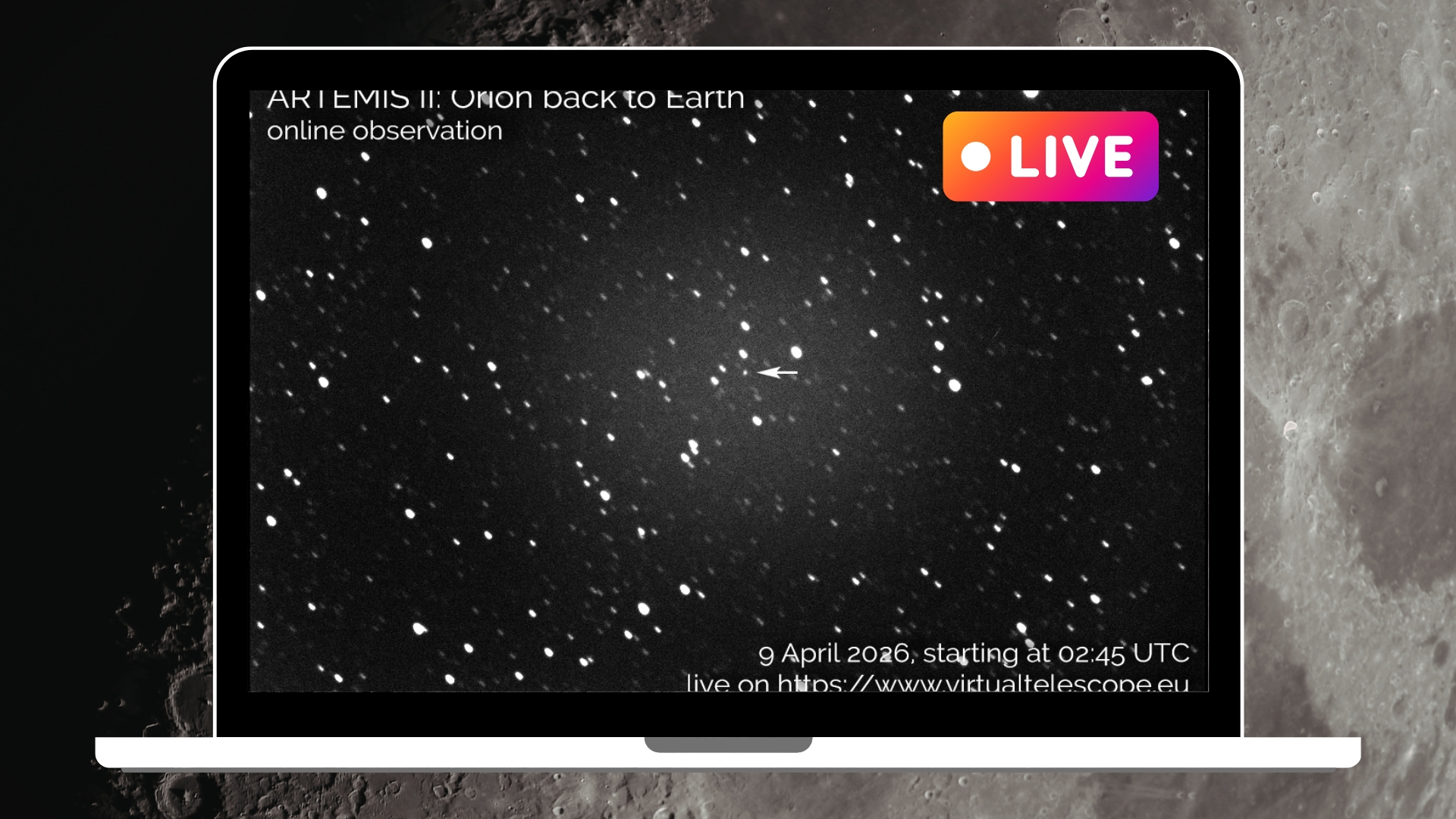 1Watch Artemis 2 race back to Earth in this telescope livestream tonight
- 21 week until the Lyrid meteor shower lights up April skies: Here's what you need to know
- 3NASA astronaut Leland Melvin makes a cartoon cameo in latest episode of Disney+'s 'Hey A.J.!'
- 4Artemis 2 astronaut poses for epic selfie | Space photo of the day for April 9, 2026
- 5'We all pretty much broke down right there': Inside the Artemis 2 astronauts' emotional moment near the moon