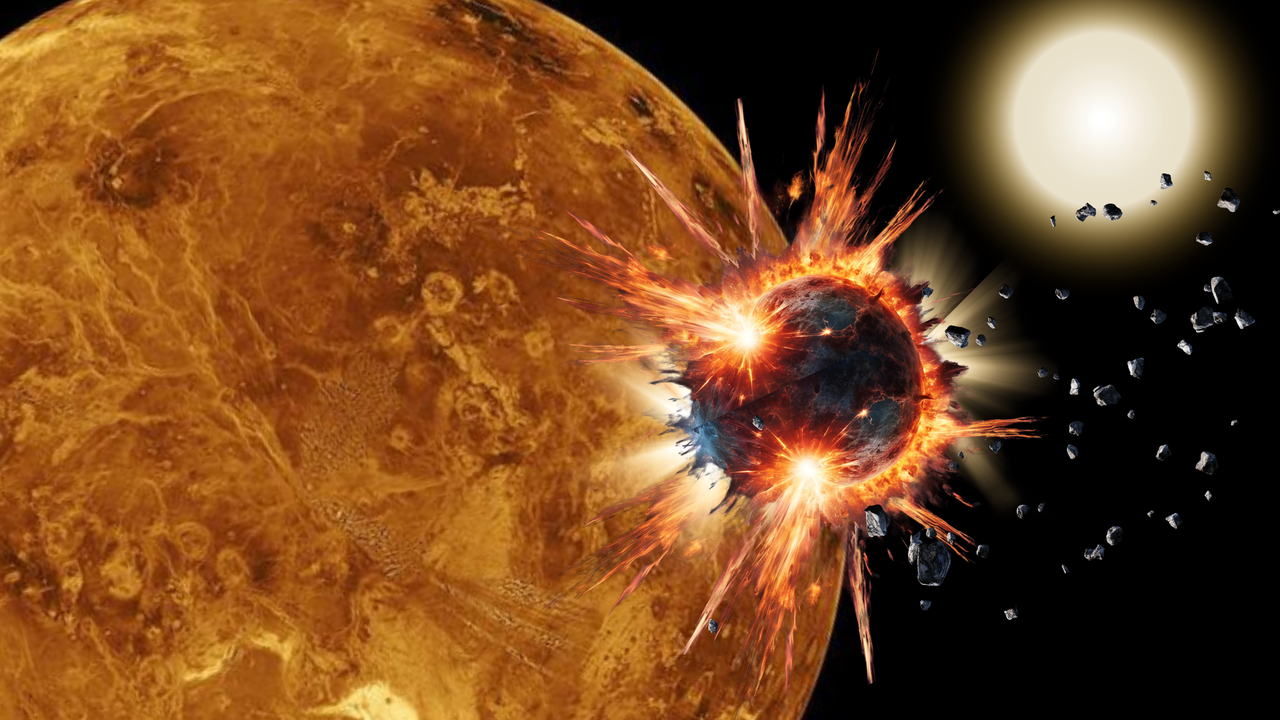
 A section of Mars' Utopia Planitia covered with dark volcanic materials is slowly expanding across the Red Planet's surface. And experts are not sure why. (Image credit: ESA/DLR/FU Berlin) Share this article 0 Join the conversation Follow us Add us as a preferred source on Google Newsletter Sign up for the Live Science daily newsletter now
 Get the world’s most fascinating discoveries delivered straight to your inbox.
Become a Member in Seconds
Unlock instant access to exclusive member features.
Contact me with news and offers from other Future brands Receive email from us on behalf of our trusted partners or sponsors By submitting your information you agree to the Terms & Conditions and Privacy Policy and are aged 16 or over.You are now subscribed
Your newsletter sign-up was successful
Want to add more newsletters?
Join the club
Get full access to premium articles, exclusive features and a growing list of member rewards.
Explore An account already exists for this email address, please log in. Subscribe to our newsletterA massive dark patch lurking within a giant Martian crater has been creeping across the Red Planet's surface since the feature was first spotted 50 years ago, new photos reveal — and scientists are unsure exactly why this is happening.
The shadowy structure is a patch of ground covered with ash and volcanic rocks, such as olivine and pyroxene, from ancient eruptions that occurred millions of years ago, before Mars was considered geologically dead. It is located in Utopia Planitia, a roughly 2,000-mile-wide (3,300 kilometers) plain in Mars' northern hemisphere.
It is unclear how large the shadowy feature is. However, sections of the patch's southern boundary have moved farther south by at least 200 miles (320 km), based on the latest photos from ESA. This suggests the dark terrain has been expanding by around 4 miles (6.5 km) per year.
Scientists are confident that the movement of the dark patch has something to do with Martian winds, which are known to scour the surface and kick up ash and dust.
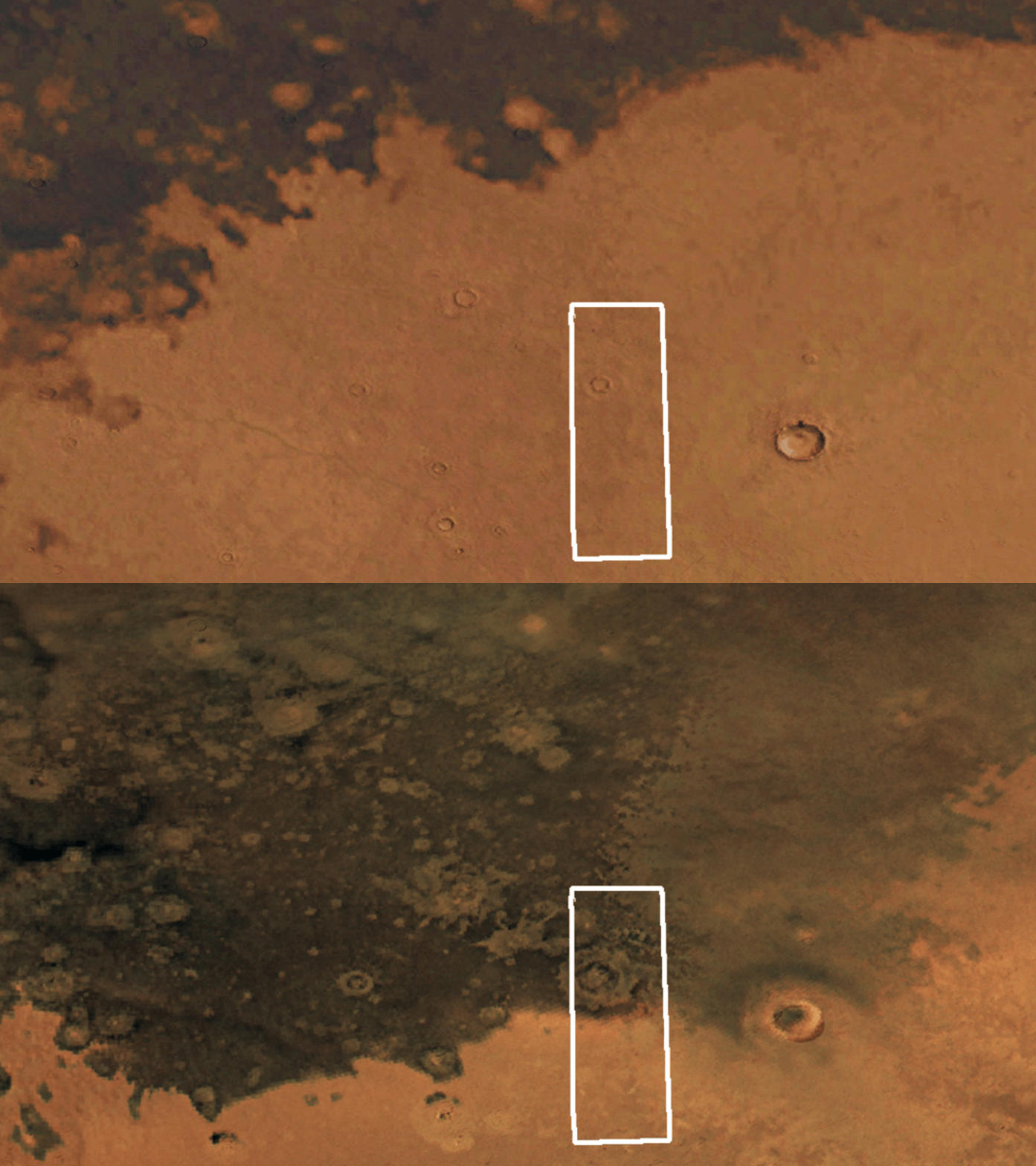
"The spread of the ash over the last 50 years has two possible explanations: either it has been picked up and moved about by Martian winds, or the ochre dust that previously covered the dark ash has been blown away," ESA representatives wrote in a statement.
However, there is currently no clue as to which hypothesis is correct, they added.
Sign up for the Live Science daily newsletter nowContact me with news and offers from other Future brandsReceive email from us on behalf of our trusted partners or sponsorsUtopia Planitia
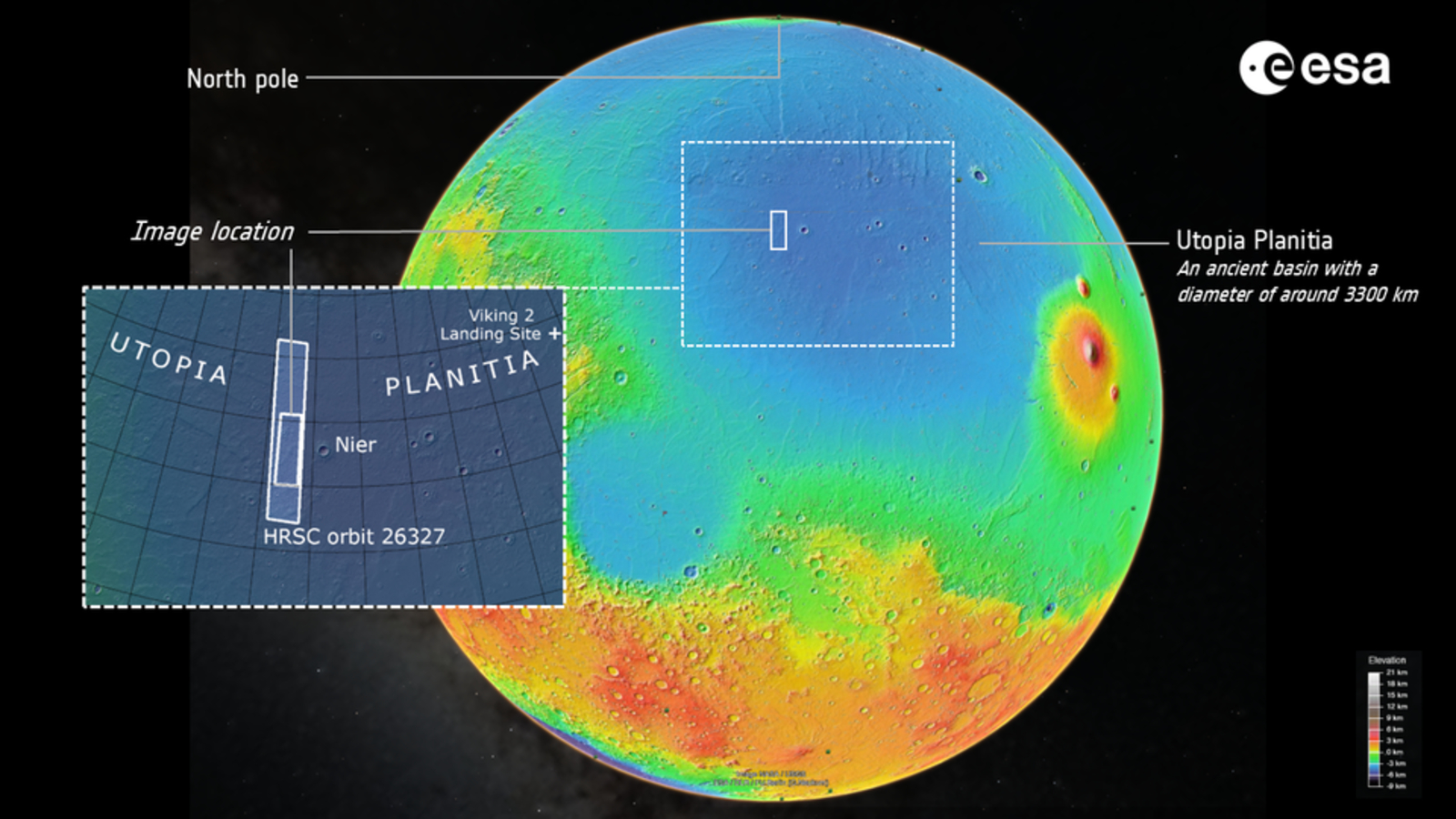
This region of Mars has been of great interest to scientists over the past half century. In 1976, the Viking 2 lander touched down in Utopia Planitia and carried out a series of "biological experiments" until its demise in 1980.
RELATED STORIES—City-size 'cosmic butterfly' carved into Mars' surface contains traces of ancient water
—2 million black 'streaks' on Mars finally have an explanation, solving 50-year mystery
More recently, China's Zhurong rover also touched down there in 2021 and explored the giant plain before going dark in 2023. Chinese scientists have since used the Zhurong data to show that Utopia Planitia was most likely once covered with one of Mars' largest oceans, and they have even mapped out what they think was once a shoreline. The rover also may have detected clues of a surprising "climatic shift" in the region around 400,000 years ago.
Utopia Planitia is home to several large cracks in the ground, known as grabens, which are one of Mars' most unusual features and could also help provide clues to any tectonic activity that once rocked the Red Planet, according to ESA.
In addition, researchers think there is a significant amount of buried ice beneath the region, which could have big implications for the hunt for extraterrestrial life.
Mars quiz: Is your knowledge of the Red Planet out of this world?
 Harry BakerSenior Staff Writer
Harry is a U.K.-based senior staff writer at Live Science. He studied marine biology at the University of Exeter before training to become a journalist. He covers a wide range of topics including space exploration, planetary science, space weather, climate change, animal behavior and paleontology. His recent work on the solar maximum won "best space submission" at the 2024 Aerospace Media Awards and was shortlisted in the "top scoop" category at the NCTJ Awards for Excellence in 2023. He also writes Live Science's weekly Earth from space series.
View MoreYou must confirm your public display name before commenting
Please logout and then login again, you will then be prompted to enter your display name.
Logout LATEST ARTICLES 1Bruce the parrot is missing his upper beak — but that hasn't stopped him from becoming an undefeated jousting champion
- 2Scientists identify main cause of extreme nausea and vomiting in pregnancy
- 3Altar to Sol: A rare 1,900-year-old monument dedicated to the Roman god of light and used in a secret underground ritual
- 4Loneliness may contribute to memory issues, but not dementia — they are 'not the same thing'
- 5Naked mole rats wage bloody wars of succession to choose a new queen — but one colony did something scientists have never seen before