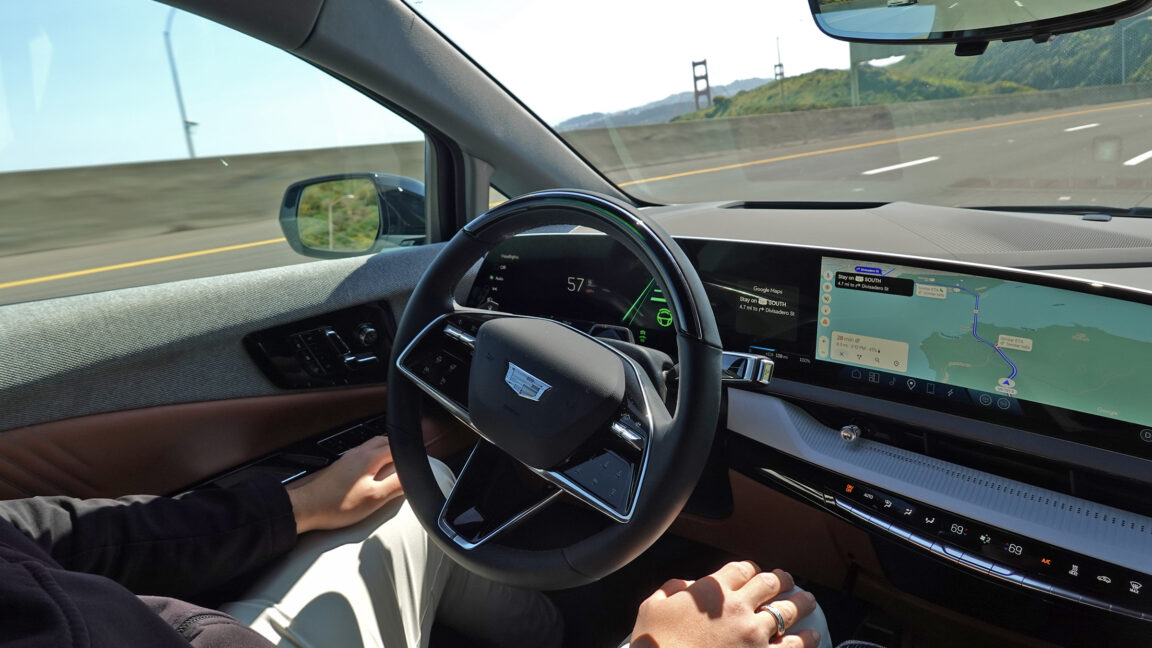
When Super Cruise debuted in the Cadillac CT6 back in 2017, it showed there was a responsible way to give drivers a hands-free assistance system. Unlike Tesla, General Motors geofenced the system to only work on restricted-access highways that had been lidar-scanned and HD-mapped ahead of time. What's more, it added a driver-facing infrared camera to track their gaze and ensure their eyes remain on the road ahead for the system to stay active.
After starting out in the Cadillac flagship sedan, GM began adding Super Cruise to more and more of its models, and the system has just passed a billion driven miles (1.6 billion km), across almost 750,000 vehicles in the US and Canada. "And we're continuing to grow that, both with the new sales and also we have a very high renewal rate," said Rashed Haq, vice president of autonomous vehicles at GM.
That renewal rate is close to 40 percent for GM owners with Super Cruise, according to Haq, which is free for the first three years then is tied to an active OnStar subscription. "It really shows how Super Cruise is passing what I call the toothbrush test. The customers are using it continuously. Once they use it, they never go back. They continue to use it, and then they use it multiple times a day, just like a toothbrush. So it's really past that kind of stickiness test," Haq told me.