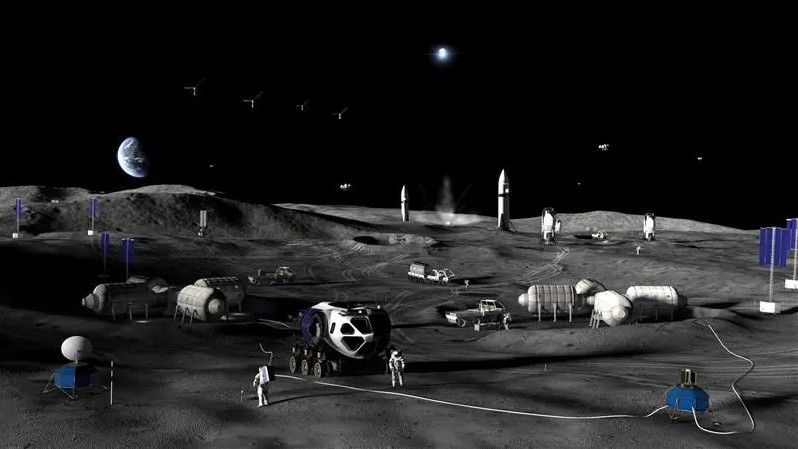
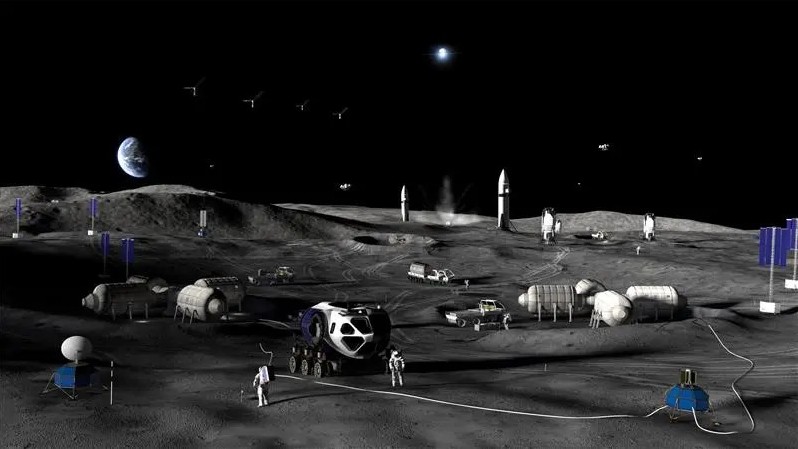
 NASA is trying to speed up its lunar missions and establish a permanent moon base, but it won't be easy. (Image credit: NASA) Share this article 0 Join the conversation Follow us Add us as a preferred source on Google Newsletter Sign up for the Live Science daily newsletter now
 Get the world’s most fascinating discoveries delivered straight to your inbox.
Become a Member in Seconds
Unlock instant access to exclusive member features.
Contact me with news and offers from other Future brands Receive email from us on behalf of our trusted partners or sponsors By submitting your information you agree to the Terms & Conditions and Privacy Policy and are aged 16 or over.You are now subscribed
Your newsletter sign-up was successful
Want to add more newsletters?
Join the club
Get full access to premium articles, exclusive features and a growing list of member rewards.
Explore An account already exists for this email address, please log in. Subscribe to our newsletterNASA has published a "Moon Base User's Guide" detailing the many challenges the agency will need to overcome for it to complete 73 planned moon landings and build a permanent lunar base.
The document, published April 6, is a bare-bones nine-page list of what NASA needs to achieve the "near-impossible" space plans announced March 24 at the agency's "Ignition" event.
NASA wants a torrent of robotic and uncrewed lunar missions — landing on the moon 21 times within the next three years alone — to lay the groundwork for its $20 billion moon base and prepare for the first crewed missions in 2028. The space agency has also said it will launch a nuclear-powered "Freedom" spacecraft to Mars by 2028.
Although the splashdown of Artemis II's crewed lunar flyby last week demonstrated that NASA can still fly humans to the moon, the Moon Base User's Guide clearly highlights lots of gaps in NASA's current capabilities. These limitations include aspects of landing systems, habitation systems and power systems — basically, everything humans need to land and live on the moon.
If it sounds fanciful, NASA Administrator Jared Isaacman seems to agree, telling attendees at the 2026 Space Symposium in Colorado Springs on April 14 that NASA does its best when it is "undertaking and achieving the near impossible," Space.com reported.
"We want to land lots of stuff, and it's okay if some of it breaks," he added. "We're going to learn."
The Moon Base User's Guide is part of a larger shake-up to American space plans. In recent years, NASA has struggled to get astronauts back to the moon and thereby set the stage for sending humans to Mars. The success of Artemis II notwithstanding, the Artemis program is over budget (costing more than $100 billion thus far) and behind schedule, with NASA originally targeting a crewed moon landing in 2024.
Sign up for the Live Science daily newsletter nowContact me with news and offers from other Future brandsReceive email from us on behalf of our trusted partners or sponsorsIsaacman, who has been in his post since December 2025, is attempting to ramp up lunar activities to realize NASA's goals for the moon and Mars. This overhaul includes scrapping work on humanity's first lunar space station, the lunar Gateway, to focus on establishing a presence on the lunar surface. To achieve this, the Artemis program has been retooled to add a second crewed lunar landing mission in 2028, as well as ramping up launches and landings.
The guide was followed by an April 14 White House memorandum stating that "NASA will, within 30 days of this memorandum, initiate a program to develop a mid-power space reactor with a lunar fission surface power (FSP) variant ready for launch by 2030, and an option for a space variant for a nuclear electric propulsion (NEP) demonstration."
The backdrop for this shake-up, aside from Artemis's spiraling costs and delays, is the new space race. China is threatening to overtake the U.S. as the leader in space exploration, with plans to land its own astronauts on the moon before 2030. And both nations are eyeing the same hydrogen-fuel-rich lunar south pole landing sites.
How to build a moon base
NASA's planned 73 moon landings will occur across three phases, according to the Moon Base User's Guide and previous Ignition documents. It's unclear how many of these will be crewed, but NASA has said that it's starting with a rapid series of robotic and early uncrewed missions, while moon crew rotations are expected to be routine by Phase 3.
Phase 1 will comprise 25 launches and 21 landings to establish frequent and reliable access to the lunar surface. This phase is scheduled to be completed by 2029, according to NASA's Building the Moon Base plans, published March 24.
Phase 2, which is planned for between 2029 and 2032, will consist of a further 27 launches and 24 landings and will establish the initial moon base infrastructure and semiannual crewed missions. Phase 3, from 2032 until an undisclosed future date, will then have another 29 launches and 28 landings to establish uncrewed cargo return technology and a continuous human presence on the moon.
Of course, this is considerably easier said than done. NASA famously landed humans on the moon as part of the Apollo missions more than 50 years ago. However, building a base on the moon's south pole comes with many more challenges, starting with establishing the basics, like a consistent power source.
"The Moon Base elements and development will occur in the lunar South Pole region, which has an incredibly different lighting environment than the equatorial maria and highlands visited by Apollo," NASA wrote in the document. "At the Moon Base, the Sun will remain low on the horizon, casting dramatic shadows that hinder solar electricity generation and subject systems to prolonged periods of extreme cold and dark."
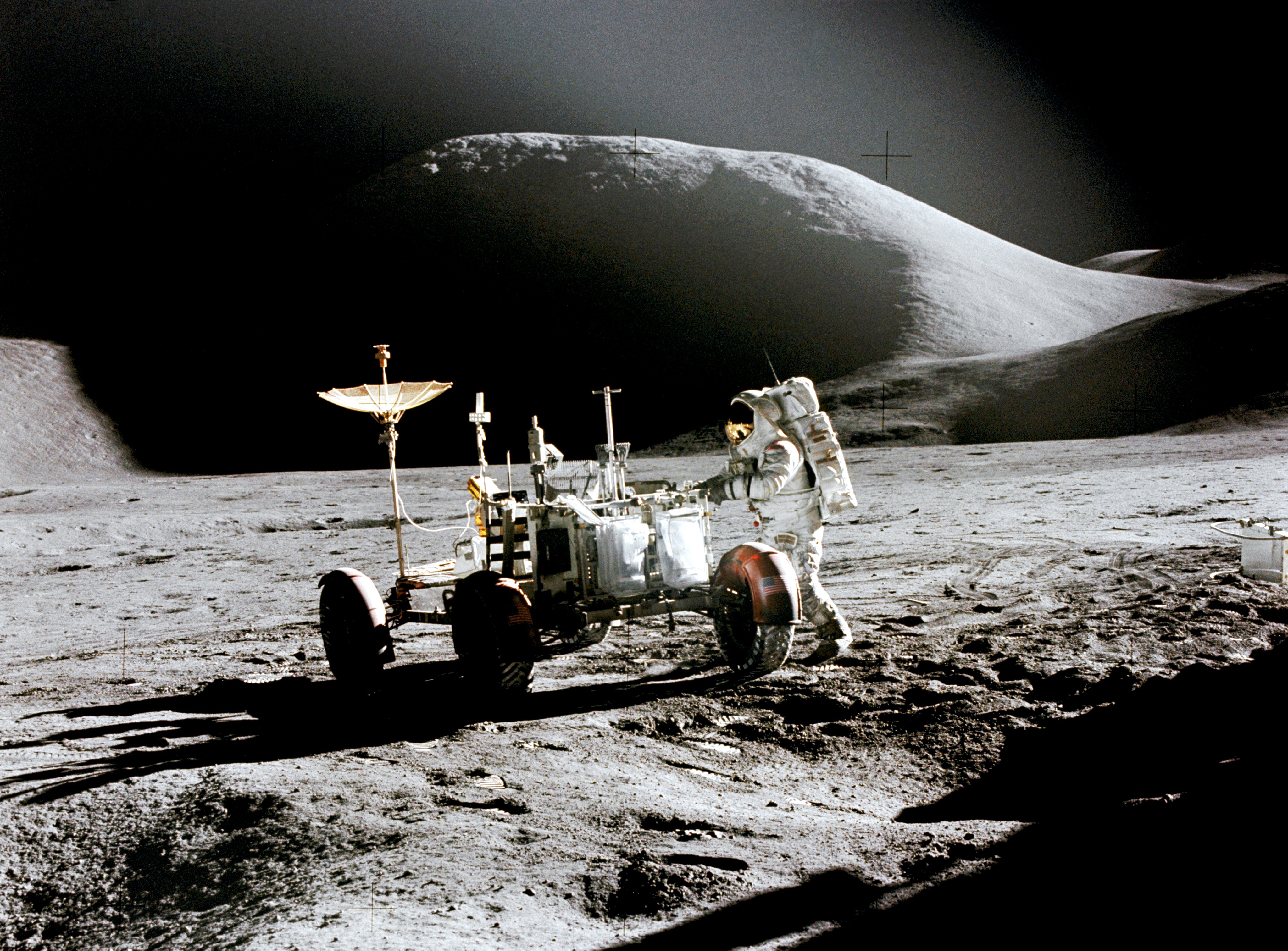
NASA needs precise knowledge of lighting conditions and solar array performance to develop suitable solar power options, which will also need to be robust enough to survive contact with razor-sharp, electrified lunar dust.
The document also noted that NASA requires detailed knowledge of the lunar environment and systems that can operate there to use its radioisotope thermal generators — nuclear batteries that generate heat and electricity. NASA's long-term plans for power also include building a nuclear reactor on the moon.
Simply landing on the moon as frequently as NASA plans also presents hurdles. For example, the document notes that NASA needs to develop precision landing systems that can accurately measure the altitude of low-visibility terrain, as well as hazard avoidance systems. Some of the power and landing gaps were flagged as architecture-driven technology gaps and will require "entirely new technologies or significant advancement in performance" of current technologies, according to the guide.
There are also unknowns barely mentioned in the document, such as the human body's response to long-term stays in the lunar environment. These include the impacts of lunar dust, microgravity and cancer-causing cosmic rays, alongside logistical challenges related to life support, exercise and nutrition.
NASA writes that it is working on filling in the many technological and data gaps highlighted in the document. It also highlights "Mars-forward" considerations, which are the things NASA needs to develop with the moon program to achieve its ultimate aim of landing humans on Mars.
RELATED STORIES- 'I have not processed what we just did': Artemis II astronauts share all in first news conference since splashdown
- 'I'm at a loss for words': Artemis II mission comes home to joy and cheers after historic 10-day mission
- Should humans colonize other planets?
The Mars considerations included data on astronaut health in deep space and the development of nuclear power systems on the lunar surface. These nuclear systems will be useful for building similar systems on Mars and benefit the development of NASA's planned nuclear-powered spacecraft, according to the document.
Only time will tell if NASA can achieve its ambitious plans, but recent history is not on the space agency's side. Only two days after Artemis II's historic launch on April 1, the White House released a budget plan calling for a 23% cut in NASA's budget, amounting to around $5.6 billion.
And while NASA has said it will build its moon base on a $20 billion budget, the average estimated cost of a single Space Launch System rocket is $2.5 billion.
TOPICS Patrick PesterTrending News Writer
Patrick Pester is the trending news writer at Live Science. His work has appeared on other science websites, such as BBC Science Focus and Scientific American. Patrick retrained as a journalist after spending his early career working in zoos and wildlife conservation. He was awarded the Master's Excellence Scholarship to study at Cardiff University where he completed a master's degree in international journalism. He also has a second master's degree in biodiversity, evolution and conservation in action from Middlesex University London. When he isn't writing news, Patrick investigates the sale of human remains.
View MoreYou must confirm your public display name before commenting
Please logout and then login again, you will then be prompted to enter your display name.
Logout LATEST ARTICLES 1Diagnostic dilemma: A woman heard voices telling her she had a brain tumor — and scans confirmed she did
- 2Triassic croc relative from Ghost Ranch, New Mexico finally identified after nearly 80 years in museum basement
- 3There were 'audible screams of delight': Why Artemis II sightings of meteor flashes on the moon have scientists giddy
- 4Physicists witness pinpricks of darkness moving faster than the speed of light
- 5Mini lake meets snowy rim of Canada's oldest ice mass


