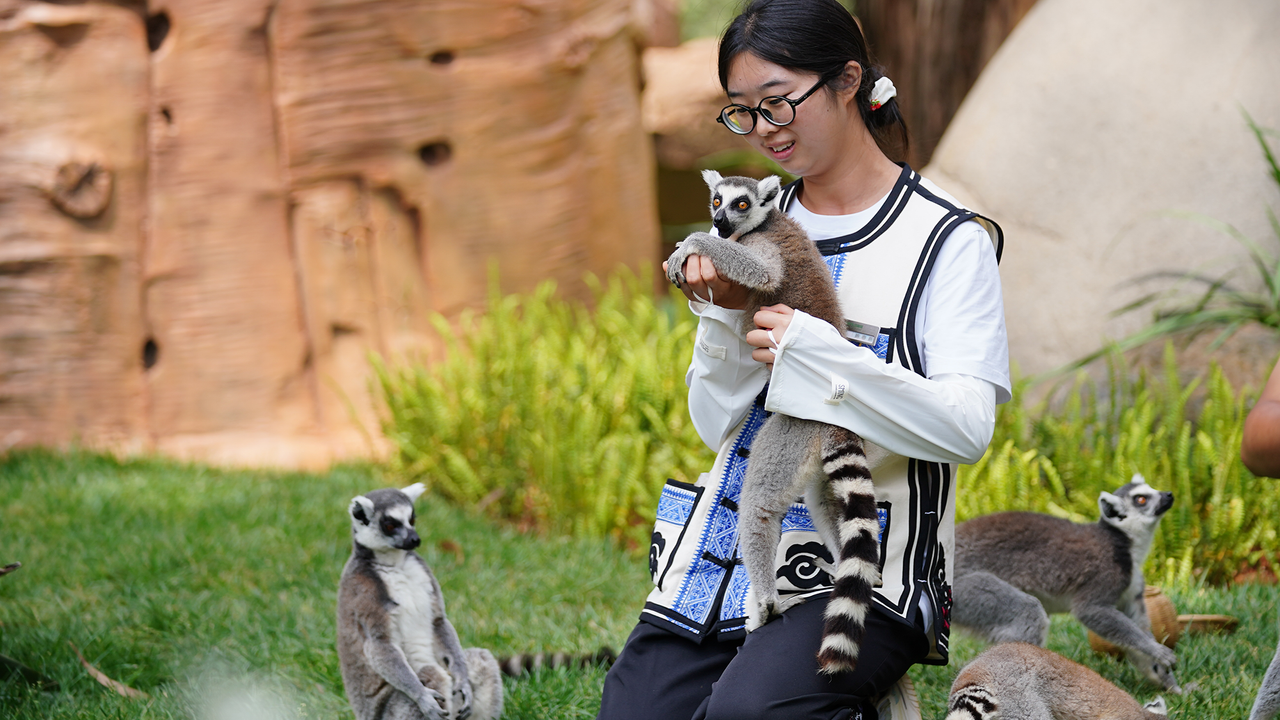
Four lemurs that had close contact with people, including one via a "lemur yoga" class, caught a human herpesvirus and subsequently died, a new study shows.
The virus at fault was herpes simplex virus type 1 (HSV-1), which is extremely common in humans. In people, the infection usually causes no symptoms or produces cold sores. In primates, though, the infections can often be deadly — in this case, all four lemurs developed encephalitis, or inflammation of the brain, and died.
This is the first time that an HSV-1 infection has been confirmed in lemurs via a molecular analysis — namely, PCR tests like a doctor might use to diagnose a person's infection. Human herpesvirus infections have been documented in lemurs in the past, albeit rarely, and those reports used laboratory methods other than molecular analysis.
These recent cases highlight the dangers of close contact between animals and humans, scientists say.
"We've evolved these kissing behaviors that have resulted in pretty effective transmissions [of HSV-1] to the point where you look at infection rates of humans and they're very high," study co-author Dr. Jim Wellehan, a professor at the University of Florida's College of Veterinary Medicine, told Live Science. But when HSV-1 infects lemurs, the consequences can be far more severe, he emphasized.
Lethal "lemur yoga"
In the study, published in July in the Journal of Zoo and Wildlife Medicine, Wellehan and colleagues confirmed HSV-1 infections in two ring-tailed lemurs (Lemur catta), one black-and-white ruffed lemur (Varecia variegata) and one ruffed-lemur hybrid (Varecia rubra x Varecia variegata). All four lemurs were privately owned.
The problem isn't limited to lemurs. HSV-1 has previously caused fatal disease in other captive and wild primates, including marmosets, saki monkeys, gibbons and other monkeys. That said, these cases of human herpesviruses jumping to primates have been uncommon.
"Herpes, as viruses, have amazing host fidelity," Wellehan said in a statement. "They don't do big host jumps very often."
The four cases in the study occurred over an eight-year period in the U.S. One of the four infected lemurs had been used in a "lemur yoga" program. "People are doing yoga, and there's lemurs wandering around," Wellehan said in the statement. "It's not good for the lemurs."
That animal's infection was almost certainly related to its close contact with humans during these yoga sessions, Wellehan said, although the study cannot prove that transmission occurred during a particular yoga session. The other three lemurs were exotic pets and also had close contact with humans.
HSV-1 typically triggers little to no symptoms in humans, with the most common symptom being a cold sore. (Image credit: Photographer, Basak Gurbuz Derman via Getty Images)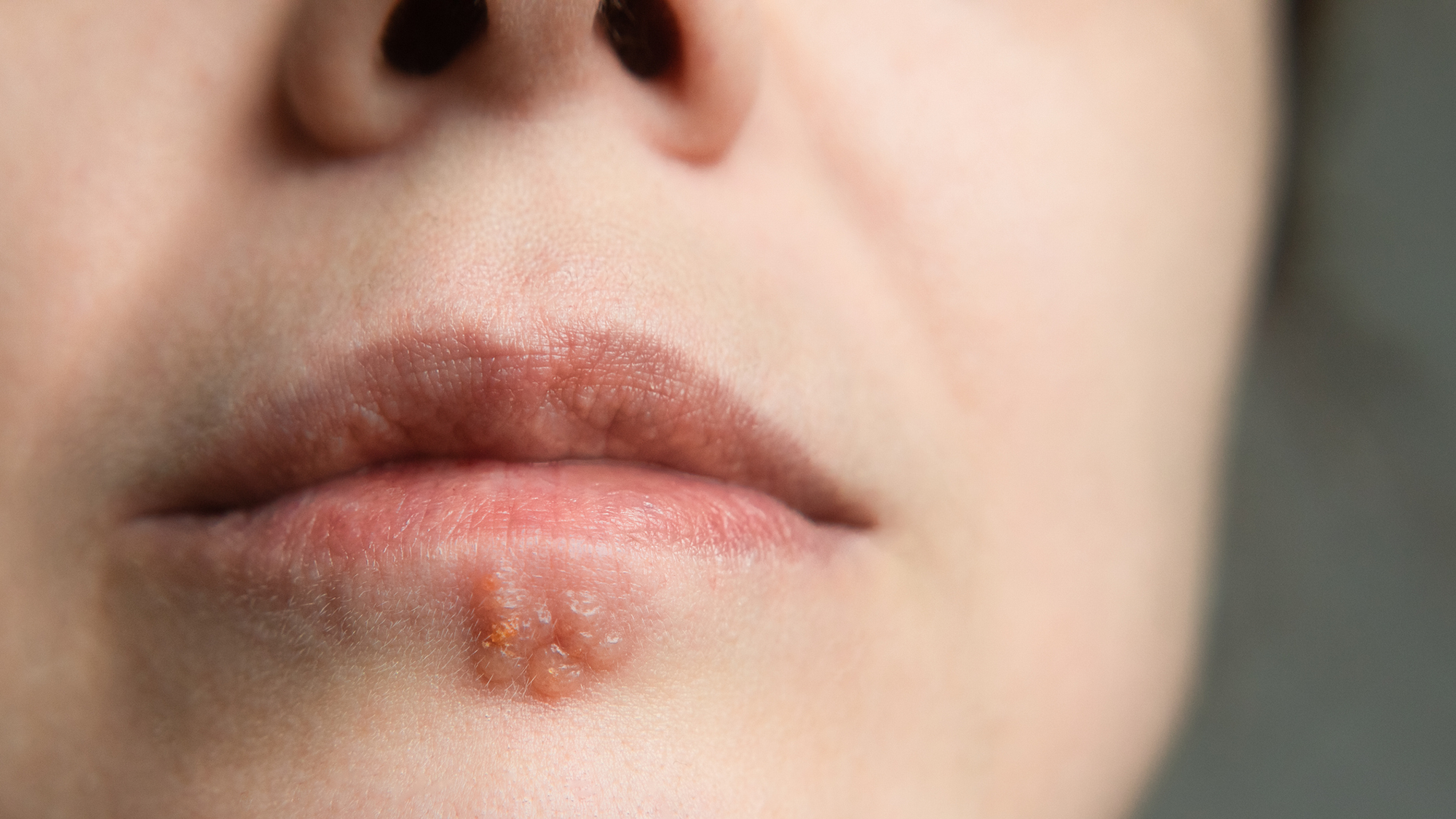
From cold sores to brain disease
HSV-1 and its close relative HSV-2, which mostly causes genital herpes, require relatively close contact to spread. HSV-1 is most often transmitted through contact with saliva or skin surfaces in or around the mouth, or with cold sores. Most adults have HSV-1 and many have no notable symptoms. It is possible to spread the virus even when symptoms aren't present.
That makes frequent, direct contact between humans and lemurs particularly concerning, the researchers said.
The four examined lemurs showed a range of symptoms, including lethargy, loss of appetite, mouth and throat ulcers, and breathing problems. One ring-tailed lemur developed prolonged, repeated seizures and died two days after initially being seen by veterinarians.
After the lemurs died, researchers examined their tissues under a microscope. In the brain, they found inflammation and destruction of the tissue, along with intranuclear inclusions, which are abnormal structures inside cells that can occur during herpesvirus infections.
The researchers then used various tests to identify the presence of HSV-1 in the body, detecting the virus's genetic material and proteins in the animals' brain cells. This provided additional evidence that the germ had caused the encephalitis.
In two of the lemurs, oral or mucous swabs collected while the animals were alive tested positive for HSV-1, while the testing of the other two occurred after death. The results from living animals means that similar samples could potentially help veterinarians diagnose infections before death in the future, rather than confirming the infection postmortem.
While humans and HSV-1 have had a long evolutionary relationship, lemurs and HSV-1 have not.
Related stories- 11 (sometimes) deadly diseases that hopped across species
- 'Reanimated' herpes viruses lurking in the brain may link concussions and dementia
- 'Cold sore' virus may have gained prominence thanks to Bronze Age smooching
"This is a virus that's highly endemic in our species," Wellehan said. "Fortunately for lemurs, this isn't something you can catch from breathing in the same airspace, as [HSV-1] requires a more direct contact. But this is the story of a pathogen jumping into a new host, which is the story of evolution in the history of life."
The researchers noted that, while the lemurs in these cases were privately owned, accredited zoos have strict biosecurity measures designed to reduce the chance of pathogens passing between people and animals.
The cases illustrate a broader lesson about the risks of putting humans and captive primates into unusually close contact, Wellehan said. "It may be fun, but it's not [in] a lemur's best interest."
What do you know about chimpanzees and great apes? Test your smarts with our primate quiz.