
 Justin RowlattClimate Editor
 ©ZSL
©ZSLVisitors to London zoo will soon be able to watch live veterinary procedures inside a state-of-the-art new animal hospital thanks to a mystery £20m donation.
A viewing gallery will show everything from penguin health checks to ultrasounds on pregnant aardvarks and even porpoise post-mortems - things never before seen publicly in the UK.
The health centre has been made possible by the zoo's largest ever gift - from an anonymous benefactor.
With the keeping of animals in captivity increasingly questioned, the Zoological Society of London (ZSL), which manages the zoo and marks its 200th anniversary today, hopes the new centre will help demonstrate the enduring value of its conservation work.
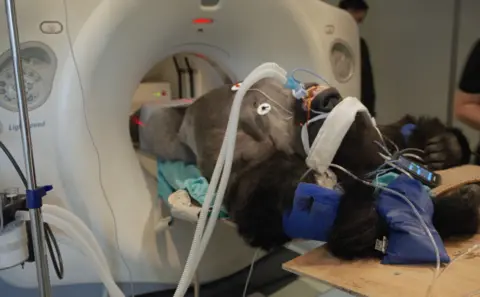 ©ZSLA western lowland silverback gorilla getting a CT scan - the kind of procedure the public may be able to watch
According to ZSL, the Wildlife Health Centre facility aims to bring together advanced veterinary care, scientific research, professional training, and public engagement under one roof. It will also investigate how diseases could spread from animals to humans
ZSL says it will build on a long-established record of veterinary innovation, which began with employing the world's first zoo vet in 1829, a year after opening London Zoo, and later included Europe's first purpose-built zoo veterinary hospital in the 1950s.
Alongside delivering world-class care for zoo animals, the centre is intended to bring veterinary science closer to the public, offering visitors a rare opportunity to watch live procedures. It is envisioned as a centre of expertise for zoo medicine and serve as a global training hub for wildlife vets.
Kathryn England, ZSL's chief executive, said: "Our history has shaped how wildlife is studied, treated and protected. Now, that legacy becomes a platform for action."
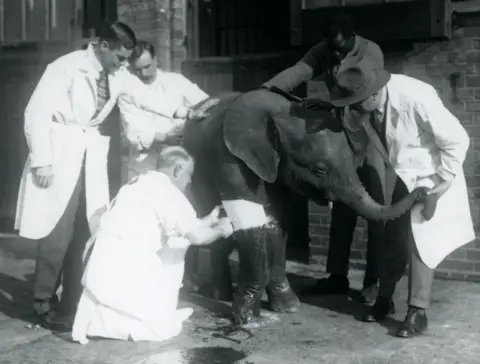 ©ZSLThe Zoological Society of London employed the world's first zoo vet in 1829
The role of modern zoos remains contested: they argue they play a vital role in conservation, while critics question the ethics of keeping wild animals in captivity.
The Born Free Foundation argues the new hospital will not address what it sees as the fundamental ethical issue and questions whether the conservation and research they claim to do justifies zoos' existence.
"On its 200th anniversary, I think the Zoological Society of London should be focusing all its efforts on protecting wildlife in the wild where it belongs, not keeping wildlife in captivity thousands of miles from where it belongs," said Mark Jones, head of policy at the charity.
The Born Free Foundation has also raised concerns that opening veterinary procedures to the public risks turning animal care into a spectacle.
ZSL says most of the procedures on display will be routine, such as weight and dental checks. It adds that, wherever possible, it uses what it calls "cooperative care". According to ZSL, this is where animals are trained to take part in their own healthcare - for example, by staying still or presenting a body part for examination.
ZSL says this is done by rewarding animals with something they enjoy, such as food, helping them remain calm and cooperative, and reducing stress. Galapagos tortoises are trained to step onto scales, for example, the lions and tigers to present their tails so blood tests and skin samples can be taken.
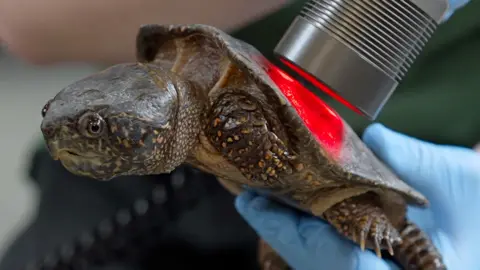 ©ZSLA big headed turtle is having laser treatment to have its shell checked
 However, ZSL says the public will also be able to observe some operations and post-mortems, including examinations of dolphins or porpoises that have washed up dead on UK beaches.
ZSL maintains that its work - both in its zoos and in the wild - is vital for conservation, education and global health.
"We are surrounded by some of the rarest animals in the world," says snail keeper Dave Clarke, as we step into a room in the zoo's Tiny Giants invertebrate exhibit.
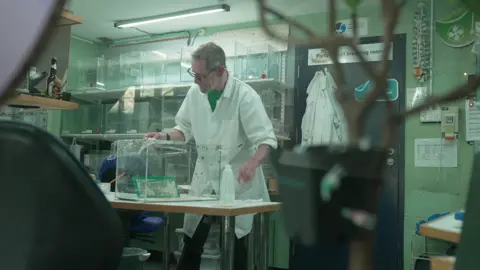 90% of the world population of the rare Garrett's tree snail are kept at London Zoo
Inside are nine species of small yellow Polynesian tree snails, including the rarest of the lot, the Garrett's tree snail.
"We've got about 120 which is 90% of the world population," Clarke explains.
One species has been successfully reintroduced to its Polynesian island home – the first invertebrate ever to be downlisted from extinct in the wild to critically endangered.
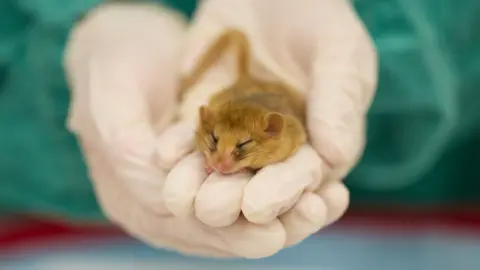
The organisation also works with threatened species closer to home, including hedgehogs in Regent's Park and dormice across the UK - both now considered endangered nationally.
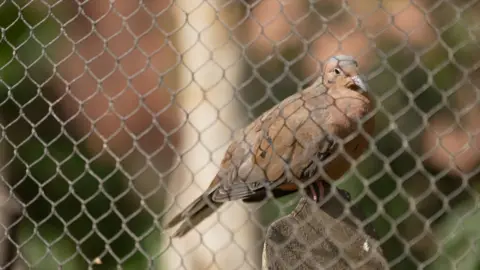 London Zoo cares for 21 species including Socorro doves that are extinct in the wild
ZSL says a key focus of the new centre will be understanding how diseases spread between species, including transmission to humans, and how those risks can be reduced. Its scientists have previously studied the spread of bovine tuberculosis as well as viruses carried by bats and the factors influencing their spillover into people.
The organisation already runs specialist training and field programmes in biodiversity hotspots, which it says will be expanded through the new centre.
Dr Amanda Guthrie, head of wildlife health services, said the facility will provide "the very best state of the art modern care" for animals, while allowing visitors to see that work and "inspire young people to consider careers in wildlife, health and conservation".
Read moreButterfly numbers are dropping but here are five species you may see more of
Decline in migratory fish populations prompts fight for protection
Tiger teeth, dried seahorses and shark fins sold illegally on Facebook, BBC finds

Sign up for our Future Earth newsletter to get exclusive insight on the latest climate and environment news from the BBC's Climate Editor Justin Rowlatt, delivered to your inbox every week. Outside the UK? Sign up to our international newsletter here.
Science & EnvironmentWildlife