The 2026 NCAA baseball tournament opened with a regional round unlike any other. It was perhaps the most chaotic opening weekend in postseason history -- one in which the No. 1 overall seed, UCLA, lost its own regional and in which multiple No. 4 seeds advanced to super regionals. Lower-ranked teams flipped the bracket on its head, eliminating seven hosts in a round that proved to college sports fans that Cinderella stories are still possible.
Baseball has long provided more upsets than most college sports, and even in an era where those programs with the most resources have greater advantages than ever, shocking results continue to define the sport's postseason. In fact, regional No. 4 seeds are in the midst of a golden age, with at least one advancing to the super regionals in each of the past four years. Low- and mid-major schools are alive and well despite the odds being stacked higher and higher against them.
That is not to say that all the perennial powerhouses flamed out in regionals, though. The SEC enjoyed another fruitful start to the tournament and is extremely well-positioned to take home its seventh consecutive national championship, and a few other perennial College World Series contenders are still in the mix, too.
Here are the biggest winners and losers from the 2026 college baseball regionals.
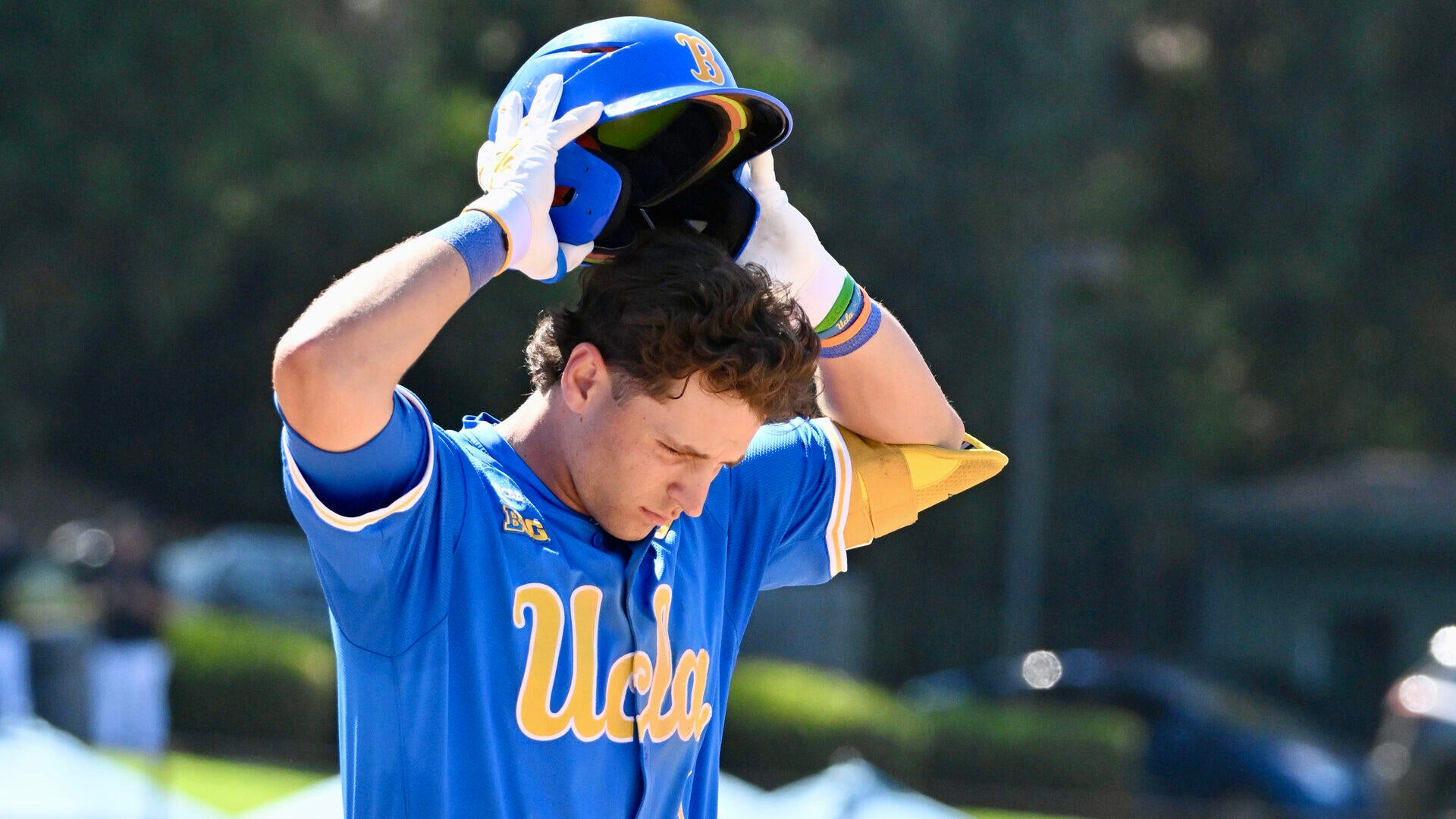
Loser: UCLA
There is a seemingly endless list of superlatives to describe how shocking No. 1 UCLA's weekend was in the Los Angeles Regional. It was the most surprisingly poor showing from a No. 1 overall seed in tournament history. The Bruins were resounding favorites to win the national championship, let alone their regional, yet they dropped two of three games, including a pair of losses to Saint Mary's. Just like that, the team that went wire-to-wire this regular season as the top-ranked squad in the nation is out of the College World Series hunt.
This is just the fifth time the No. 1 overall seed has lost its regional, and the second time in as many years, after Vanderbilt fell short last season.
No. 1 overall seeds eliminated in regionals
YearTeamNote2026
UCLA
First No. 1 seed to lose regional opener
2025
Vanderbilt
First No. 1 seed to miss regional final
2015
UCLA
Had set school record with 22 conference wins
2014
Oregon State
Was previously 12-0 in home regional games
2007
Vanderbilt
Had won SEC for first time in program history
The Bruins had not lost a weekend series all year, but they entered the tournament playing their worst baseball and ran into trouble against a Saint Mary's program that has now suddenly beaten regional hosts in consecutive years. The last six games of UCLA's campaign featured four walk-off wins and a pair of one-run losses. John Savage's team played with fire down the stretch, and it eventually burned them.
Winner: Little Rock and St. John's
For the first time in tournament history, two No. 4 seeds won a regional in the same year. Low-major automatic bids had been trending upward of late, with at least one team emerging victorious from the regional four-line each of the last three years entering this postseason, and Little Rock and St. John's took things to another level in 2026. Both teams went a perfect 3-0 in regional play, stunning No. 9 Southern Miss and No. 10 Florida State, respectively.
This is the first super regional appearance in Little Rock's history, and the Trojans have to feel good about their chances to take this run a step further, given that they match up against a Troy team that enters the supers at 36-30 on the year. Its bullpen was lights-out against a couple of stellar offenses, so if the rotation of Brannon Westmoreland, Bridgen Parker and Nic Bronzini holds up its end of the bargain to a greater extent this weekend, the Ohio Valley Conference champions could be Omaha-bound.
St. John's has a rich history, including 39 tournament appearances and six trips to the College World Series, but it has struggled to advance past regionals this century. The Red Storm broke out of that slump for just their second regional championship since 1980 when Adam Agresti launched a go-ahead grand slam in the final against Florida State. Not only did the Johnnies defeat the Seminoles twice, but they also racked up 21 runs against Northern Illinois in the winner's bracket.
Both teams will be super regional underdogs, but now that they have proven themselves against two of the 10 best teams in the sport, it would be unwise to count them out of winning two more games and taking their Cinderella stories to the CWS.
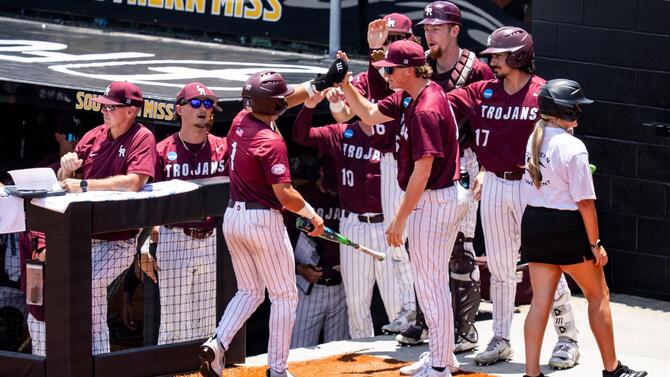 Jerdy Lopez (1) and Little Rock travel to Alabama for the Troy Super Regional this weekend. Imagn Images
 Loser: Georgia Tech
The door was wide open for No. 2 Georgia Tech to emerge as the national championship favorite after UCLA's ouster, but instead of finishing off a 2-0 start to the Atlanta Regional, the Yellow Jackets inexplicably lost consecutive games in the final to fall out of the tournament. Oklahoma exposed the only real weakness on this ACC-champion roster -- the back end of the pitching staff -- to eliminate a team that had all the other requisite characteristics of a title winner.
After a 22-run outburst in the regional opener in which Alex Hernandez bashed three home runs and accumulated nine RBIs, it looked as though Georgia Tech could steamroll its way to the supers. That it scored no fewer than seven runs in any of its four postseason contests was another testament to how elite the nation's most explosive offense was all year.
The harsh reality of tournament baseball, though, is that it takes more than just the elite bats of Jarren Advincula, Vahn Lackey and numerous others to make a deep run. Pitching will always be the great equalizer this time of year, and the Yellow Jackets did not get enough of it in surrendering 15 runs to the Sooners on Sunday and eight more on Monday.
Winner: Lower-seeded teams
The regional championships for two No. 4 seeds tell only part of the story of what was a tremendous weekend for lower-seeded teams. Little Rock and St. John's carry the banner for the regional underdogs, but the success on the three- and four-lines went much deeper.
The tournament's opening day featured a roaring start for No. 3 and No. 4 seeds. The combined 14 wins by such teams ranked second-most in a single tournament since the start of this postseason format in 1999.
Starting strong sets the table for a deep run in the double-elimination bracket, and of the 14 teams that won on Day 1, 12 advanced to the regional finals. Four of them were No. 4 seeds (tied for the most in the super regional era), and the remaining eight were No. 3 seeds.
- No. 4 seeds to reach regional finals: Little Rock, St. John's, Milwaukee, Saint Mary's
- No. 3 seeds to reach regional finals: Troy, Cal Poly, Jacksonville State, Arizona State, Louisiana, Kentucky, East Carolina, Liberty
Loser: Last year's CWS teams
Charles Schwab Field in Omaha will see some new matchups this month. For the first time in the super regional era, which dates back to 1999, all eight teams that made the College World Series last year failed to reach the super regionals the following season.
Reigning national champion LSU was among the four teams from last year's Omaha 8 that missed the tournament entirely. The four squads that returned to the dance in 2026 were highly underwhelming. While two of them reached regional finals, 2025 CWS runner-up Coastal Carolina was winless, and UCLA became the biggest bust of the postseason.
- Arkansas: Lost in Lawrence Regional final
- Oregon State: Lost in Eugene Regional final
- UCLA: 1-2 in Los Angeles Regional
- Coastal Carolina: 0-2 in Tallahassee Regional
- Louisville: Missed tournament
- LSU: Missed tournament
- Murray State: Missed tournament
- Arizona: Missed tournament
 Michael O'Shaughnessy (4) and SEC champion Georgia are one of seven teams from the conference in the super regionals. Imagn Images
 Winner: SEC
Even in a year where chaos reigned supreme and power conference programs fell victim to regional upsets, the SEC stands squarely atop the college baseball world. Parity is alive and well in this sport -- below the SEC. This one conference, which produced each of the last six national champions, accounts for nearly half of the remaining teams and is guaranteed multiple spots in the CWS.
While Florida and Texas A&M fell victim to regional upsets, five of the SEC's seven hosts advanced to the supers. A couple of No. 2 seeds picked up for the Gators and Aggies, with Ole Miss and Oklahoma advancing out of their respective fields. In total, seven teams from the sport's most powerful league remain in title contention. No other conference has more than two squads still alive.
Remaining teams by conference
ConferenceNumber of teamsTeamsSEC
7
(3) Georgia, (4) Auburn, (6) Texas, (7) Alabama, (14) Mississippi State, Ole Miss, Oklahoma
Big 12
2
(15) Kansas, (16) West Virginia
Big Ten
2
(11) Oregon, USC
ACC
1
(5) North Carolina
Sun Belt
1
Troy
Big East
1
St. John's
Big West
1
Cal Poly
Ohio Valley
1
Little Rock
The CWS is forecast to be SEC-centric yet again. With a couple of all-SEC supers in Athens, Georgia and Auburn, Alabama, the conference will send no fewer than two teams to Omaha. Additionally, No. 7 Alabama received a favorable draw with St. John's coming to town, and No. 6 Texas is a slight favorite with home-field advantage over No. 11 Oregon.
It would not be unreasonable to expect half of the CWS field to hail from the SEC.
2026 NCAA baseball super regionals
Check out the official NCAA bracket for scheduled start times for all games.
Cal Poly at No. 16 West Virginia
June 5-7 | Kendrick Family Ballpark | Morgantown, West Virginia
Little Rock at Troy
June 5-7 | Riddle-Pace Field | Troy, Alabama
USC at No. 5 North Carolina
June 5-7 | Boshamer Stadium | Chapel Hill, North Carolina
Ole Miss at No. 4 Auburn
June 5-7 | Plainsman Park | Auburn, Alabama
Oklahoma at No. 15 Kansas
June 6-8 | Hoglund Ballpark | Lawrence, Kansas
St. John's at No. 7 Alabama
June 6-8 | Sewell-Thomas Stadium | Tuscaloosa, Alabama
No. 11 Oregon at No. 6 Texas
June 6-8 | UFCU Disch-Falk Field | Austin, Texas
No. 14 Mississippi State at No. 3 Georgia
June 6-8 | Foley Field | Athens, Georgia
Add CBS Sports on Google Join the Conversation comments