The 2026 MLB Draft is only six weeks away. Five years ago, MLB pushed the draft back from the first week of June to the All-Star break in an effort to better market the event, and it will remain there moving forward even though many executives don't like it. The two-day draft begins Saturday, July 11, this year.
This is the fourth draft with MLB's lottery system. In the past, the draft order was the reverse order of the previous year's standings, which was nice and easy. Now picks 1-6 are assigned via lottery, picks 7-18 are the remaining non-postseason teams in the reverse order of the previous year's standings, and picks 19-30 are postseason teams in order of their playoff finish.
At 60-102, the White Sox had baseball's second-worst record last season, yet Chicago won the lottery and moved up to the No. 1 pick. It is the third time in franchise history the White Sox have held the No. 1 selection. They selected Danny Goodwin with the No. 1 pick in 1971 (but did not sign him) and Hall of Famer Harold Baines with the No. 1 pick in 1977.
"It's an opportunity to boost what we have going on right now," ChiSox GM Chris Getz said after winning the lottery (via MLB.com). "It's an honor. It's a huge responsibility. I'm just so happy for everyone. You prepare for all kinds of scenarios emotionally, but I can't understate how big of a deal this is."
The Giants also won big on lottery day. They moved up from the No. 15 pick to No. 4. It will be San Francisco's highest selection since taking Joey Bart with the No. 2 pick in 2018. The 119-loss Rockies moved back to the No. 10 pick. They had the No. 3 pick in 2024 and the No. 4 pick in 2025, and teams can not have lottery picks in three consecutive years.
All first-round picks are protected from free-agent compensation. Teams forfeit later draft picks (and international bonus pool money) to sign qualified free agents. The Blue Jays, Dodgers, Mets, Phillies, and Yankees all exceeded the $281 million third competitive balance tax threshold in 2025, and the penalty moves their first 2026 pick back 10 spots. They're now out of the first round.
Each team is given a set bonus pool for draft spending each summer. The penalties for excessive spending are harsh enough (tax on overage, forfeit a future first rounder, etc.) that the bonus pool is effectively a hard cap. The bonus pools are tied to picks in the top 10 rounds, and if you sign one player to a below slot bonus, you can give the savings to another player(s).
Here are the five largest bonus pools for the 2026 MLB draft (via MLB.com):
The Dodgers have the smallest bonus pool at $3,951,900. Their first-round pick was moved back 10 spots through CBT penalties, plus they surrendered a total of four picks (second, third, fifth, and sixth rounders) to sign qualified free agents Edwin Díaz and Kyle Tucker. Picking late and forfeiting four picks is how you get the smallest bonus pool by more than $1.5 million.
Generally speaking, teams do not draft for need in the early rounds of the draft. It's difficult to predict this sport a month or two into the future. It's impossible to know what your roster needs will be two or three (or more) years down the line, when most of these players will be ready for the big leagues. Take the best, most talented player, and sort out the roster later.
Below is our first 2026 first-round mock draft. We'll have three mock draft updates between now and draft day to reflect the latest chatter, speculation, and rumors.

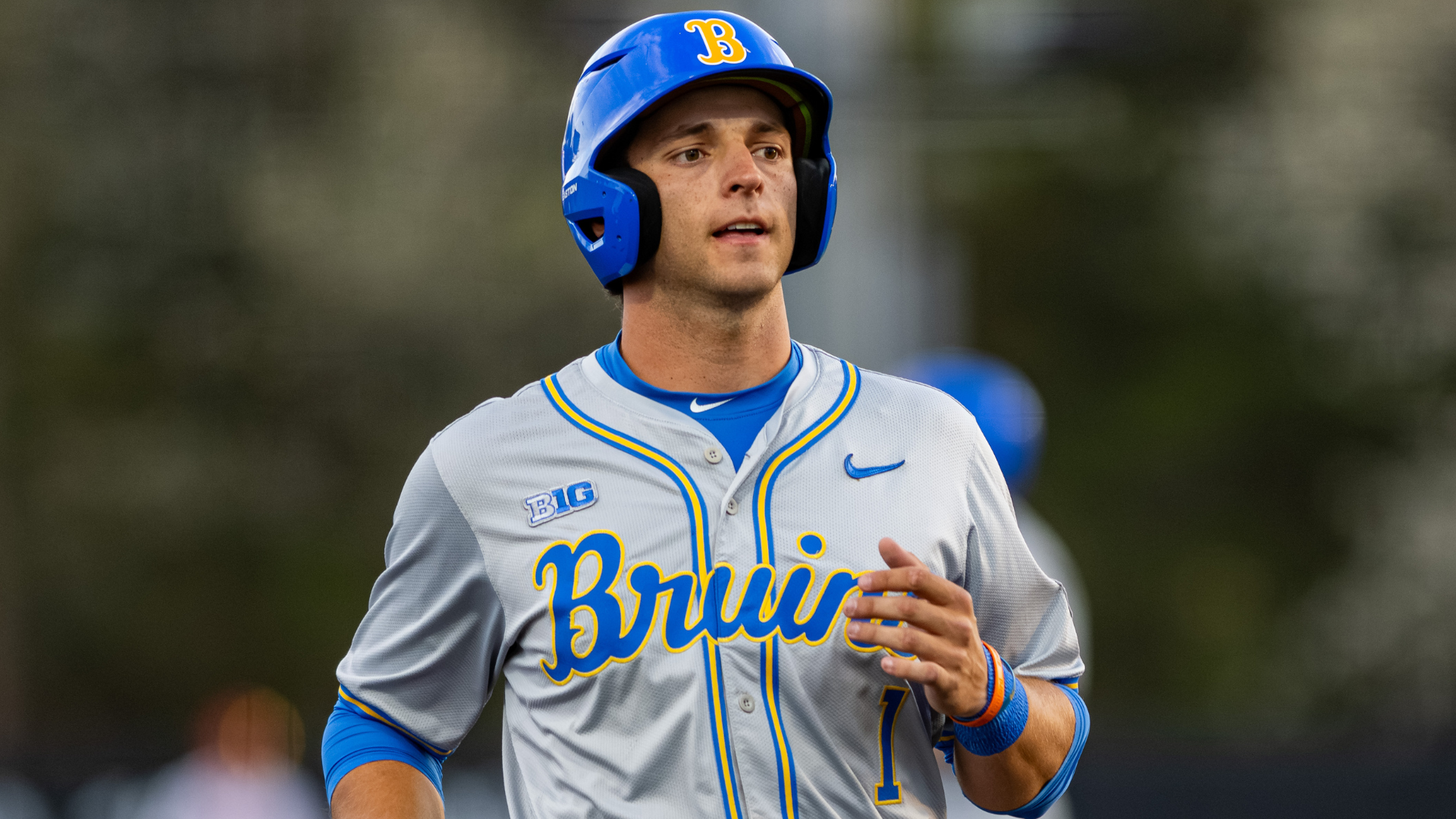
1. White Sox: SS Roch Cholowsky, UCLA
Six weeks out from draft day, Cholowsky to the ChiSox is not set in stone, though it is the most likely outcome. Cholowsky is the best college shortstop in years, probably since Dansby Swanson and Alex Bregman went 1-2 in the 2015 draft, and he is the consensus No. 1 prospect for this year's draft. High school shortstop Grady Emerson is a legitimate option at No. 1 and it could be that Chicago's decision comes down to each player's bonus demands. The White Sox could also take a player like, say, high school shortstop Jacob Lombard, sign him to a below-slot bonus, and use the savings to grab whichever highly ranked players fall to their later picks. For now, Cholowsky's the pick here.
2. Rays: SS Grady Emerson, Fort Worth Christian HS (TX)
Cholowsky and Emerson are the consensus top two prospects for this year's draft, so, in a sense, the Rays have a pretty easy decision with the No. 2 pick. They'll just take whichever one the White Sox don't take. If the White Sox go off the board and take a lower ranked player to play bonus pool games, leaving the Rays to choose between Cholowsky and Emerson, I suspect they would go with Cholowsky, who has less development ahead of him and is closer to MLB-ready.
3. Twins: C Vahn Lackey, Georgia Tech
The No. 3 pick seems like the earliest we could hear a pitcher's named called, with UC Santa Barbara righty Jackson Flora having emerged as the draft's best arm. The Twins have used their last few first-round picks on players with high-end hit tools (Walker Jenkins in 2023, Kaelen Culpepper in 2024, Marek Houston in 2025) and Lackey fits that mold. He is the draft's best catcher and an all-around threat who projects to contribute at the plate while playing strong defense behind it.

4. Giants: SS Jacob Lombard, Gulliver Prep (FL)
The Giants acquired the No. 29 pick and an additional $3,270,200 in bonus pool money in the Patrick Bailey trade with Cleveland. They have the fourth largest bonus pool and spending capacity to tell Cholowsky they'll give him a record bonus (the current record is $9.25 million, so maybe float a $10 million offer?), and see whether that's enough to scare away the White Sox, Rays, and Twins. Most likely, that strategy would fail, but it's worth a try. San Francisco has been linked heavily to Lombard, one of the most tooled up players in the draft who also has good baseball bloodlines. His father, George, played six years in the big leagues and is currently A.J. Hinch's bench coach with the Tigers. His brother, George Jr., is the Yankees' top prospect.

5. Pirates: RHP Jackson Flora, UC Santa Barbara
Teams typically do not draft for need, especially within the top five picks, though Pittsburgh's competitive window is open and it's fair to wonder how many more bites at the apple they have with Paul Skenes, who will be three years away from free agency after this season. A quick-moving college player makes the most sense here and the Pirates are an excellent pitcher development organization. Flora, with his upper-90s fastball and two wipeout sliders, should rocket through the minors and pair with Skenes in short order. Lackey could be another option too should he make it to No. 5.
6. Royals: OF Eric Booth Jr., Oak Grove HS (MS)
The Royals have been connected mostly to high school players, which makes sense given the likelihood the top college prospects (Cholowsky, Flora, Lackey) will come off the board before this pick. Booth might have the highest upside in the draft class even though his swing is a bit unconventional. Still, he's a terrific athlete with top of the line speed, and he's shown enough contact skills and raw power to dream on a future 30-30 player with lockdown center field defense. My guess is Kansas City would prefer Lombard to Booth, though Lombard doesn't make it them in this mock draft.
7. Orioles: IF Drew Burress, Georgia Tech
Is this the year POBO Mike Elias takes a pitcher in the first round? No, almost certainly not. The O's have taken only two pitchers as early as the second round since Elias took over in November 2018 (Jackson Baumeister in 2023 and Joseph Dzierwa in 2025), and, frankly, it shows with the major league team. Baltimore would have to consider Flora in the unlikely event he makes it to this pick. Anyway, Burress is up their alley as a power/plate discipline guy with a solid baseball IQ. Those are the kind of players the O's have gravitated too in the Elias era.
8. Athletics: OF AJ Gracia, Virginia
It could be any of a number of college position players for the A's, including Burress should he make it this far. Texas A&M second baseman Chris Hacopian, Arkansas catcher Ryder Helfrick, and possibly Alabama shortstop Justin Lebron are other possibilities. Gracia is a very disciplined hitter who will have a chance to stay in center field long-term. Coastal Carolina righty Cameron Flukey, even after missing time with a rib injury this spring, could to be the target if the Athletics want a pitcher.
9. Braves: RHP Cade Townsend, Mississippi
Flukey is the consensus No. 2 college pitcher behind Flora, though Townsend is rising and aligns more closely with what the Braves typically target in pitching prospects. He's athletic (think Spencer Schwellenbach) and his raw stuff lights up analytical models (think Hurston Waldrep). Townsend operates in the mid-90s with two bat-missing breaking balls in his slider and curveball. He also has a cutter that is another above-average pitch on its best days. This is Atlanta's highest pick since they took Shea Langeliers with the No. 9 selection in 2019.

10. Rockies: RHP Cameron Flukey, Coastal Carolina
The Rockies have a new front office led by POBO Paul DePodesta, who ran the NFL's Cleveland Browns from 2016-25, so good luck trying to pin down their draft strategy. Colorado has two other picks in the top 40 (competitive balance pick at No. 37 and second rounder at No. 38) and plenty of bonus pool space. The safe route would be taken an college player here, with Flukey standing out as the best available in our mock draft, then targeting higher upside players at No. 37 and 38. But really, the Rockies could go in any number of directions in DePodesta's first draft as an MLB executive since 2014.
11. Nationals: OF/LHP Jared Grindlinger, Huntington Beach HS (CA)
The Nationals are another team with a new front office, one led by POBO Paul Toboni, so we can't use their past draft history to make an educated guess about this year's draft strategy. Grindlinger reclassified out of the 2027 draft and into the 2026 class, so he's among the younger players available this year, and he's a legitimate two-way prospect. The consensus is he has more upside as an outfielder with a well-rounded offensive game, though, as a pitcher, he'd still slot into the top three rounds on talent. It's unclear if the team that drafts Grindlinger will allow him to play both ways as a pro, or have him focus on one side of the ball.
12. Angels: C Ryder Helfrick, Arkansas
Chances are whoever the Angels take here will be the first player in the 2026 draft class to reach the big leagues. An Angels player was the first player to reach MLB from the 2021 (Chase Silseth), 2022 (Zach Neto), 2023 (Nolan Schanuel), and 2024 (Ryan Johnson) draft classes. Helfrick is a strong defender with big power and could come off the board earlier than No. 12. Thanks to position scarcity, catchers are frequently drafted earlier than the public draft prospect rankings would lead you to expect.
13. Cardinals: RHP Liam Peterson, Florida
We're in the guesswork portion of the mock draft and, since being elevated to the top job in the offseason, Cardinals POBO Chaim Bloom has targeted pitching, pitching, and more pitching in every trade (Willson Contreras, Brendan Donovan, Sonny Gray, etc.). I figure that strategy will extend into the draft. Peterson is a scouting report over stats (good but not elite 3.86 ERA this spring) prospect with a very big arm that a pro team could coach up in short order. He would be an excellent ball of clay for the pitching development infrastructure Bloom has been putting in place the last few years.
14. Marlins: SS Justin Lebron, Alabama
Lebron went into 2025 as the super early favorite to be the No. 1 overall pick in 2026, but then Cholowsky broke out, and Lebron put together some uneven performances despite All-Star caliber tools. Under POBO Peter Bendix, the Marlins have hoarded exit velocity (think Owen Caissie, Deyvison De Los Santos, Christopher Morel, Agustín Ramírez) and Lebron offers plenty of it. He is one of the most talented and drool-worthy prospects in the draft class, but also one of the most enigmatic. It is a boom or bust profile with the potential for a very loud boom.
15. Diamondbacks: OF Trevor Condon, Etowah HS (GA)
The Diamondbacks have a type and that type is undersized hitters with short levers, strong bat-to-ball ability, and athleticism. It's the Corbin Carroll/Gabriel Moreno/Slade Caldwell (2024 first rounder) mold. Condon, who is listed at 5-foot-11 and 178 lbs., is right up Arizona's alley then. He's speedy and the belief is there's more power in his bat once he learns how to hunt and turn on fastballs. Condon is also a very intense competitor who's been compared to Lenny Dykstra for his hair-on-fire playing style.
16. Rangers: LHP Hunter Dietz, Arkansas
As a four (and sometimes five) pitch lefty who's shown some 98s this spring, Dietz has a real chance to go in the top 10 picks on draft day despite throwing 1 ⅔ innings total from 2024-25. The arm talent is undeniable and I think getting Dietz here would be a coup for Texas. The Rangers have had a thing for "famous" prospects in the draft (think Jack Leiter and Kumar Rocker), which could lead them to Lebron should he make it to this pick.
17. Astros: OF Sawyer Strosnider, TCU
Whichever teams selects Strosnider will do so dreaming on the tools and overlooking shaky performance and a recent ankle injury. The natural gifts (raw power, speed, athleticism) suggest he should be a top 10 pick. The plate discipline, specifically Strosnider's penchant for chasing spin out of the zone, point more toward the middle and back of the first round, and create risk.

18. Reds: LHP Gio Rojas, Stoneman Douglas HS (FL)
Relatively speaking, high school pitchers are an unpopular demographic these days because there is so much injury risk and because teams have so much more information about college arms. Rojas is the prototype as a big (listed at 6-foot-4 and 190 lbs.) and projectable lefty who's already touched the upper-90s, has one of the draft's best breaking balls, and a calm demeanor on the mound. He would not be out of place in the top 10 picks, but risk aversion potentially pushes him down into the back half of the first round. The Reds hit a home run with this profile with Hunter Greene.
19. Guardians: 2B Chris Hacopian, Texas A&M
One of the more divisive players in the draft class, Hacopian could hear his name called in the top 10 picks or not in the first round at all. He's one of the best and most decorated college hitters of the 2020s, but there are concerns about his power potential (he hits a lot of ground balls for a potential first rounder) and long-term defensive home (likely first base or left field). The Guardians have zigged in the opposite direction with recent first round picks, going after college hitters with big power and athleticism (Chase DeLauter in 2022 and Jace LaViolette in 2025), but it's OK to zag sometimes too.
20. Red Sox: 3B Bo Lowrance, Christ Church Episcopal School (SC)
Lowrance is one of the biggest risers in the draft class and we could be talking about him as a potential top 10-15 pick as we get closer to draft day. He's a big kid (listed at 6-foot-5 and 200 lbs.) with a pretty left-handed swing and power potential, and a track record of performing well against top competition in showcase events. Whichever team drafts him (this is especially true if he goes closer to the No. 10 pick than the No. 20 pick) will do so believing Lowrance can stick at the hot corner at the next level. There is a chance his future lies at first base, putting adding pressure on the bat.

21. Padres: LHP Brody Bumila, Bishop Feehan HS (MA)
Under GM A.J. Preller, the Padres have targeted high school players with significant upside in the first round. Bumila is in their wheelhouse as a 6-foot-9, 255-pound lefty who's hit 102 mph this spring and has the makings of three secondary pitches (curveball, changeup, slider). He's already had his UCL repaired once via the internal brace procedure (so not full Tommy John surgery), and there's some thought that between missing time with the injury and being from a cold weather state means Bumila has a lot of untapped potential. This would be 10 straight first-round picks on high school players for San Diego.

22. Tigers: OF Derek Curiel, LSU
Curiel gives off some Kevin McGonigle vibes as an elite bat-to-ball hitter with a great approach, though he doesn't have McGonigle's over-the-fence power potential. There are also some questions about his ability to stay in center field given his good but not great defensive chops. The Tigers have used their last few first round picks on high school players (Max Clark in 2024, Bryce Rainer in 2024, Jordan Yost in 2025), so Curiel would be an against the grain selection for them at No. 22.

23. Cubs: SS Tyler Bell, Kentucky
If healthy, Bell might've been a top five pick this year. He tore the labrum in his non-throwing shoulder on Opening Day and has played through the injury the last few weeks, and he's been mashing anyway: .352/.517/.602 in 37 games. Bell is a switch-hitter with contact skills, some power, a good approach, and good defense. He's expected to have surgery after the season and the recovery could cut into his 2027, but my guess is a team will still take a swing late in the first round. The Cubs have taken a college hitter with their last three first round picks (Matt Shaw in 2023, Cam Smith in 2024, Ethan Conrad in 2025) and are as good a bet as any team to roll the dice on Bell. (Shoulder surgery cut Conrad's draft year short too. Hmmm.)
24. Mariners: SS Eric Becker, Virginia
Nagging injuries have taken a bite out of Becker's draft stock, though there's still a chance he's a top 15 pick. He's a solid, well-rounded player who is good at everything but will probably never be great at any one thing, but he can hit, he can run, and he can defend his position. Even without loud tools, Becker is a winning type of player who is popular in the clubhouse and a team leader. The Mariners excel at developing college pitching, though there aren't any on the board in the mock draft who make sense here.
25. Brewers: SS Aiden Ruiz, Stony Brook School (NY)
Ruiz is Brewers coded as a terrific athlete with high-end defensive skills (he's arguably the best defensive player in the draft class), strong bat-to-ball ability, speed, and the sort of quiet confident and toughness that you find up and down Milwaukee's lineup. The risk is Ruiz just never develops enough hard-hit ability to be more than a No. 9 hitter, but the defense is so good that he'll always be worth having in the lineup.
The Blue Jays, Dodgers, Mets, Phillies, and Yankees all had their first-round pick moved back 10 spots through CBT penalties. The Mets hold the No. 27 pick, the Yankees the No. 35 pick, the Phillies the No. 36 pick, the Blue Jays the No. 39 pick, and the Dodgers the No. 40 picks. Those picks have all been pushed out of the first round proper.
Add CBS Sports on Google Join the Conversation comments