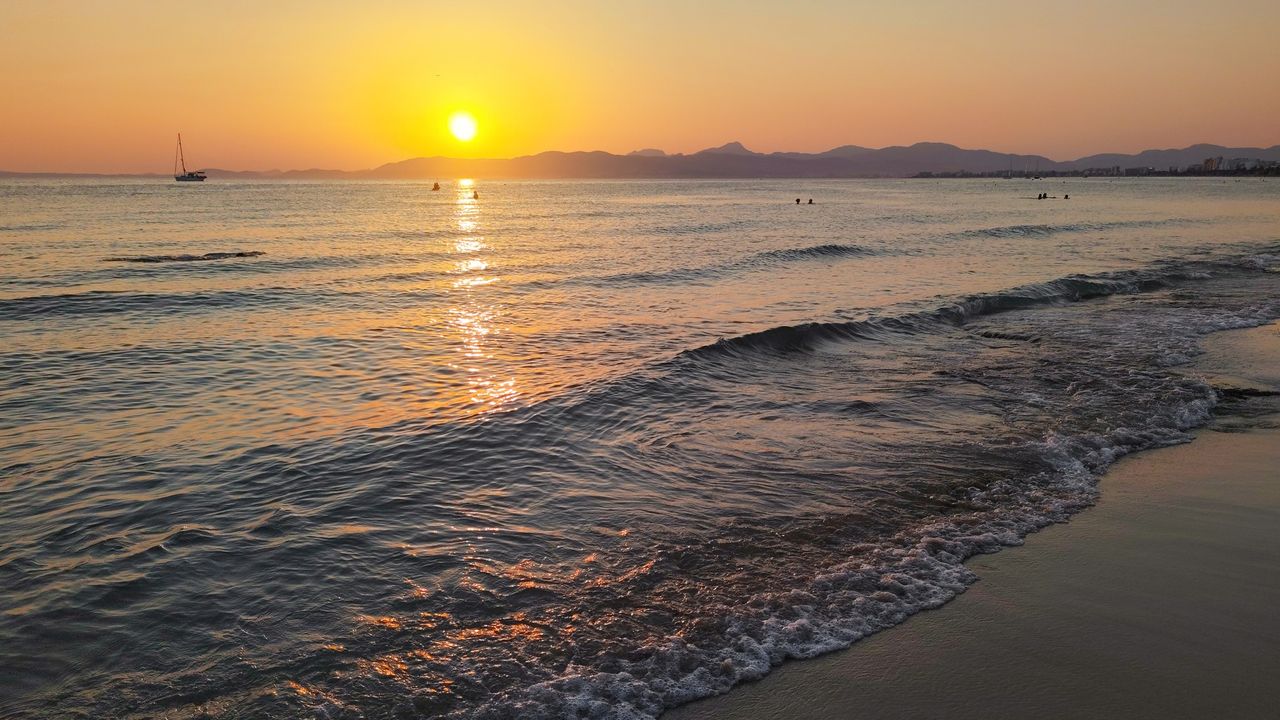
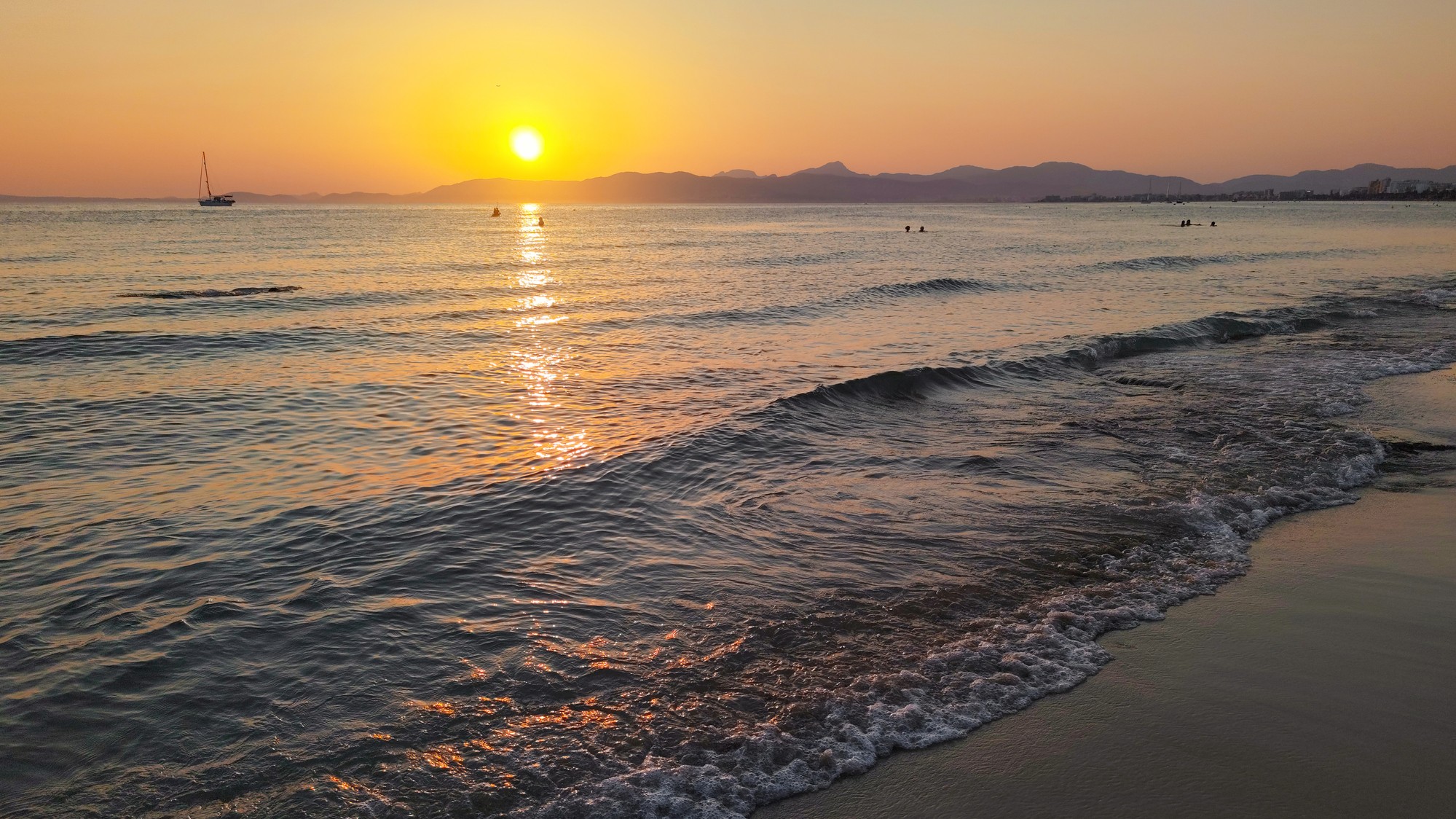
 The total solar eclipse on Aug. 12, 2026, can be enjoyed on many beaches in Spain, such as S'Arenal in Mallorca. (Image credit: Emya Photography via Getty Images) Jump To:
 - 1. Playa de Palma, Mallorca
- 2. Playa de la Malvarrosa, Valencia
- 3. La Muntanyeta dels Sants, Valencia
- 4. Platja de Llevant, Salou
- 5. Circuit Ricardo Tormo, Valencia
- 6. Vinaròs, Costa del Azahar
- 7. Altafulla, Catalonia
- 8. Far d'Artrutx, Menorca
- 9. Llacuna de l'Encanyissada, Ebro Delta
- 10. Montsià Hills, Catalonia
For the Aug. 12, 2026, total solar eclipse, Spain's iconic holiday hubs will be buzzing, but many are outside the path of totality. If you're in the Costa Brava or Barcelona, you're in the danger zone of missing out. Barcelona will experience a 99% partial eclipse, which might sound impressive, but in practice it's no more interesting than a 10% eclipse; you miss the corona, the sudden darkness and the drop in temperature.
In eclipse chasing, it's totality or bust — and that means getting in the path of totality, on the east coast of Spain, between Vilanova i la Geltrú in the north, close to Barcelona, and Cullera, just south of Valencia. Here, the eclipsed sun will be about four degrees above the west-northwest horizon, but most Mediterranean resorts face the water to the east, meaning the sun will be behind you, hidden by hotels or hills. To see the corona, you need an unobstructed northwest-facing view. Wide, flat areas like the Ebro Delta, high ground and well-positioned miradors are worth searching out. The same goes for the Balearic Islands, where a sunset eclipse — totality takes place barely 2 degrees above the horizon — can be enjoyed from west-facing beaches.
Essential resources for checking and re-checking intended destinations for totality include Xavier Jubier's Interactive Google Map, which has timings and built-in sightlines from Peak Finder, as well as The Eclipse App, Eclipse Horizon Checker and the Instituto Geográfico Nacional. Do your research and, if you can, check the location the night before for a clear view of the sunset.
Latest Videos FromView moreWatch full video here:
1. Playa de Palma, Mallorca
The S'Arenal end of Playa de Palma beach. (Image credit: Emya Photography via Getty Images)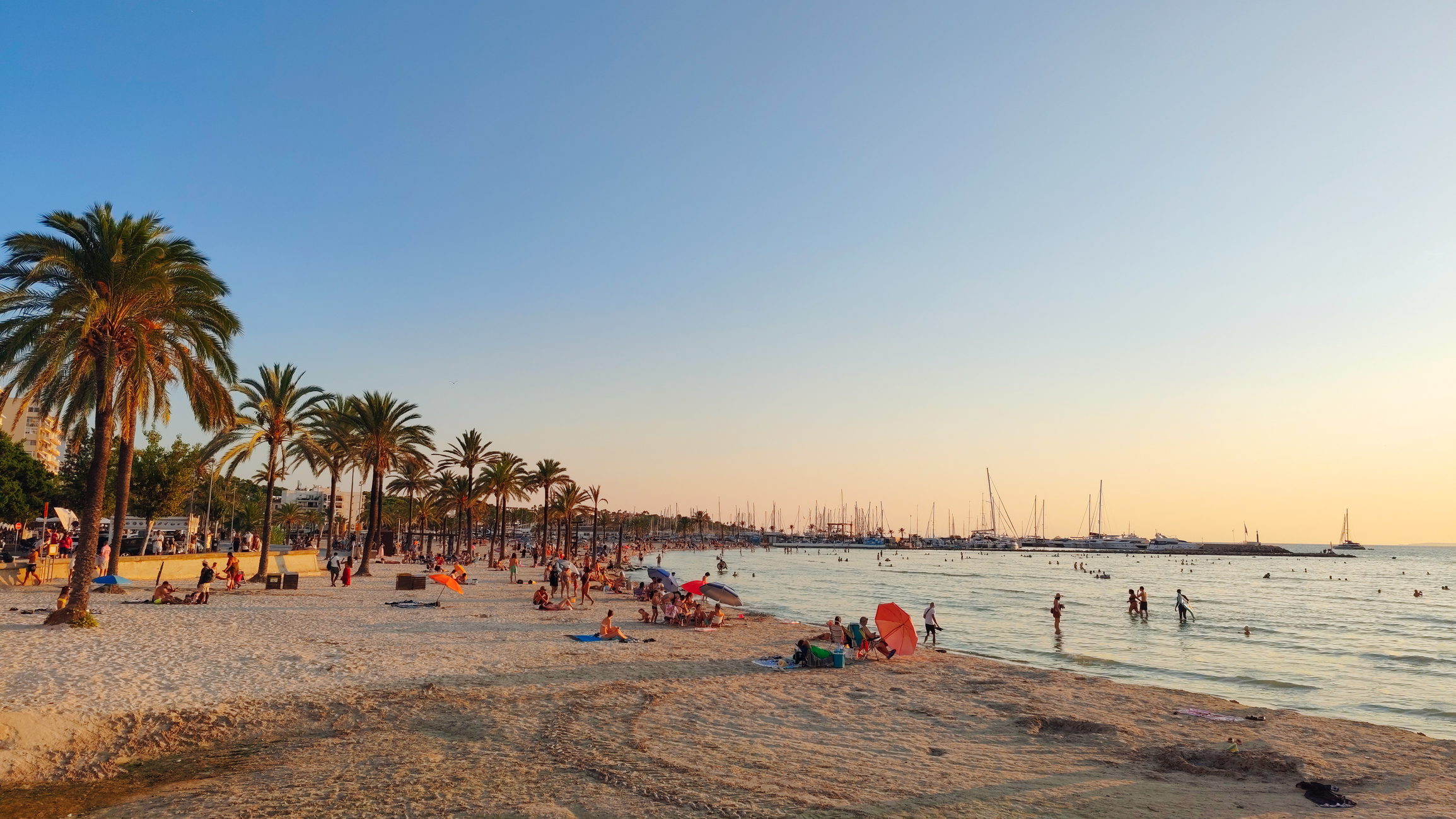
Location: Mallorca, Balearic Islands, Spain
Time and duration of totality: 8:31 p.m. CEST; 1 minute, 36 seconds
Height of eclipsed sun above west-northwest: 2.4 degrees
Chance of clouds: 32% (since 2000, according to Timeanddate.com)
It won't do to be in Palma de Mallorca, the island's capital, come totality. Escaping to the rugged west coast is one option, but another is to head down the coast to this long sandy beach resort stretching between Can Pastilla and S'Arenal. Its lively promenade will host a fine view of the eclipsed sun just before sunset, though avoid the first miles or so southeast of Can Pastilla, which will have obstructed sightlines.
2. Playa de la Malvarrosa, Valencia
Valencia's Malvarrosa beach. (Image credit: pawel.gaul via Getty Images)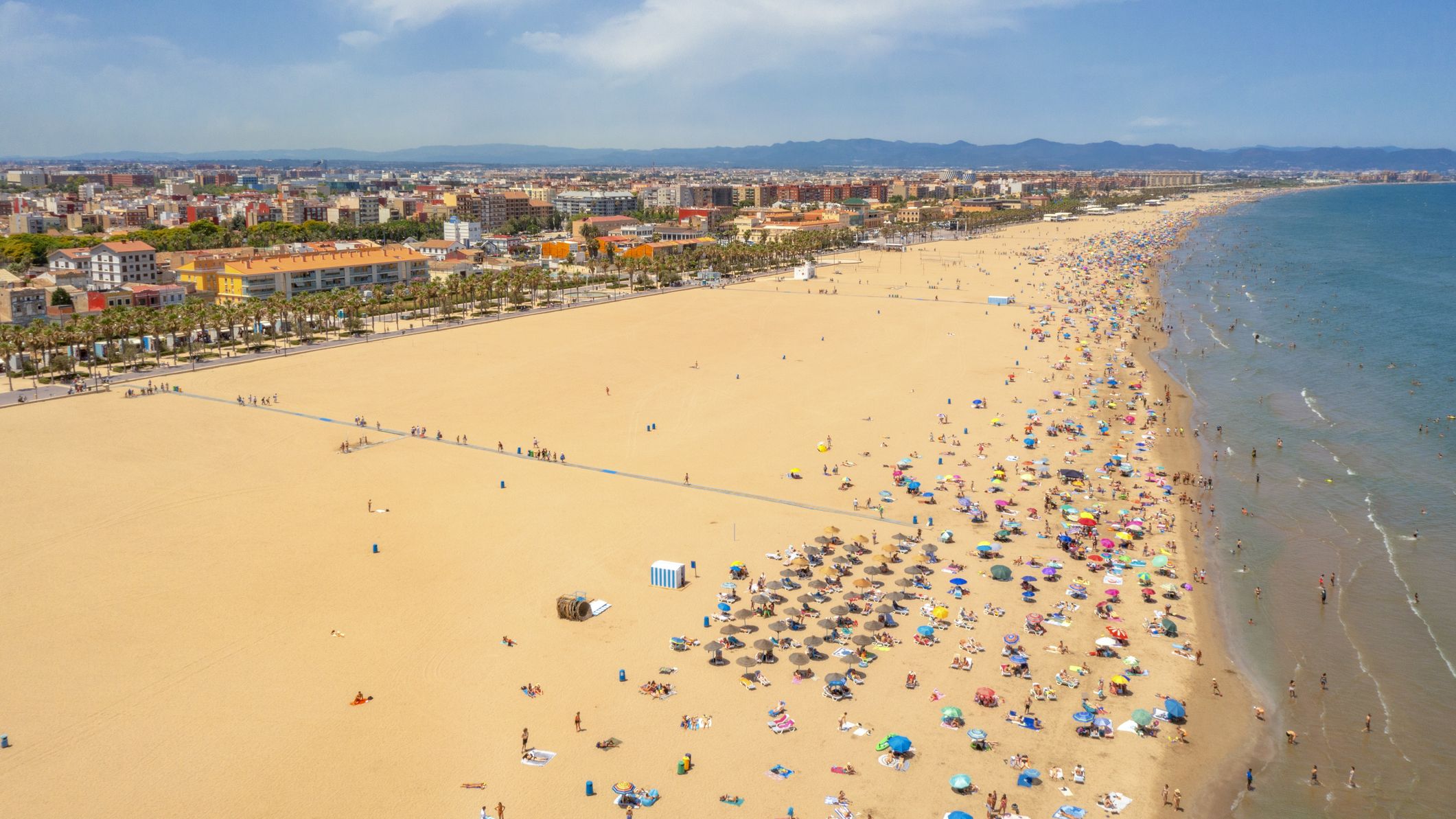
Location: Valencia, Spain
Time and duration of totality: 8:32 p.m. CEST; 1 minute, 3 seconds
Height of eclipsed sun above west-northwest: 4.4 degrees
Chance of clouds: 31% (since 2000)
Just a stone's throw from the city center, Valencia's best-known beach has fine sand, a relaxed atmosphere and — if you're careful — clear sightlines to the eclipse. The port, at the south end of the beach, is also an option.
3. La Muntanyeta dels Sants, Valencia
Location: València, Spain
Time and duration of totality: 8:33 p.m. CEST; 25 seconds
Height of eclipsed sun above west-northwest: 4.2 degrees
Chance of clouds: 28% (since 2000)
Chasing such a short totality might seem crazy, but clear sightlines from the east coast are rare — and this location has everything. Inside Albufera Natural Park, this watchtower is a limestone promontory that gives views across paddy fields.
4. Platja de Llevant, Salou
Llevant golden sand beach in Salou. (Image credit: imageBROKER/LUNAMARINA via Getty Images)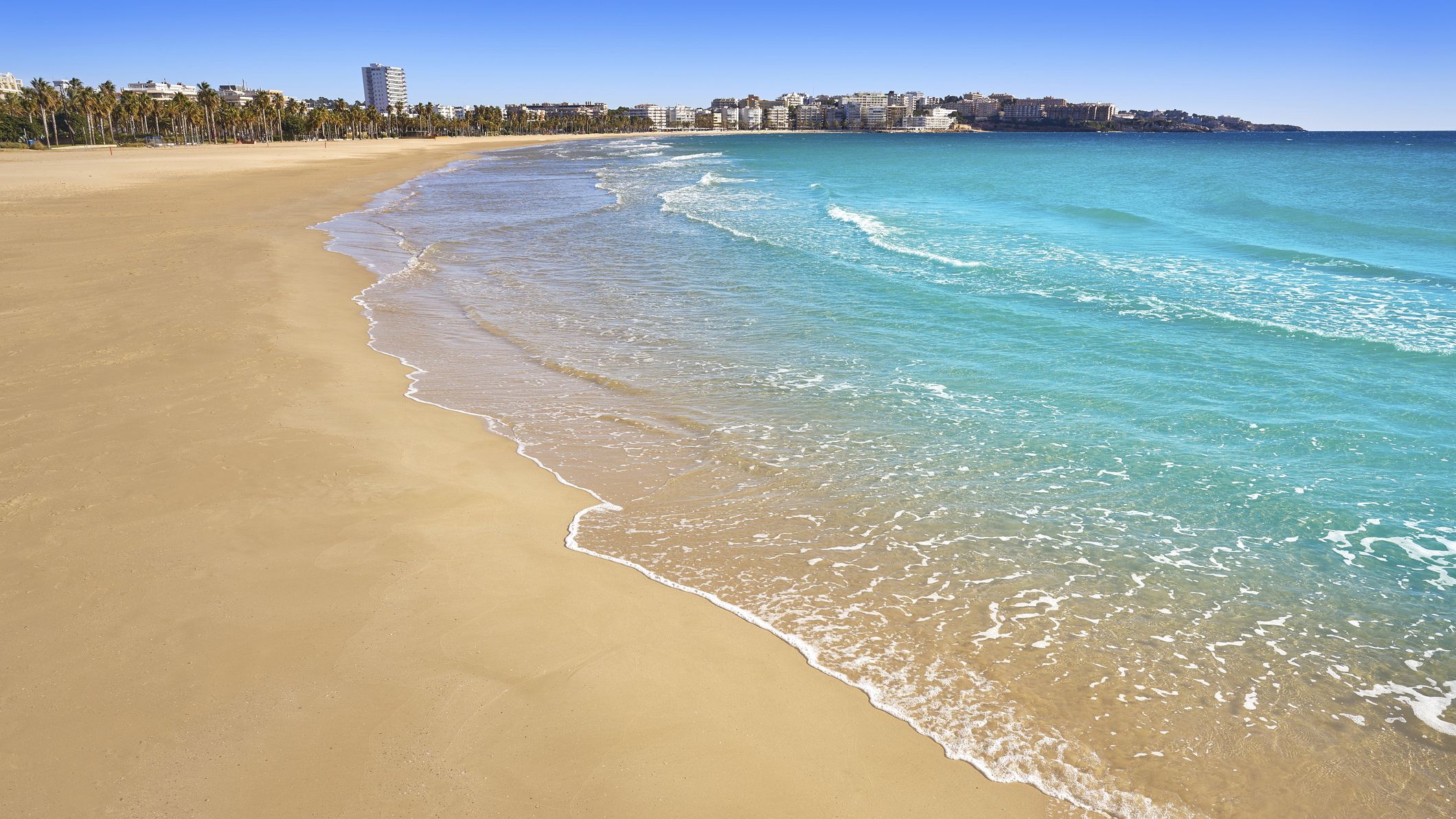
Location: Salou, Tarragona, Spain
Time and duration of totality: 8:29 p.m. CEST: 1 minute, 7 seconds
Height of eclipsed sun above west-northwest: 4 degrees
Chance of clouds: 35% (since 2000)
A popular, family-friendly resort town on Spain's Costa Daurada (or Costa Dorada), Salou is close to the northern limit of the path of totality, but still has a reasonably long totality. It's known for its Llevant golden sand beach, with the place to be a mirador at its eastern end, on the Punta del Cavall promontory that overlooks the coast. It's one of 25 viewpoints along a coastal path.
5. Circuit Ricardo Tormo, Valencia
Location: Cheste, Valencia, Spain
Time and duration of totality: 8:32 p.m. CEST; 51 seconds
Height of eclipsed sun above west-northwest: 4.6 degrees
Chance of clouds: 32% (since 2000)
Also called Circuit de Valencia, this motor racing track holds the finale of the MotoGP season, but on Aug. 12 it looks set to stage a mass observing event. It's got high ground to the northwest, so sightlines will likely be tight, but the southeast of the circuit has a clear view of a short totality
6. Vinaròs, Costa del Azahar
Location: Costa del Azahar, Castellón, Spain
Time and duration of totality: 8:30 p.m. CEST; 1 minute, 39 seconds
Height of eclipsed sun above west-northwest: 4.5 degrees
Chance of clouds: 34% (since 2000)
On the Costa del Azahar — the Orange Blossom Coast — Vinaròs is renowned for its beaches, coves and its red prawns. Those after clear sightlines here will struggle, but there is one option: Far de Vinaròs, a lighthouse with views back to the northwest.
7. Altafulla, Catalonia
Platja de Tamarit in Altafulla. (Image credit: imageBROKER/TONO BALAGUER via Getty Images)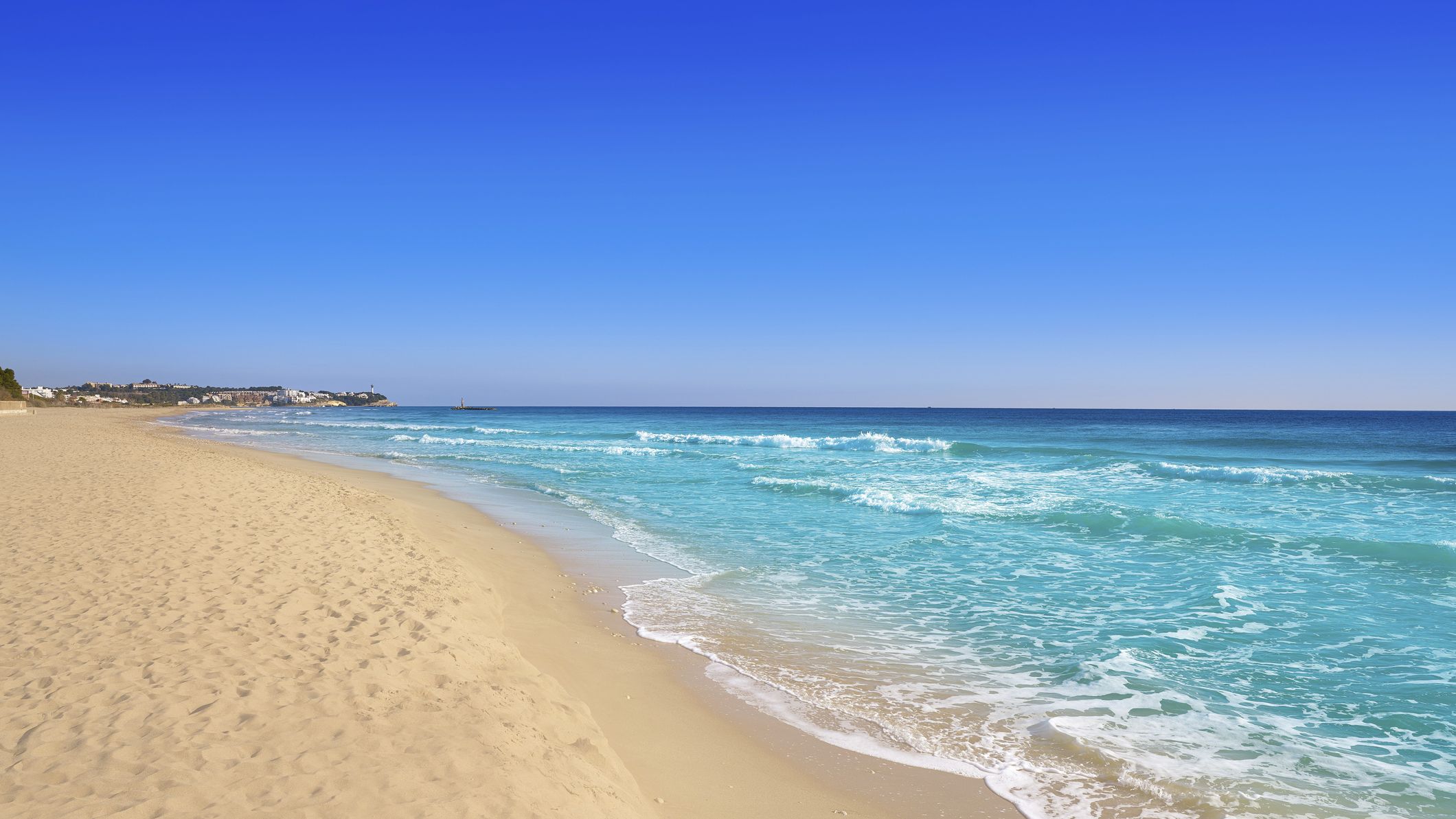
Location: Tarragonès, Catalonia, Spain
Time and duration of totality: 8:29 p.m. CEST; 54 seconds
Height of eclipsed sun above west-northwest: 4.2 degrees
Chance of clouds: 38% (since 2000)
A smaller, quieter alternative to the neighboring large cities, Altafulla has a well-preserved old town. Its beaches — Platja de Tamarit and Platja d'Altafulla — will offer open views, particularly near Búnquer d'Altafulla. However, it's close to the northern limit of the path, so totality is short.
8. Far d'Artrutx, Menorca
The Far d'Artrutx Lighthouse in Menorca. (Image credit: David Martinez viaGetty Images)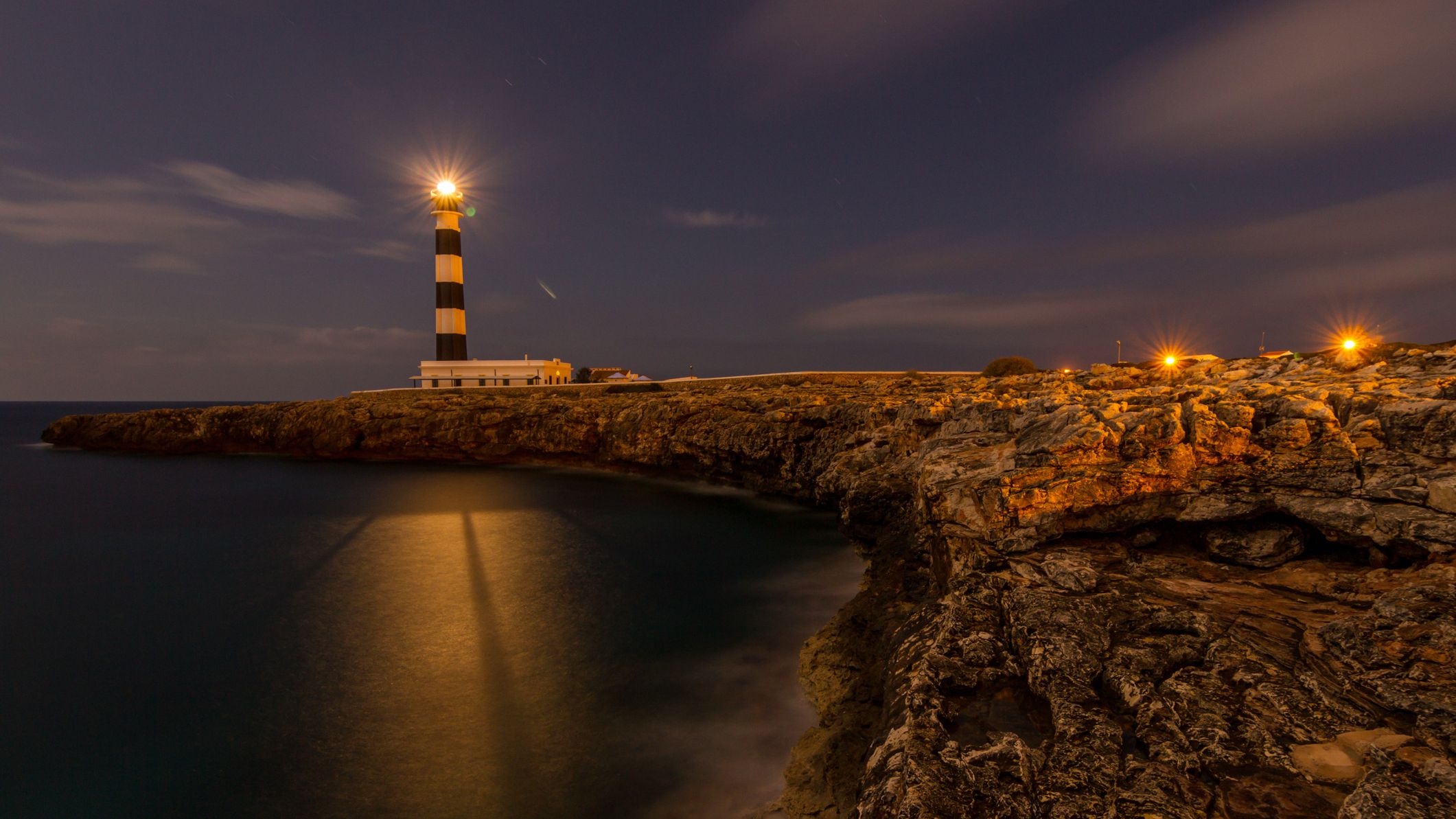
Location: Cap d'Artrutx, Menorca, Balearic Islands, Spain
Time and duration of totality: 8:31 p.m. CEST; 1 minute, 16 seconds
Height of eclipsed sun above west-northwest: 2 degrees
Chance of clouds: 32% (since 2000)
Far d'Artrutx is a lighthouse at the extreme southwest corner of Menorca, from where Mallorca can be seen in the distance. The town above it, Cap d'Artrutx, has a long promenade along a low cliff edge where thousands will gather to watch totality, followed by a deep, partially eclipsed sun sinking into the Mediterranean.
9. Llacuna de l'Encanyissada, Ebro Delta
Tancada lagoon, close to Encanyissada in the Ebro Delta. (Image credit: Westend61 via Getty Images)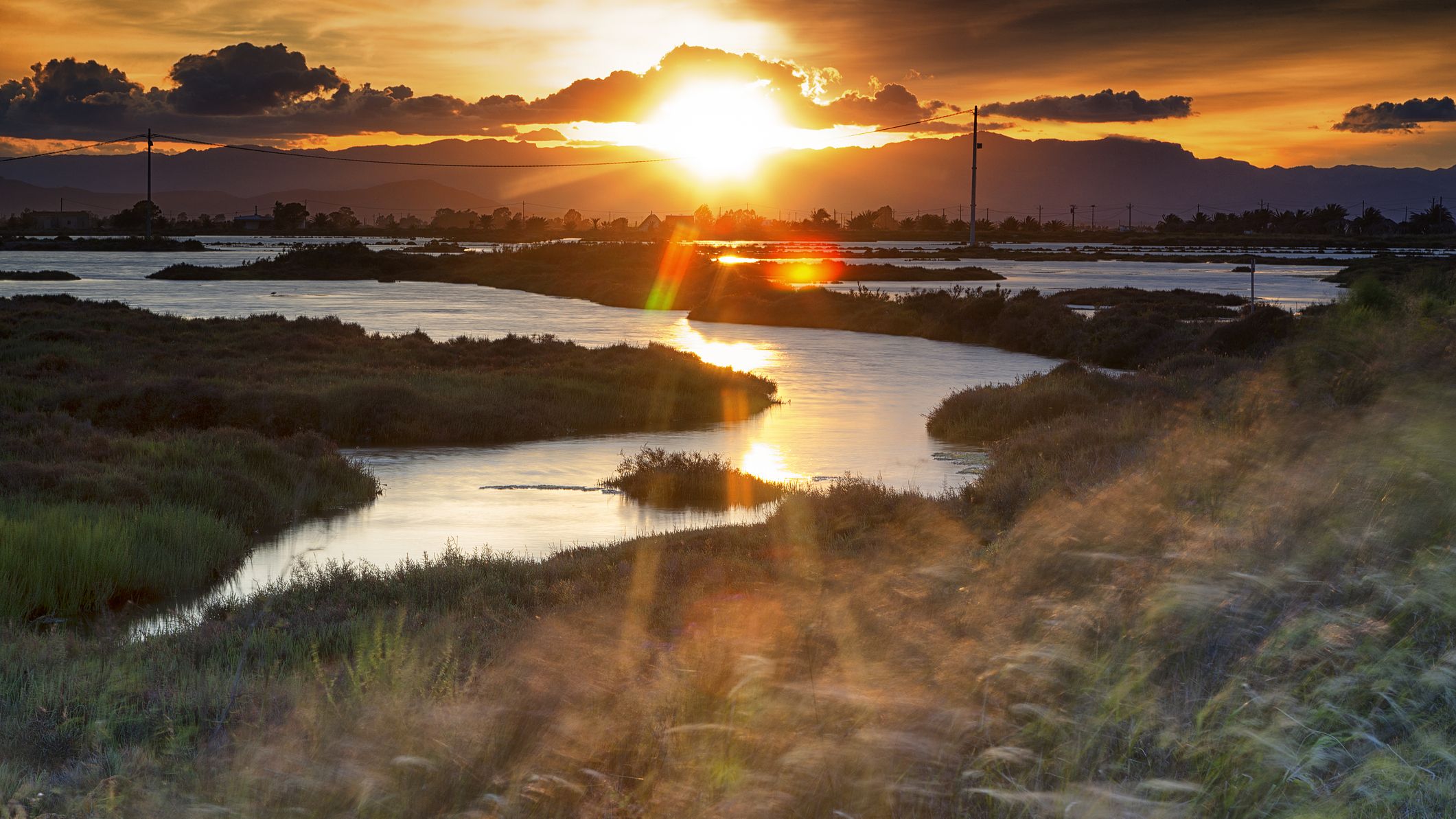
Location: Parc Natural del Delta de l'Ebre, Tarragona, Spain
Time and duration of totality: 8:30 p.m. CEST; 1 minute, 34 seconds
Height of eclipsed sun above west-northwest: 4.5 degrees
Chance of clouds: 31% (since 2000)
Llacuna de l'Encanyissada — the largest lagoon in the Ebro Delta — is a nature reserve and has a low and unobstructed sightline west-northwest across a lagoon. It's ringed by raised tracks, levees and birdwatching hides.
10. Montsià Hills, Catalonia
Aerial view of the Montsià area in Catalonia, Spain. (Image credit: Jordi Salas via Getty Images)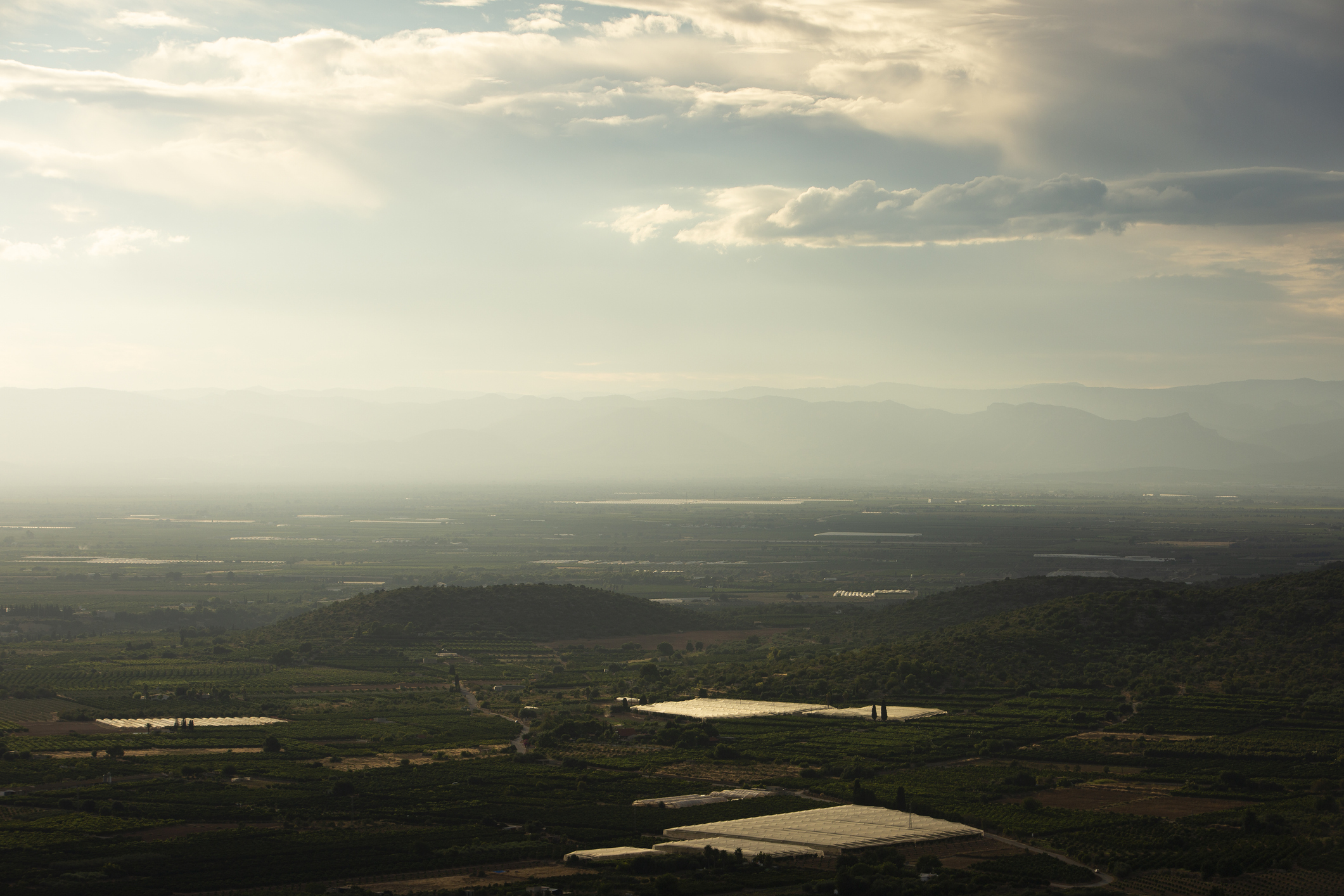
Location: Ulldecona, Catalonia, Spain
Time and duration of totality: 8:30 p.m. CEST; 1 minute, 37 seconds
Height of eclipsed sun above west-northwest: 4.5 degrees
Chance of clouds: 35% (since 2000)
Hikers after something special — and prepared to take the chance of cloud — could consider ascending to la Torreta del Montsià, at 2,506 ft. (764 m), the highest point of the Serra del Montsià range. It's above Sant Carles de la Ràpita and inland from the Ebro Delta.
View MoreYou must confirm your public display name before commenting
Please logout and then login again, you will then be prompted to enter your display name.
Logout Jamie CarterContributing Writer
Jamie is an experienced science and travel journalist, stargazer and eclipse chaser who writes about exploring the night sky, solar and lunar eclipses, the Northern Lights, moon-gazing, astro-travel, astronomy and space exploration. He is the editor of WhenIsTheNextEclipse.com, author of A Stargazing Program For Beginners, co-author of The Eclipse Effect, and a senior contributor at Forbes.