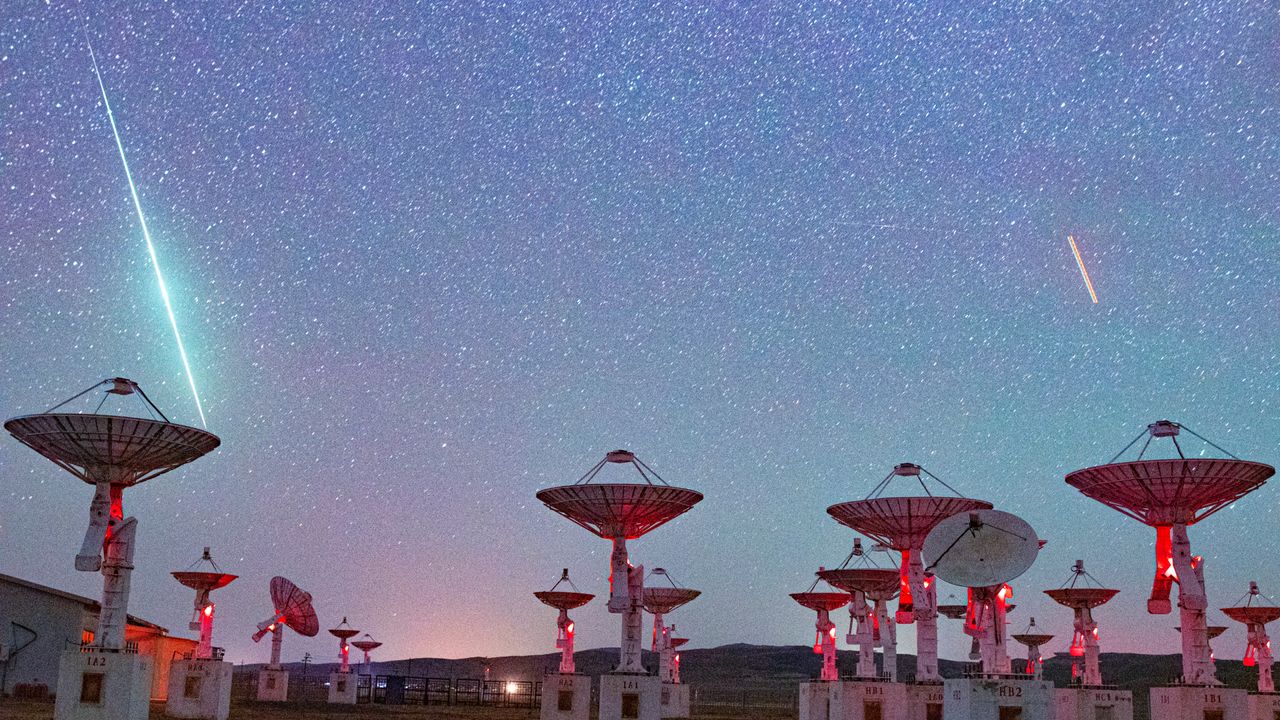
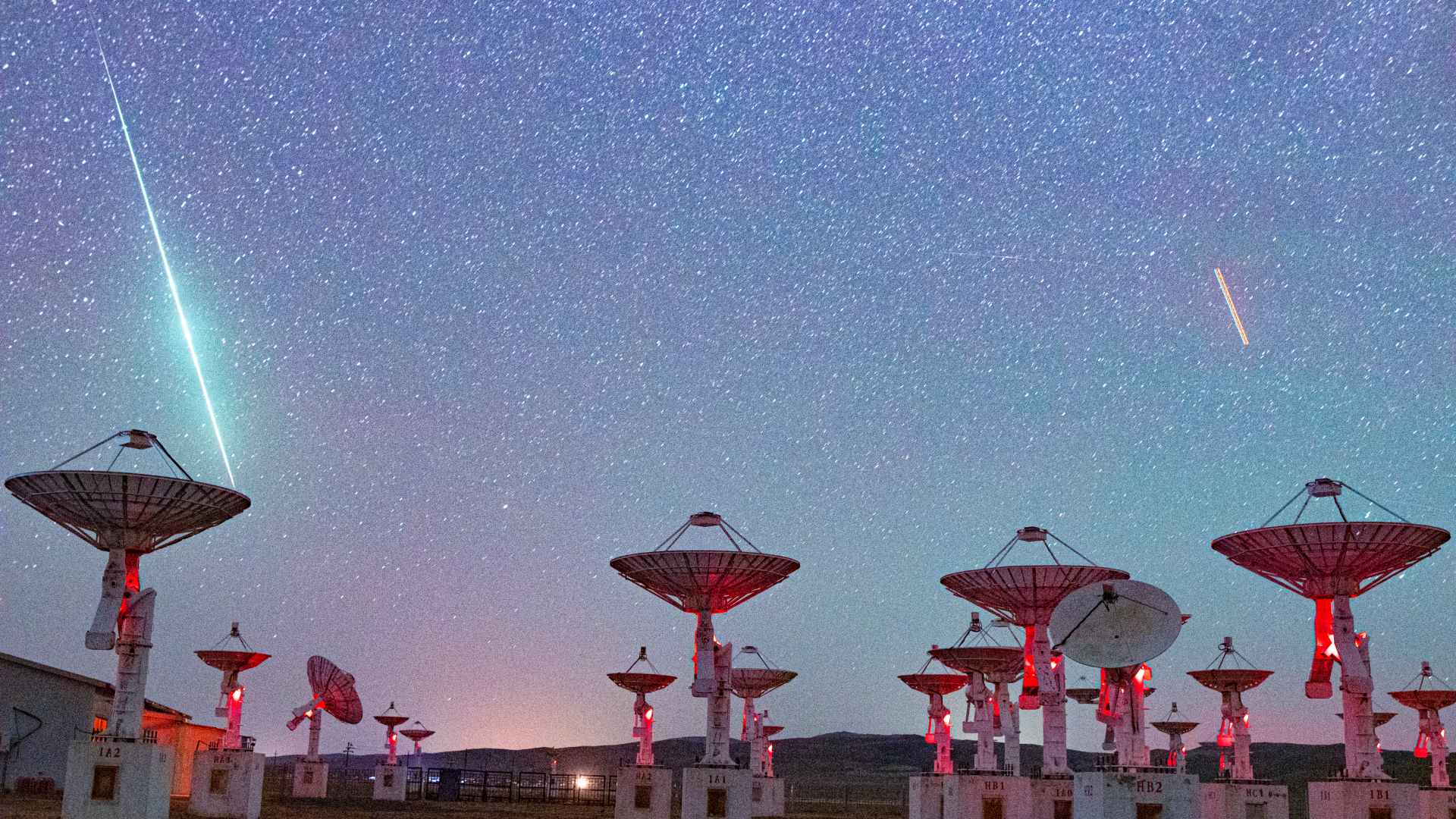
 Lyrid meteors streak Earthward over China in April 2021. (Image credit: Photo by Zhang Gang/VCG via Getty Images) Share this article 0 Join the conversation Follow us Add us as a preferred source on Google Newsletter Get the Space.com Newsletter
 Breaking space news, the latest updates on rocket launches, skywatching events and more!
Contact me with news and offers from other Future brands Receive email from us on behalf of our trusted partners or sponsors By submitting your information you agree to the Terms & Conditions and Privacy Policy and are aged 16 or over.You are now subscribed
Your newsletter sign-up was successful
Want to add more newsletters?
An account already exists for this email address, please log in. Subscribe to our newsletterGet ready stargazers, we're just one week away from the start of the Lyrid meteor shower! Here's what you need to know before Earth passes into the trail of debris shed by Comet C/1861 G1 Thatcher, triggering the start of a spectacular natural light show that could see magnificent fireballs streak through the predawn sky.
Canon EOS R7 camera 
The Canon EOS R7 is the best camera for beginners hoping to capture shooting stars. It features a 34.4MP sensor, ISO range up to 32,000 and a video capability of 4K UHD 60p and all the best tools to help a novice master photography. Read our full Canon EOS R7 review.
Shooting stars occur when tiny fragments of comets or asteroids enter Earth's atmosphere. During their descent toward Earth, they create brief, fiery trails as they're overwhelmed by the intense friction of atmospheric entry.
Meteors belonging to the Lyrid shower will appear to originate from a patch of sky close to the bright star Vega in the constellation Lyra, which can be found rising in the northeast during the evening and climbing higher toward dawn.
The Lyrids are known for producing bright, fast-moving meteors that tend to lack persistent trails, but have the potential to spawn spectacular fireballs as larger chunks of Comet Thatcher smash into Earth's atmosphere.
When to see Lyrid meteors
Your prime window for spotting Lyrid meteors is in the early hours of April 22, when the radiant will be positioned high above the eastern horizon and the 27%-lit waxing crescent moon will have set out of sight, providing a beautiful dark sky perfect for spotting shooting stars. While the shower is expected to crescendo on April 22, it could put on a fairly strong showing on the surrounding nights, so be sure to look up!
The radiant of the Lyrid meteor shower is located near the Hercules-Lyra border. (Image credit: Future)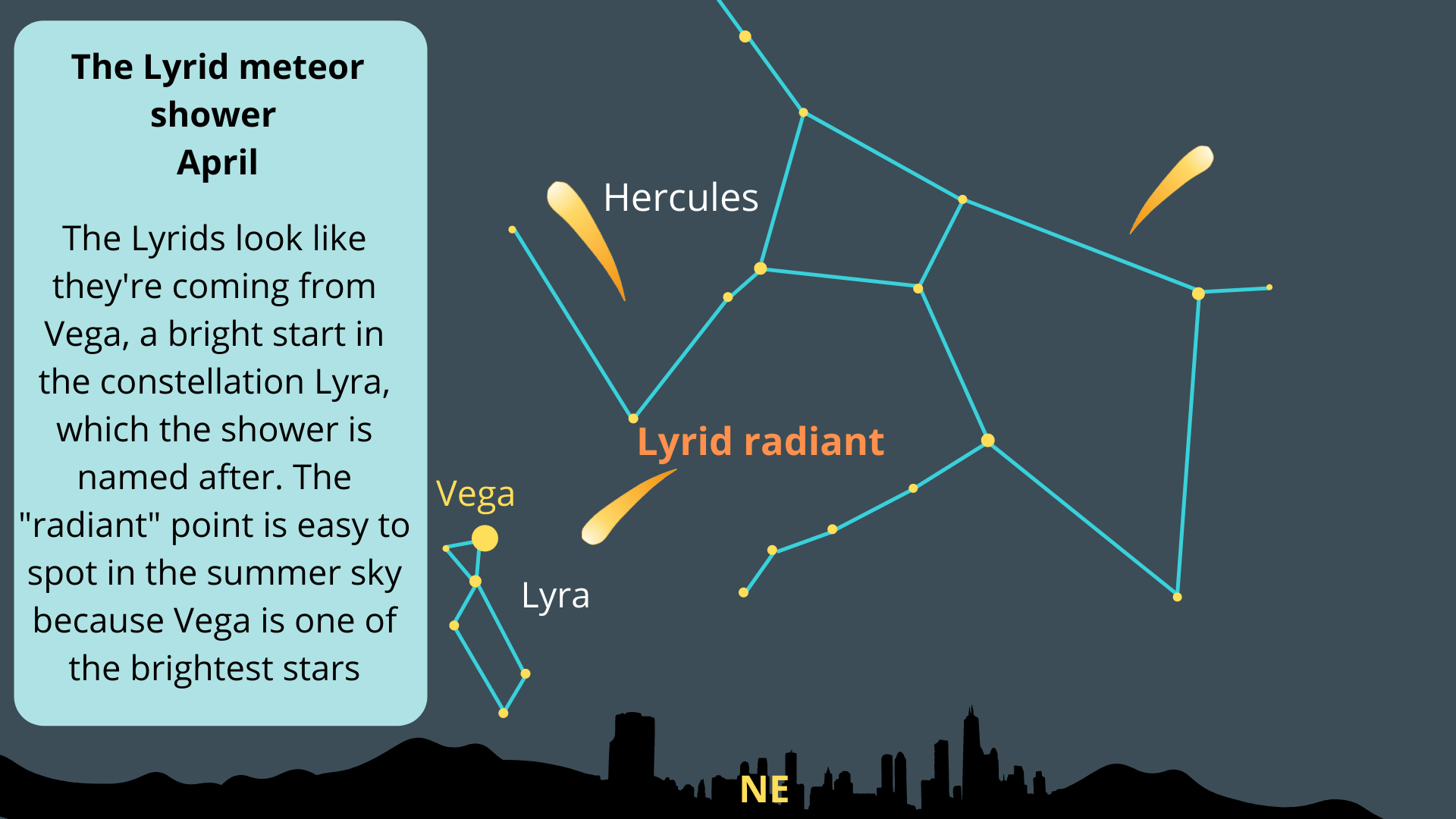
How to spot Lyrid meteors
If you can, try to head away from city lights and allow 20-30 minutes for your eyes to fully adjust to the dark. Use a red light if you do need a source of illumination, as this will preserve your night vision while allowing you to see what you're doing.
Get the Space.com NewsletterContact me with news and offers from other Future brandsReceive email from us on behalf of our trusted partners or sponsorsMeteor showers can put on a spectacular show when seen with the naked eye, but also make for a phenomenal photographic target. Why not check out our guide to capturing meteor showers with a digital camera, along with our roundups of the best lenses and camera bodies for astrophotography.
Editor's Note: If you capture a photo of a Lyrid meteor and want to share it with Space.com's readers, then please send your image(s), comments, and your name and location to [email protected].
 Anthony WoodSkywatching Writer
Anthony Wood joined Space.com in April 2025 after contributing articles to outlets including IGN, New Atlas and Gizmodo. He has a passion for the night sky, science, Hideo Kojima, and human space exploration, and can’t wait for the day when astronauts once again set foot on the moon.
View MoreYou must confirm your public display name before commenting
Please logout and then login again, you will then be prompted to enter your display name.
Logout MORE FROM SPACE... 1NASA astronaut Leland Melvin makes a cartoon cameo in latest episode of Disney+'s 'Hey A.J.!'
- 2Artemis 2 astronaut poses for epic selfie | Space photo of the day for April 9, 2026
- 3'We all pretty much broke down right there': Inside the Artemis 2 astronauts' emotional moment near the moon
- 4Light pollution has brightened Earth by 16% since 2014, satellites find
- 5Artemis 2 mission sends 'Kerbal Space Program' player numbers soaring to the Mun