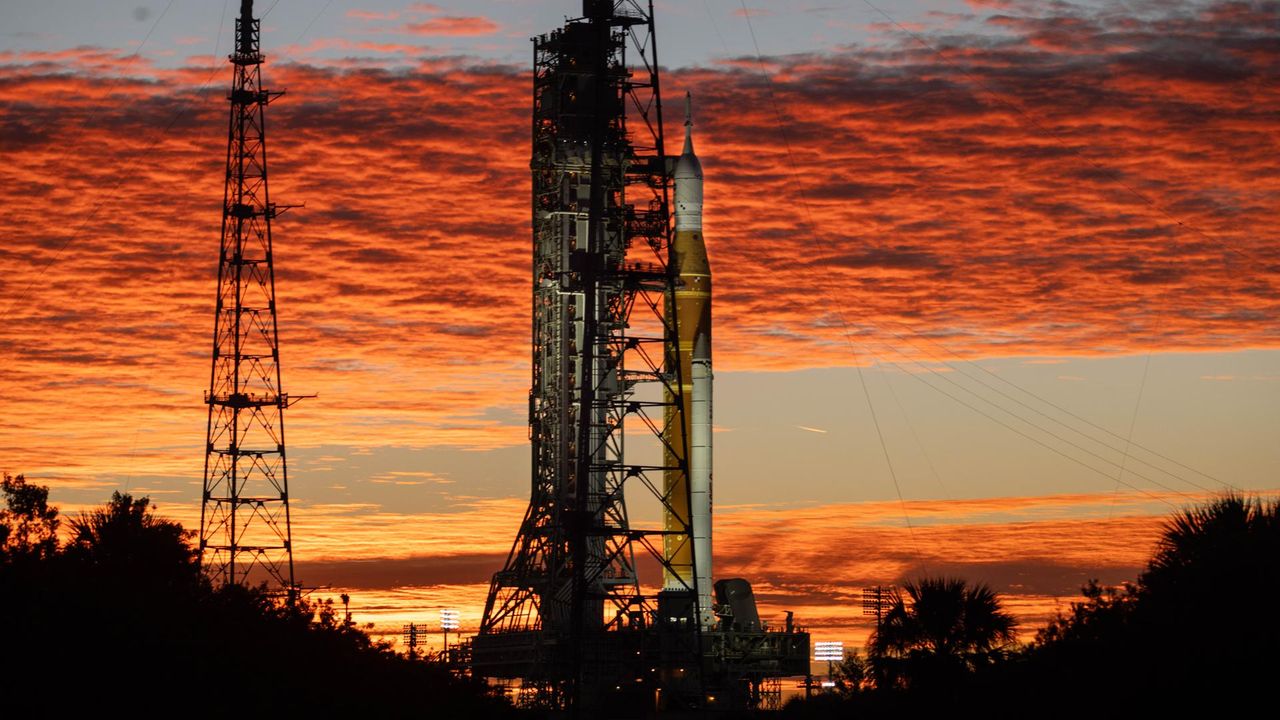
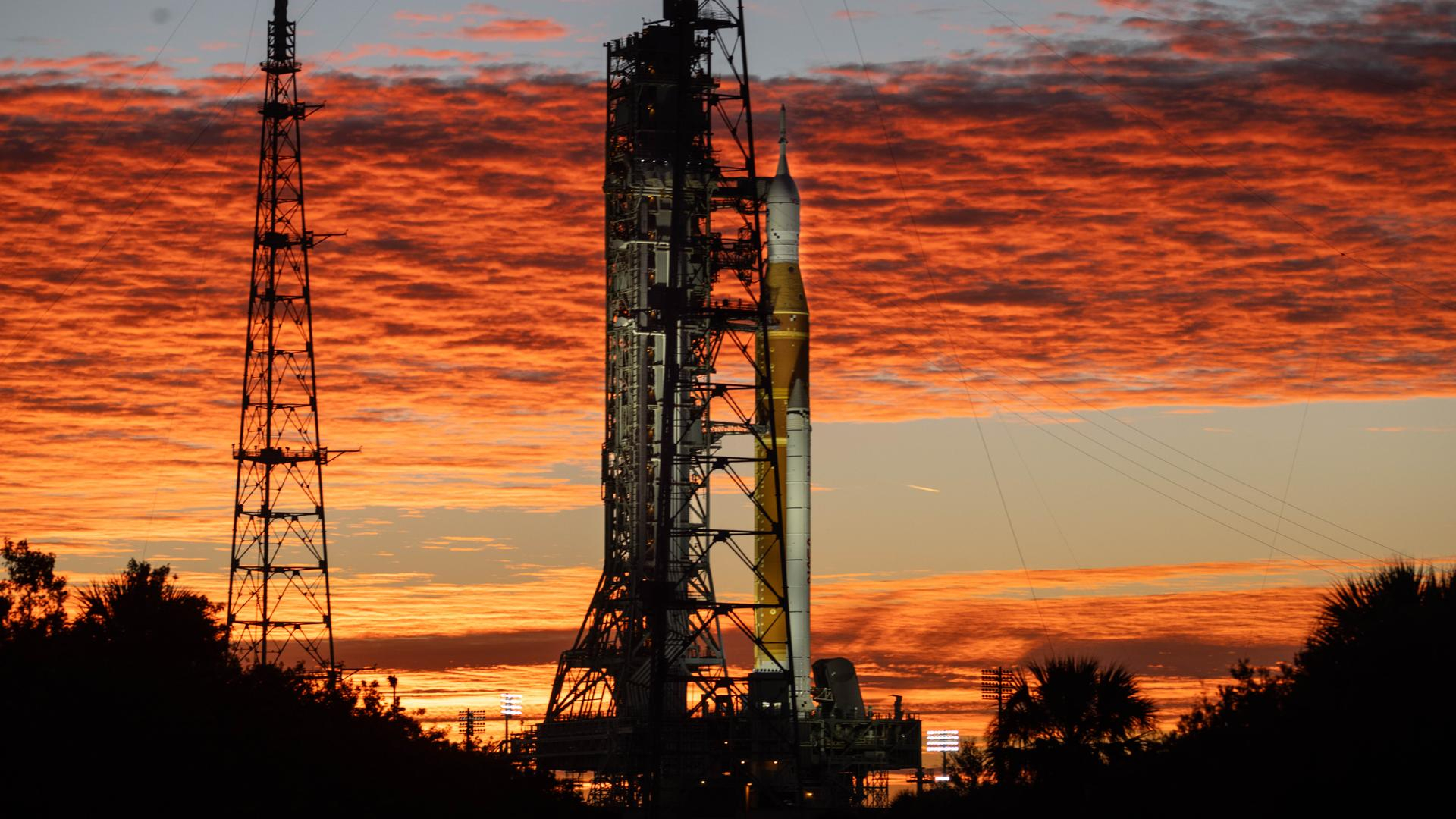
 The Artemis 2 stack on the launch pad. (Image credit: NASA/Cory S Huston) Share this article 0 Join the conversation Follow us Add us as a preferred source on Google Newsletter Get the Space.com Newsletter
 Breaking space news, the latest updates on rocket launches, skywatching events and more!
Contact me with news and offers from other Future brands Receive email from us on behalf of our trusted partners or sponsors By submitting your information you agree to the Terms & Conditions and Privacy Policy and are aged 16 or over.You are now subscribed
Your newsletter sign-up was successful
Want to add more newsletters?
An account already exists for this email address, please log in. Subscribe to our newsletterThe first crewed moon mission since the Apollo era will launch a week from today, if all goes according to plan.
NASA is apparently still targeting April 1 for the liftoff of Artemis 2, which will send four astronauts on a 10-day journey around the moon and back to Earth.
Article continues belowThe Artemis 2 stack is already at the pad — Launch Complex 39B at NASA's Kennedy Space Center (KSC) in Florida. It got there on March 20, making the 4-mile (6.4-kilometer) trek from KSC's Vehicle Assembly Building (VAB) atop the the agency's huge crawler-transporter 2 vehicle.
It was the second trip to the pad for Artemis 2's SLS and Orion. The duo first got there on Jan. 17, when NASA was targeting early February for the liftoff.
But the Artemis 2 team hit a few hurdles that pushed that timeline back. For example, a leak of liquid hydrogen propellant was detected during the mission's first attempt at a wet dress rehearsal (WDR), a two-day-long practice run of the procedures leading up to launch.
The team fixed the leak and successfully completed a WDR on Feb. 20. But they soon discovered another issue — an interruption in the flow of helium to the SLS' upper stage. That problem couldn't be fixed on the pad, so the Artemis 2 stack was rolled back to the VAB for repairs.
Get the Space.com NewsletterContact me with news and offers from other Future brandsReceive email from us on behalf of our trusted partners or sponsors 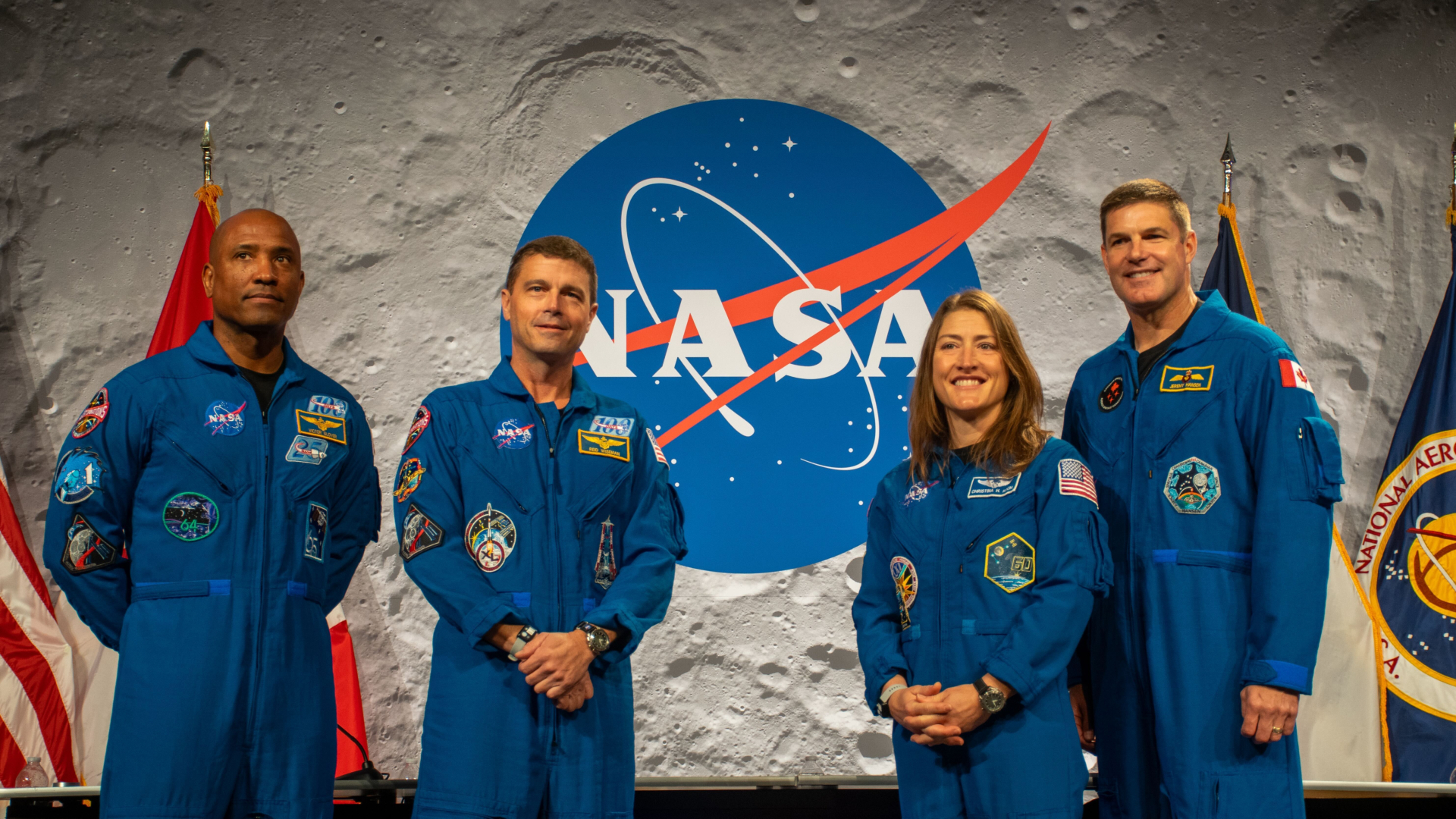
NASA has said it doesn't plan to perform another WDR, so there are fewer boxes to check during this second stint at the pad. Still, a launch on April 1 is far from guaranteed. Many different issues could pop up, and NASA will doubtless err on the side of caution, given that this is a crewed mission. (The four people flying are NASA's Reid Wiseman, Victor Glover and Christina Koch, and Jeremy Hansen of the Canadian Space Agency.)
If Artemis 2 can't get off the ground on April 1, other opportunities are available each day through April 6. Another window opens on April 30, but we're not sure how far it extends; NASA has declined to discuss May opportunities, saying it's laser-focused on April.
 Mike WallSenior Space Writer
Michael Wall is a Senior Space Writer with Space.com and joined the team in 2010. He primarily covers exoplanets, spaceflight and military space, but has been known to dabble in the space art beat. His book about the search for alien life, "Out There," was published on Nov. 13, 2018. Before becoming a science writer, Michael worked as a herpetologist and wildlife biologist. He has a Ph.D. in evolutionary biology from the University of Sydney, Australia, a bachelor's degree from the University of Arizona, and a graduate certificate in science writing from the University of California, Santa Cruz. To find out what his latest project is, you can follow Michael on Twitter.
View MoreYou must confirm your public display name before commenting
Please logout and then login again, you will then be prompted to enter your display name.
Logout MORE FROM SPACE... 1Amazon Spring Sale deals for stargazing 2026: Huge savings on telescopes, binoculars and cameras
- 2Scientists discover mirror of our solar system in 2 exoplanets forming around a star
- 3Watch Rocket Lab launch Europe's 1st 2 'Celeste' navigation satellites early March 25
- 4NASA's lunar Gateway space station is out. Moon bases are in
- 5A car-sized asteroid is heading toward Earth for a flyby later tonight: Here's what you need to know