Get the world’s most fascinating discoveries delivered straight to your inbox.
Become a Member in Seconds
Unlock instant access to exclusive member features.
Contact me with news and offers from other Future brands Receive email from us on behalf of our trusted partners or sponsors By submitting your information you agree to the Terms & Conditions and Privacy Policy and are aged 16 or over.You are now subscribed
Your newsletter sign-up was successful
Want to add more newsletters?
Join the club
Get full access to premium articles, exclusive features and a growing list of member rewards.
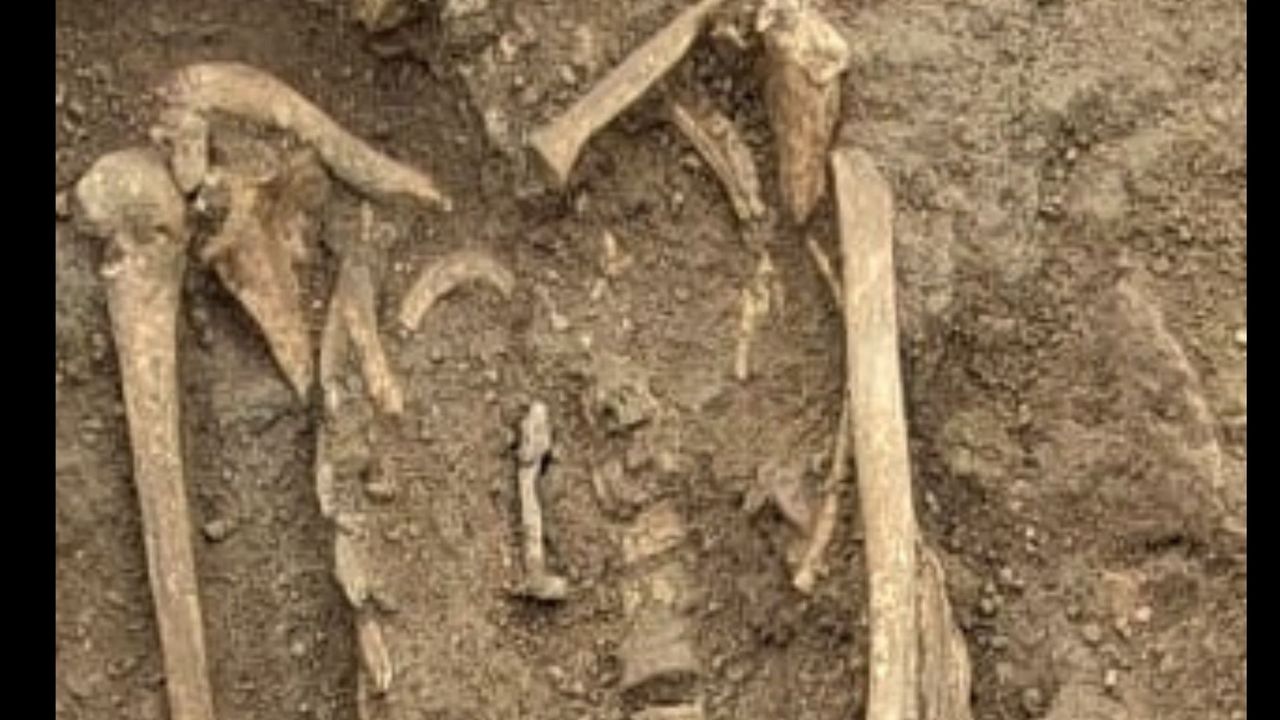
Explore An account already exists for this email address, please log in. Subscribe to our newsletter A close-up of the skeleton shows a nail placed on top of the chest (just left of the spine). (Image credit: Special Superintendency of Rome)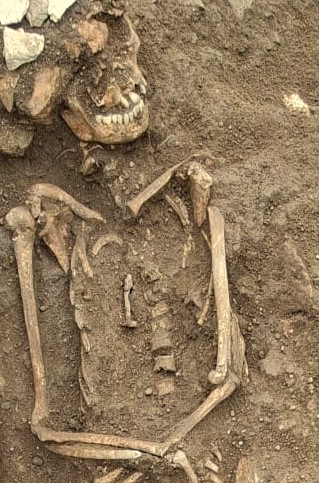
Small iron nails laid across three skeletons' chests preserve an unusual detail about ancient Roman burial practices: 1,800 years ago, someone tried to protect the living from the dead.
Menghinello and colleagues were working in the vast Ostiense necropolis in the heart of Rome when they discovered three burials with nails that had been placed deliberately over the chest, according to a March 4 translated statement from the Special Superintendency of Rome.
Article continues belowThe Ostiense necropolis was initially excavated in 1919, but new archaeological work ahead of housing construction exposed another part of the cemetery on Via Ostiense, near the Basilica of Saint Paul Outside the Walls. The newly uncovered site is helping clarify how burial customs changed across centuries as the Ostiense necropolis expanded, Menghinello said.
"In antiquity, the sides of the road were occupied by a vast Roman necropolis" with several different tomb types, Menghinello said, dating to between the second century B.C. and the fourth century A.D. But the precise boundary of the necropolis is still not fully known, she said. The skeletons buried with nails were found in simple graves, likely dating to the third and fourth century A.D.
But the purpose of the nail is something of a mystery.
Image 1 of 3 (Image credit: Special Superintendency of Rome)
A close up of one of the three skeletons found with a nail in the excavation site on Via Ostiense in Rome.
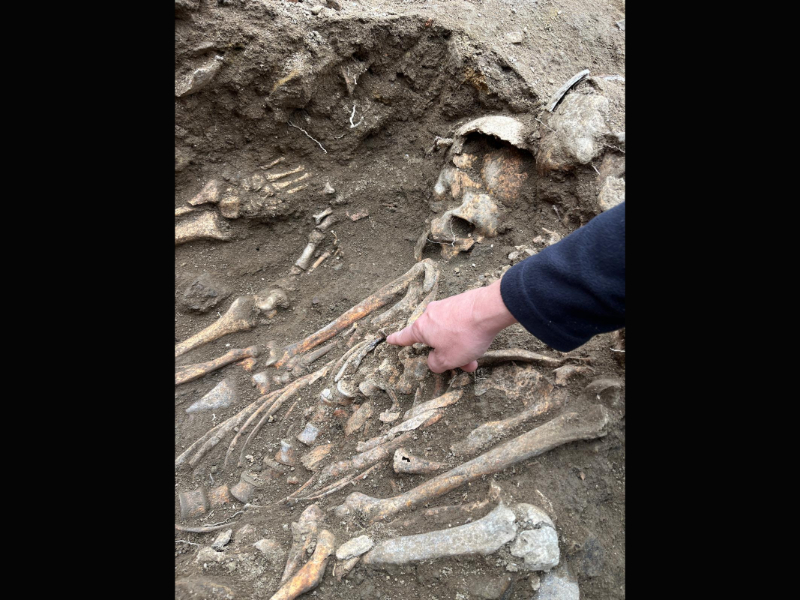 (Image credit: Special Superintendency of Rome)
Archaeologist Walter Pantano points to the nail resting on one of the skeletons' chests at the new excavation site.
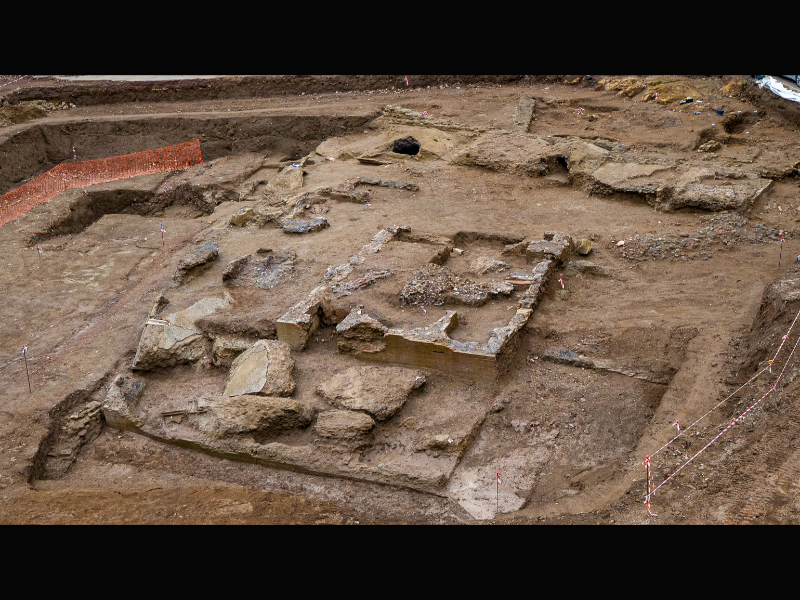 (Image credit: Special Superintendency of Rome)
An aerial view of the Ostiense necropolis excavation site.
"Its function has been interpreted in different ways," Menghinello said, noting that the nail may have been used for symbolically "fixing" the dead from returning to haunt the living. If the body wasn't fixed, it was thought that the dead could become a "revenant," or a revived corpse common in folklore.
Sign up for the Live Science daily newsletter nowContact me with news and offers from other Future brandsReceive email from us on behalf of our trusted partners or sponsorsRELATED STORIES—Sacred chickens, witches and animal entrails: 7 unusual ancient Roman superstitions
But the practice may have been meant to protect the deceased person as well. When used in an apotropaic practice — one meant to ward off harm — the nail became a type of talisman to protect the dead individual from the perils of the afterlife or to protect the tomb from being disturbed, Menghinello said.
The nail ritual "would therefore have served to preserve the body from potential violators of its final resting place, protect the deceased from malevolent forces and, at the same time, safeguard the surviving relatives from the possible return of the dead among the living," Menghinello said.
Roman emperor quiz: Test your knowledge on the rulers of the ancient empire
 Kenna Hughes-CastleberryContent Manager, Live Science
Kenna Hughes-Castleberry is the Content Manager at Live Science. Formerly, she was the Content Manager at Space.com and before that the Science Communicator at JILA, a physics research institute. Kenna is also a book author, with her upcoming book 'Octopus X' scheduled for release in spring of 2027. Her beats include physics, health, environmental science, technology, AI, animal intelligence, corvids, and cephalopods.
View MoreYou must confirm your public display name before commenting
Please logout and then login again, you will then be prompted to enter your display name.
Logout LATEST ARTICLES 1An experimental AI agent broke out of its testing environment and mined crypto without permission
- 2Scientists witness birth of one of the universe's strongest magnets for the first time, thanks to a general relativity 'magic trick'
- 3Top 5 tips for surviving hay fever season
- 4Best APS-C and Micro Four-Thirds cameras for astrophotography
- 5Live Science Today: Artemis II readies for rollout as auroras paint skies